

Finding the best smart home devices 2026 has to offer is equal parts exciting and confusing: Matter is finally delivering on cross-platform compatibility, AI assistants have grown genuinely conversational, and every category has a clear winner — if you know where to look. We merged five major buying guides, compared every category pick head to head, and rebuilt the advice into one complete resource. For the broader gadget landscape, see our best gadgets for everyday life.
The Best Smart Home Devices of 2026 at a Glance
The single smartest starting point is a control hub: the Amazon Echo Hub for Alexa households, the Nest Hub Max for Google families, or the HomePod for Apple loyalists. From there, the highest-return upgrades are Philips Hue lighting and an Ecobee thermostat — the two categories that measurably cut your bills. Security comes next with a camera, doorbell, and lock.
| Device | Category | Top pick | Price |
|---|---|---|---|
| Amazon Echo Hub | Control panel | Best smart home hub | $179.99 |
| Google Nest Hub Max | Smart display | Best for Google | $229 |
| Apple HomePod (2nd gen) | Smart speaker | Best audio + privacy | $299 |
| Philips Hue Starter Kit | Smart lighting | Best lighting | $199.99 |
| Ecobee SmartThermostat Premium | Thermostat | Best thermostat | $249.99 |
| Tapo C460 | Security camera | Best outdoor camera | $100 |
| Eufy E340 | Video doorbell | Best doorbell | $150 |
| Level Lock Pro | Smart lock | Best smart lock | $349 |
| Emporia Smart Plug | Smart plug | Best smart plug | $35 |
| Roborock Saros 10 | Robot vacuum | Best robo vac | $1,110 |
Best Smart Home Hub: Amazon Echo Hub
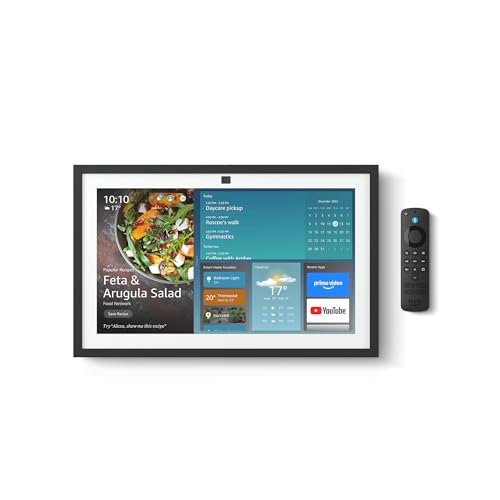
The Echo Hub is the closest thing to a universal remote for the smart home. Its 8-inch touchscreen manages lights, locks, cameras, thermostats, and plugs at a glance, and it speaks every protocol that matters — Matter, Thread, Zigbee, and Z-Wave — controlling over 140,000 Alexa-compatible devices from one wall-mounted or countertop panel.
At $179.99 it undercuts most rivals while out-connecting them, though it is unapologetically Alexa-centric with no native Google or HomeKit control. If your household already lives on Alexa, this is the command center to build around.
Best for Google Households: Google Nest Hub Max
The Nest Hub Max pairs a 10-inch HD display and 30W subwoofer with Gemini AI, making it the most conversational smart display you can buy. It handles Gmail, Calendar, and Photos naturally, detects sounds like breaking glass or alarms and alerts your phone, and its camera supports face and gesture recognition.
The hardware is aging and non-Google device control is limited, but frequent discounts to $179 soften both complaints. For households organized around Google services, nothing else integrates as deeply.
Best for Apple Households: Apple HomePod (2nd Gen)
Tom’s Guide rated the second-generation HomePod the best-sounding smart speaker of 2026, with spatial audio and room sensing that adapt to your space. The S9 chip processes many Siri requests on-device, and independent analysis found it sends far less data to Apple than Alexa or Google speakers send to their makers — the privacy-forward choice.
At $299 it demands an iPhone-centered household to make sense, and it will never match Alexa’s third-party device breadth. But for Apple families who value audio quality and privacy over universal compatibility, it is the obvious pick.
Best Smart Lighting: Philips Hue Starter Kit
Hue remains the gold standard for color and reliability, and it pays for itself: smart lighting cuts energy use 15 to 25 percent versus traditional bulbs, the fastest ROI of any smart home category. The starter kit’s Bridge unlocks 16 million colors, sunrise and motion automations, and compatibility with Alexa, Google, HomeKit, and Matter alike.
The Bridge adds upfront cost and a separate hub to manage, with bulbs from $14.99 each. Budget alternatives from TP-Link or Wyze work fine for single rooms, but for whole-home lighting that never becomes obsolete, Hue is still the answer.
Best Smart Thermostat: Ecobee SmartThermostat Premium
The Ecobee Premium is the most compatible thermostat of 2026 — the only one that works with Alexa, Google, HomeKit, and Siri simultaneously. EPA Energy Star data credits it with $215 per year in average heating and cooling savings, roughly a 23 percent HVAC reduction, and wireless SmartSensors turn drafty rooms into their own climate zones.
Installation takes about 30 minutes with a C-wire, or use the included Power Extender Kit. At $249.99 it is not cheap, but it typically pays for itself in under two years — the biggest annual savings of any device on this list.
Best Outdoor Security Camera: Tapo C460
The Tapo C460 proves you do not need a subscription for good security. Its 4K video, 18x digital zoom, and AI person, vehicle, and pet detection come with no monthly fee for basic alerts, while a 10,000mAh battery stretches to a claimed 200 days per charge. Color night vision, two-way audio, and local microSD storage complete a $100 package that embarrasses pricier rivals.
Cloud storage costs extra if you want it, and the magnetic mount suits sheltered spots better than fully exposed ones. For subscription-free outdoor monitoring, though, it is the value king.
Best Video Doorbell: Eufy E340
The Eufy E340 solves the doorbell’s oldest problem with two cameras: a 2K main lens for visitors and a second angled down at packages on the mat. Visitor and package detection run locally with no cloud subscription, and clips store on Eufy’s base station.
At $150 it undercuts the Ring Video Doorbell Pro 2 by $100 while skipping the $3.99 monthly fee Ring needs for recordings. Hardwiring is still recommended for permanent installs, but for most homes this is the doorbell to beat.
Best Smart Lock: Level Lock Pro
The best smart lock is the one nobody notices. The Level Lock Pro hides every component inside a standard-looking deadbolt — no keypad, no touchscreen, no fingerprint scanner — while adding Matter and Bluetooth connectivity, app control, and geofencing that unlocks the door as you approach. Your existing handle set and physical key stay exactly as they are.
At $349 it is premium-priced, and remote control needs a home hub like an Apple TV or Echo. But for invisible security that installs like a traditional deadbolt, nothing else matches it. Renters should consider the August Smart Lock Pro instead — it fits over your existing deadbolt and moves with you.
Best Smart Plug: Emporia Energy Monitoring Smart Plug
Most smart plugs just switch things on and off; the Emporia shows you what everything costs. Real-time energy tracking exposes standby drain device by device, and entering your electricity rate converts usage into actual dollars. You can even automate devices to run when your utility rates are cheapest, not just on fixed schedules.
At $35 it costs more than basic plugs, but it is the only one that actively lowers your bill. Pair a few with your biggest phantom loads — entertainment centers, home offices — and watch the savings add up. More everyday upgrades live in our top 10 gadgets of 2026.
Best Robot Vacuum: Roborock Saros 10
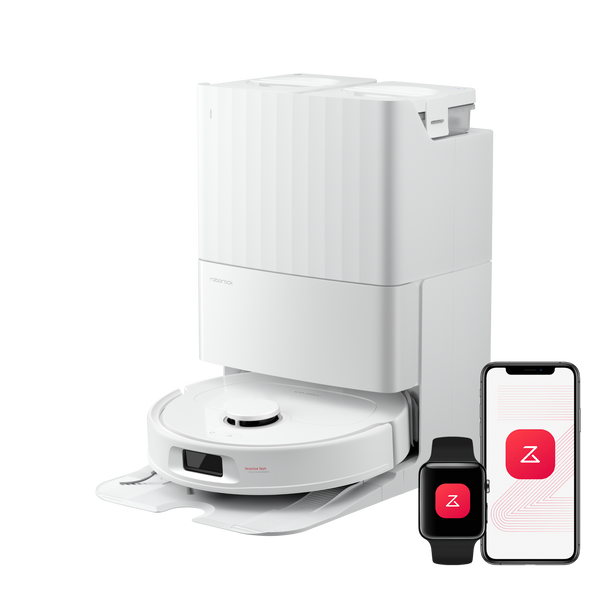
The Saros 10 is the robot vacuum for people who stopped believing the hype — then saw 22,000Pa of suction pull embedded dust from high-pile carpet. Its 3.14-inch slim profile with retractable LiDAR glides under furniture rivals cannot reach, the dock auto-washes the mop with 176°F water, and Reactive AI 3.0 obstacle avoidance actually works.
At $1,110 it is a serious investment with a large dock footprint. But at 52 decibels — about as loud as an air conditioner — it cleans while you work from home without a second thought.
Matter and Choosing Your Ecosystem
Matter is the universal standard that finally lets devices work across Alexa, Google Home, and Apple HomeKit without separate bridges or apps. With Apple, Google, Amazon, Samsung, and over 550 companies behind it, most new 2026 devices launch Matter-certified — buying the Matter logo is the single smartest decision you can make to avoid obsolescence.
Still, pick one primary ecosystem to reduce friction: Alexa for the broadest device compatibility, Google for conversational AI, HomeKit for privacy, SmartThings for automation. Follow your phone — iPhone families belong with HomeKit, everyone else with Alexa or Google.
What You Need Before Building a Smart Home
Two foundations matter more than any device: reliable internet and one chosen platform. Every smart home depends on stable Wi-Fi, so consider a mesh system or Wi-Fi 7 router before adding dozens of connected gadgets. Then commit to a single ecosystem for your automations, even if individual devices span platforms via Matter.
Security hygiene is non-negotiable: enable two-factor authentication, change default passwords, and keep firmware updated. For locks, alarms, and cameras, always keep a manual fallback — a physical key, the alarm’s own siren — because cloud services can and do go down.
How to Build Your Smart Home Step by Step
Start with a hub or smart speaker — the Echo Hub, Nest Hub Max, or an Echo Show 8 on a budget. Add smart lighting one room at a time, beginning where you spend your evenings. Install the thermostat next; it delivers the biggest savings. Then secure the perimeter with a camera, doorbell, and lock.
Automate in layers once the hardware is in: a Good Morning routine that ramps lights and adjusts the thermostat, an Away Mode that locks doors and arms cameras, a Night routine that dims everything. Total starter cost runs $280 to $430 for voice control plus lighting and thermostat — the three highest-ROI investments.
Smart Home Setup by Budget
At $200 to $500, cover the essentials: a smart speaker, a few bulbs, a smart plug, and a video doorbell. The $500 to $1,500 tier adds security cameras, a thermostat, and a smart lock — the complete security and efficiency package. Above $1,500, go whole-home: full lighting, advanced security, a robot vacuum, and multi-room audio.
Whatever the budget, start small and expand gradually. Black Friday and Prime Day consistently deliver the year’s best speaker and bulb prices, so timing big purchases pays.
Mistakes to Avoid
The classic error is buying without a plan — a drawer of incompatible gadgets that never automate anything. Decide your ecosystem first, then buy Matter-certified devices within it. Equally common is ignoring Wi-Fi quality: thirty connected devices on a struggling router is a recipe for daily frustration.
Do not mix too many platforms, do not skip security basics, and do not buy cloud-dependent devices from makers with uncertain futures — when the service dies, so do your automations. When in doubt, prefer local control and local storage.
Frequently Asked Questions
What are the best smart home devices in 2026?
The five highest-ROI categories: a control hub (Echo Hub $179.99), smart lighting (Philips Hue), a thermostat (Ecobee $249.99), a security camera (Tapo C460 $100), and a video doorbell (Eufy E340 $150). Start with the hub, then add by priority.
What is Matter and why should I care?
Matter is the universal connectivity standard letting devices work across Alexa, Google Home, and Apple HomeKit without separate bridges. Buying Matter-certified devices protects your investment — they work with any ecosystem now or in the future.
Which smart home ecosystem is best?
Alexa offers the broadest compatibility, Google the best conversational AI, Apple HomeKit the strongest privacy, and SmartThings the deepest automation. With Matter, you are no longer permanently locked into any of them.
Do I need a hub?
Not for small setups — many devices connect over Wi-Fi directly. Larger homes benefit from one, and Zigbee or Z-Wave devices need a hub or a speaker with one built in. Matter devices use a border router, often a speaker or display you already own.
Do smart home devices work without a subscription?
Most do for basic functions. Hue and Ecobee need none at all; Eufy cameras store locally for free. Arlo ($9.99/month) and Ring ($3.99/month) charge for cloud storage and advanced AI — check before you buy.
Which devices save the most energy?
The Ecobee thermostat (~$215/year), smart lighting (15–25 percent savings), and smart plugs that kill phantom load. Automated shades can cut summer cooling costs up to 15 percent.
Is a smart home secure?
Yes, with proper practices: two-factor authentication, strong unique passwords, regular firmware updates, and local storage where possible. Avoid default passwords and keep manual fallbacks for locks and alarms.
Our Verdict
With Matter accelerating and AI assistants genuinely useful, 2026 is the best year yet to build a smart home that will not become obsolete. Start with an Echo Hub, Nest Hub Max, or HomePod — whichever matches your household — add Hue lighting and an Ecobee thermostat for the fastest payback, then secure the perimeter. Buy once, buy Matter-certified, and expand only as fast as your automations earn their keep.
