

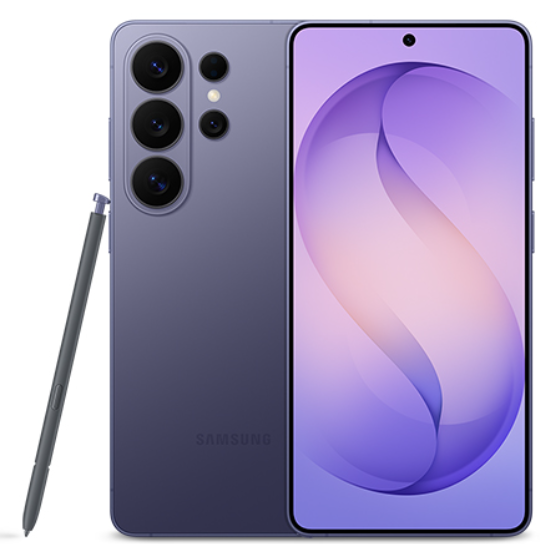
This Samsung Galaxy S26 Ultra review looks at whether Samsung’s $1,299 flagship — on sale since March 2026 with a hardware-level Privacy Display, faster 60W charging, and a slimmer 214g body — truly earns the “best Android phone” crown, or whether it’s just another safe, familiar upgrade. Having worked through the top professional reviews, the answer turns out to be more interesting than the spec sheet suggests.
Samsung Galaxy S26 Ultra Review: The Short Version
The Galaxy S26 Ultra is Samsung doing what it does best: refining rather than reinventing. Reviewers praise the Privacy Display as a genuine innovation, call the performance excellent, and rate battery life highly. At the same time, several outlets flag the unchanged 5,000mAh cell, the missing Qi2 magnets, and the lack of any single headline feature as reasons to hesitate — especially if you already own a Galaxy S25 Ultra.
Key specifications, confirmed across the top reviews:
| Spec | Galaxy S26 Ultra |
|---|---|
| Display | 6.9-inch Dynamic AMOLED 2X, 3120 × 1440, 1–120Hz adaptive, up to 2,600 nits peak |
| Chipset | Qualcomm Snapdragon 8 Elite Gen 5 for Galaxy |
| RAM / Storage | 12GB / 16GB LPDDR5X; 256GB / 512GB / 1TB UFS 4.0 (non-expandable) |
| Rear cameras | 200MP main (f/1.4, OIS) + 50MP ultrawide (f/1.9, 120°) + 10MP 3x telephoto (f/2.4, OIS) + 50MP 5x periscope (f/2.9, OIS) |
| Front camera | 12MP (f/2.2) |
| Battery / Charging | 5,000mAh; 60W wired (USB-C PD PPS); 25W wireless; 4.5W reverse wireless |
| Software | Android 16 with One UI 8.5; 7 years of OS and security updates |
| Build | Armor aluminum frame, Gorilla Glass Armor 2, IP68 |
| Dimensions / Weight | 163.6 × 78.1 × 7.9mm; 214g |
| Standout features | Privacy Display, integrated S Pen, Wi-Fi 7, UWB, USB 3.2 |
| US pricing | $1,299 (256GB) / $1,499 (512GB) / $1,799 (1TB) |
Design and Build Quality
The S26 Ultra shaves 0.3mm of thickness and 4g of weight off its predecessor, landing at 7.9mm and 214g. That sounds trivial on paper, yet reviewers consistently say it feels meaningfully better in the hand. Rounded corners that now match the rest of the S26 lineup make the phone less chunky to grip and easier to slide into a pocket.
Samsung has moved back to Armor aluminum after two generations of titanium. Reviewers note this keeps durability high while offsetting rising RAM and storage costs — which is how Samsung avoided a price increase on the base model. The finish is tight and creak-free, with a 91% screen-to-surface ratio and Gorilla Glass Armor 2 up front.
Color options are Black, Cobalt Violet, Sky Blue, and White, with Pink Gold and Silver Shadow exclusive to Samsung’s online store. One design complaint shows up in every review: the redesigned camera island (borrowed from the Galaxy Z Fold 7) makes the phone wobble noticeably on a table. It also gets in the way of S Pen use without a case, and the matte glass back still picks up fingerprints on the black and violet variants.
Display and Privacy Display
The 6.9-inch Dynamic AMOLED 2X panel is, by most accounts, one of the best displays on any phone this year. Resolution is 3120 × 1440 with an adaptive 1–120Hz refresh rate and peak brightness up to 2,600 nits, so it stays readable in direct sunlight. HDR content looks superb, with dark scenes rendering properly dark instead of muddy gray.
The headline feature is the hardware-level Privacy Display, built on what Samsung calls Flex Magic Pixel technology. It narrows viewing angles at the hardware level, so anyone glancing from the side sees a blank, dim screen while your straight-on view stays clear. Unlike a $10 privacy screen protector, it can be toggled on and off at will, applied to specific apps or just to incoming notifications, and it never touches the front camera’s facial recognition.
Is the Privacy Display a Must-Have?
There are two protection levels. The standard mode lightly tints the screen so snoopers would have to squint or lean in to read anything. “Maximum privacy protection” makes the screen nearly impossible to view from any angle — but brightness drops sharply, a light haze appears over everything, and blacks turn gray, which can fatigue your eyes. Reviewers found the regular mode sufficient for trains, offices, and cafés, and recommend leaving the maximum mode for genuinely sensitive moments like banking.
The trade-offs are real: Privacy Display adds a gray tint, removes the anti-reflective coating that distinguished the S24 and S25 Ultra, and reduces brightness. One outlet even measured the panel as dimmer than the S25 Ultra’s, especially at an angle. The consensus is that the feature is genuinely useful and innovative — but situational, not something most people will leave on all day.
Performance
The Snapdragon 8 Elite Gen 5 for Galaxy, paired with 12GB of LPDDR5X RAM on the 256GB and 512GB models (16GB on the 1TB model), delivers the expected flagship muscle. Clock speeds top out at 4.74GHz, and reviewers report zero stutter in heavy multitasking — 20 browser tabs, Google Sheets, and a 4K video edit in LumaFusion all ran without a hitch.
Benchmarks
Measured scores show the usual generational leap: Geekbench 6 results of 3,675 single-core and 11,241 multi-core, with a GPU score of 25,275 — roughly a 20–30% jump over the S25 Ultra. AnTuTu lands just shy of 4 million (3,824,993), about a 40% year-over-year improvement. In lab testing it now beats the iPhone 17 Pro Max on several graphics benchmarks, which speaks to strong software optimization as much as silicon.
Thermals and Gaming
A larger vapor chamber keeps surface temperatures in check — an hour of Call of Duty Mobile at max settings or Genshin Impact at full graphics stayed comfortable to hold, and battery drain was modest (about 12% for an hour of CoD Mobile in one test). But sustained-load stress tests tell a more nuanced story: performance throttles noticeably over long benchmarks, with stability scores around 51–57% in 3DMark Wildlife Extreme. Still, reviewers agree that for real-world gaming and daily use, the phone stays cool and never feels slow.
To see how that performance, camera, and battery combination compares against this year’s other flagships, check our smartphone reviews of 2026 covering performance, camera, and battery.
Cameras
The hardware is familiar: a 200MP main sensor (Samsung HP2, f/1.4, OIS), a 50MP ultrawide (f/1.9, 120° field of view), a 10MP 3x telephoto (f/2.4, OIS), and a 50MP 5x periscope (f/2.9, OIS). The 5x periscope now uses an ALoP sensor that gathers more light but pushes minimum focus distance from about 30cm out to 80cm — so telemacro shooting is gone. Samsung says the 3x telephoto stays mainly for portrait shots, where its focal length creates better bokeh.
Photo Quality
Reviewers agree the biggest change is in processing, not hardware. Samsung has finally reined in the oversaturation: skies no longer turn neon blue and skin tones look natural instead of airbrushed. In good light, the 200MP sensor (binning down to 12.5MP by default) captures excellent detail — you can crop into a distant sign and read it. Low-light shots are solid, though texture smoothing creeps in and rivals like the Pixel keep more fine grain. Zoom is consistent from 3x to 10x, usable at 30x thanks to better stabilization, and still a gimmick at 100x.
Video, Horizon Lock, and Pro Tools
Video tops out at 8K30, but 4K60 is where you’ll live, with superb stabilization. Horizon Lock with Super Steady 2.0 keeps the horizon line level even as you rotate the phone — like a built-in gimbal, and a standout feature for creators filming kids or pets. The phone also supports APV and LOG recording (Android’s answer to Apple’s ProRAW), putting it in serious creator territory — though 8K30 in LOG APV burns through over 20GB of storage per minute, so budget for the 512GB model if you shoot pro video.
Battery Life and Charging
It’s the same 5,000mAh cell for the sixth generation running, and reviewers are openly tired of it — Samsung is reportedly testing silicon-carbon batteries but hasn’t committed. Yet efficiency gains from the new chip squeeze genuinely strong endurance out of it: Tom’s Guide measured 16 hours 10 minutes of web surfing, lab tests recorded 23 hours 45 minutes of video playback and nearly 18 hours of Wi-Fi browsing, and real-world use delivered 6–8 hours of screen-on time with a full day to a day and a half per charge. In some tests it even outlasted silicon-carbon rivals like the OnePlus 15.
Charging is the real upgrade: 60W wired over standard USB-C PD PPS, reaching about 75% in 30 minutes — roughly halving the S25 Ultra’s full-charge time to around 45 minutes. Because it’s standard PD PPS rather than a proprietary standard, any 60W USB-C charger works; you’ll just need your own 5A cable, since the box only includes a 3A one. Wireless charging runs at 25W and is Qi2-compatible, but there’s no built-in magnetic ring — a $1,300 phone really should have one. One caveat from long-term testers: Samsung software updates have a habit of hurting battery life over time, so today’s numbers may not hold a year from now.
Software, Galaxy AI, and Updates
The phone ships with Android 16 and One UI 8.5, which reviewers describe as clean, fast, and still absolutely loaded with settings. Samsung’s seven-year update promise — seven major OS upgrades and seven years of security patches, running to early 2033 — remains one of the strongest commitments in the Android world.
Galaxy AI expands again this year. Now Nudge is a content-aware assistant that tracks what you’re doing on screen and suggests actions — texting about dinner plans prompts a calendar entry. Bixby has been rebuilt with agentic capabilities that can chain multi-step tasks across apps, and deep Perplexity integration (“Hey, Plex”) adds real-time AI search. Circle to Search now recognizes multiple objects at once, and Photo Assist takes natural-language editing commands. The catch: many features still work only inside Samsung’s own apps, some (like the voice-driven Uber booking) were broken for months after launch, and the sheer volume of AI surfacing everywhere can grate. Notably, AI functions can also run entirely on-device if you prefer privacy over speed.
S Pen
The S Pen is still here, now slimmer with a more rounded top that protrudes slightly from the slot — making it easier to pull out. Samsung has shifted its focus squarely to productivity: note-taking and sketching work well with imperceptible latency, but the Bluetooth camera-shutter remote was removed a generation ago and hasn’t returned. Reviewers are split: it’s the only built-in stylus you can buy on any phone, which keeps loyalists happy, but several note it feels kept around more by tradition than innovation — and the camera wobble makes writing on a table awkward without a case.
Price and Availability
The Galaxy S26 Ultra went on sale in the US in March 2026 at $1,299 for 256GB, $1,499 for 512GB, and $1,799 for the 1TB model with 16GB of RAM. The base price didn’t rise, but the 512GB model costs $80 more than last year and the 1TB model $140 more (offset by the extra RAM). Amazon listings have already shown meaningful discounts on unlocked models, so deal-hunters shouldn’t pay full price for long.
Galaxy S26 Ultra vs Galaxy S25 Ultra: Should You Upgrade?
Side by side, the differences are subtle: a 7.9mm body versus 8.6mm, 214g versus 233g, the hardware privacy display, better thermals, and a faster chip. The display, camera hardware, and battery capacity are essentially unchanged. If you own an S24 Ultra or anything older, reviewers call this a clear upgrade — the performance jump, camera consistency, charging speed, and slimmer build will all feel significant.
If you own an S25 Ultra, it’s a much tougher sell. The privacy display and thermal improvements are the only real differentiators, One UI 8.5 is rolling out to you anyway, and nothing here amounts to a generational shift. Check trade-in values — an S24 Ultra trade-in can knock hundreds off — but otherwise, waiting is the sensible move.
Pros and Cons
Pros:
- Privacy Display genuinely works and has no real competition
- Flagship performance with excellent real-world thermal behavior
- Strong battery life from the same 5,000mAh cell, plus much faster 60W PD PPS charging
- Versatile, natural-looking cameras with Horizon Lock and LOG/APV pro video
- Thinner, lighter, and more comfortable than any previous Ultra
- Seven years of software updates and the only built-in S Pen on the market
Cons:
- No Qi2 magnetic ring on a $1,299 phone
- Privacy Display adds a gray tint, cuts brightness, and removes the anti-reflective coating
- Same 5,000mAh battery for the sixth generation — no silicon-carbon
- Camera island makes the phone wobble on tables
- No charger or 5A cable in the box
- Incremental overall: S25 Ultra owners have little reason to upgrade
Final Verdict
So, is the Samsung Galaxy S26 Ultra the best Android phone ever? As an all-rounder, it’s the strongest case anyone has made in 2026: it doesn’t need to win a single category to win the whole game. It’s lighter, smarter, and faster than anything Samsung has made, the Privacy Display is a real innovation, and the camera system finally gets colors right — all without a price increase. That’s harder to pull off than it sounds.
But “best ever” comes with an asterisk. It’s a refinement, not a revolution, and the spec sheet tells an underwhelming story: same battery, same camera hardware, same IP68, missing magnets. If you’re coming from an S23 Ultra or older, or switching from another brand, this is the complete package to buy. If you’re holding an S25 Ultra, the wiser move is to wait — or at least wait for a deal. Either way, if you’re still weighing your options, see our roundup of the best phones in 2026 before you decide.

Frequently Asked Questions
Is the Samsung Galaxy S26 Ultra worth buying or upgrading from the Galaxy S25 Ultra?
It depends on what you own. Coming from an S24 Ultra or older, it’s a clear upgrade with better performance, battery efficiency, camera consistency, and a slimmer build. From an S25 Ultra, the privacy display and improved thermals are the only real differentiators — most owners should wait for a price drop or skip a generation.
What are the biggest Galaxy S26 Ultra upgrades over the S25 Ultra?
The standout additions are the hardware-level Privacy Display, the Snapdragon 8 Elite Gen 5 for Galaxy with a larger vapor chamber, a thinner and lighter 7.9mm / 214g chassis, more natural camera processing, and 60W wired charging that roughly halves full-charge time. Battery capacity, display size, and camera hardware are unchanged.
How good is the Galaxy S26 Ultra camera compared with other flagships?
It sits among the best Android cameras, with consistent results from its 200MP main sensor and dual telephoto setup, plus top-tier video stabilization. It trades a little low-light texture for cleaner output versus rivals like the Pixel, and its 30x hybrid zoom is genuinely usable. For pure still-image quality, Chinese flagships like the vivo X300 Pro and OPPO Find X9 Pro still push further.
What are the Galaxy S26 Ultra’s key specs and performance improvements?
You get a 6.9-inch QHD+ 120Hz AMOLED display, Snapdragon 8 Elite Gen 5 for Galaxy (up to 4.74GHz), 12GB or 16GB of RAM, 256GB–1TB storage, a 200MP quad camera, a 5,000mAh battery with 60W wired charging, and Android 16 with One UI 8.5. Benchmarks show roughly a 20–30% performance jump over the S25 Ultra with better sustained thermals.
Does the Galaxy S26 Ultra support the S Pen?
Yes — the S Pen is included and slots into the phone’s chassis as always. It’s slimmer this year with a slightly protruding top that’s easier to grab, and it’s geared toward note-taking and sketching. The Bluetooth remote-shutter feature from older models is gone, though.
