

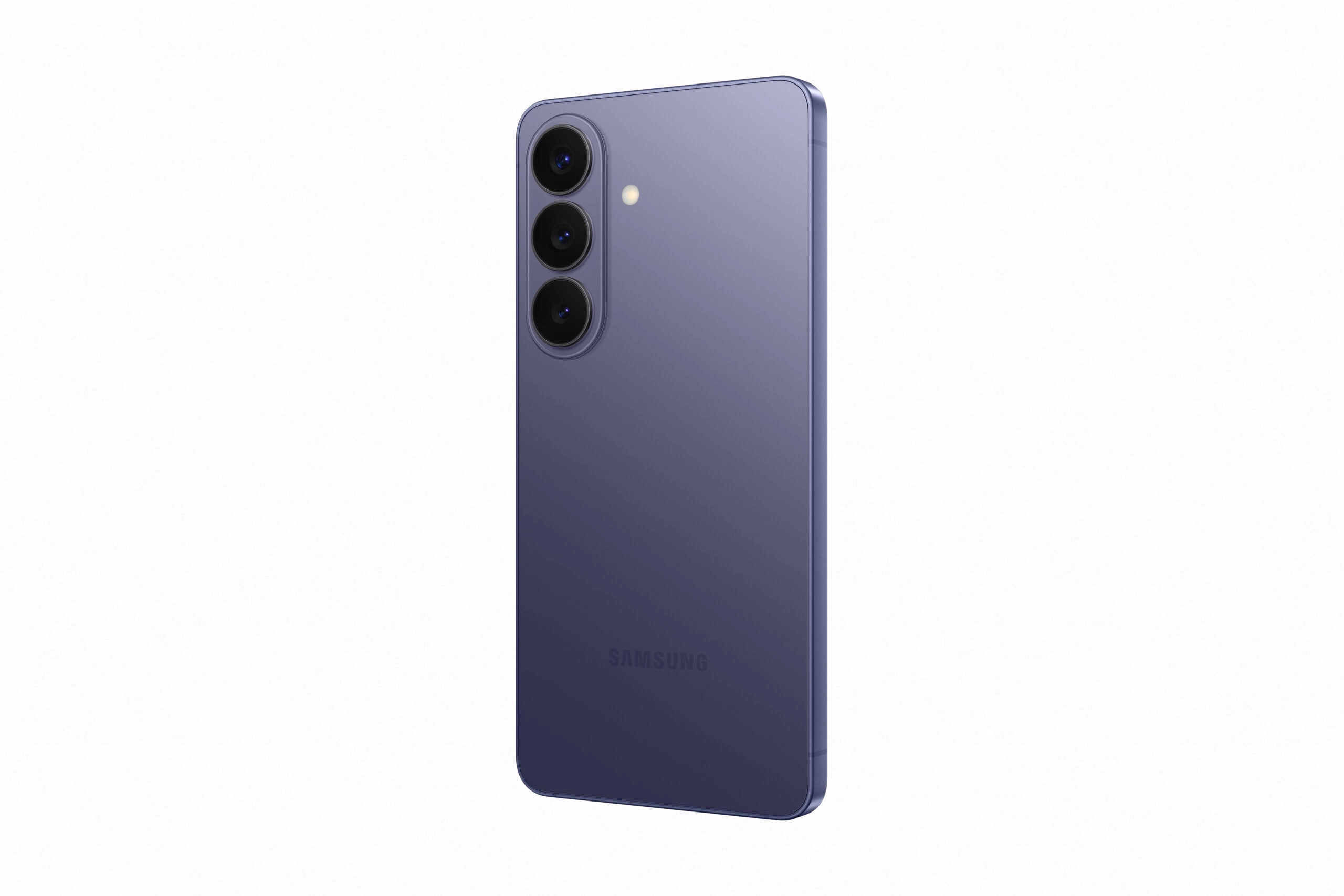
This Samsung Galaxy S26 review takes an honest look at Samsung’s 2026 compact flagship: a phone that pairs genuine flagship speed with hardware choices that have barely moved in years. It costs more than its predecessor, keeps the same camera setup, and yet remains one of the easiest Android phones to live with.
The question is not whether the Galaxy S26 is a good phone — it clearly is. The question is whether it is worth $899 when rivals are pushing harder on cameras, batteries and charging. Here is the full picture, drawn from hands-on testing across five in-depth reviews.
Price, Release Date and Availability
Samsung unveiled the Galaxy S26 on 25 February 2026 and put it on sale on 11 March 2026. The headline change is pricing: the base model now starts at $899 for 256GB of storage, a full $100 more than the Galaxy S25 cost at launch.
The 128GB tier is gone entirely, so 256GB is the new baseline. That extra storage softens the price rise slightly — it works out to just $40 more than the 256GB S25 — but it is still a lot to ask for a phone whose headline hardware is largely unchanged.
Colour options include Black, White and Cobalt Violet, the latter being the standout of the range. A 512GB variant is also available in most regions for those who need more room.
Design and Build Quality
At 167 grams and 7.2mm thin, the Galaxy S26 is one of the lightest and slimmest flagships you can buy in 2026. The difference is tangible: it makes a 204-gram Pixel 10 feel like a brick by comparison, and one-handed use is genuinely comfortable.
The biggest visual change is at the back, where the individual floating camera rings have been replaced by a unified camera island that ties the lenses together. It looks cleaner and more deliberate, though the raised module means the phone wobbles noticeably when lying flat on a table.
The frame is Armour Aluminium 2 with Gorilla Glass Victus 2 on the front and back, and the frosted finish picks up fingerprints but resists slips better than last year’s model. IP68 dust and water resistance is included, which is reassuring, though rivals have moved on to IP69 and some competitors now rate their phones for deeper, longer submersion.
Display
The 6.3-inch Dynamic AMOLED 2X panel is one of the phone’s strongest assets. It is sharp, vibrant and easily bright enough outdoors — it held up fine even under harsh midday sun — with deep blacks, slim bezels and a smooth 120Hz refresh rate that keeps everything feeling fluid.
There are caveats. The panel is Full HD+ only, with no option to scale the resolution up or down as you get on the Plus and Ultra models. Samsung has also withheld the anti-reflective coating found on the Ultra, and the new Privacy Display feature is exclusive to the top model.
A new Dim Strobing feature automatically dims the display when watching video with harsh lights to protect your eyes, which works well in practice. HDR10+ content looks excellent, though there is still no Dolby Vision support. Some reviewers also flagged that Samsung continues to use an 8-bit panel while rivals have moved to 10-bit or 12-bit displays.
Performance
This is where the Galaxy S26 genuinely shines. In the US and China it runs the Snapdragon 8 Elite Gen 5 for Galaxy, while most international markets get Samsung’s in-house Exynos 2600 — a 2nm, 10-core chip that has finally closed much of the historic gap to Qualcomm.
Independent benchmarks put the Exynos 2600 comfortably ahead of the older Snapdragon 8 Elite and within reach of the 8 Elite Gen 5. In one AnTuTu run it scored 2,147,779, with Geekbench 6 results of 3,243 single-core and 11,206 multi-core. In real terms it trades blows with the OnePlus 15 and comfortably outpaces the Tensor G5 in the Pixel 10 Pro.
Day-to-day use is flawless: apps open instantly, multitasking with 12GB of RAM is effortless, and demanding games like BGMI run at a steady 120fps. Genshin Impact holds close to 58fps at maximum settings. Extended gaming sessions do warm the phone up — temperatures can approach 50°C under sustained load — because the compact chassis limits cooling, though it stays cool in normal use.
Cameras
Let us address the elephant in the room: the camera hardware is essentially unchanged since the Galaxy S22. You get a 50MP main camera with an f/1.8 aperture, a 12MP ultrawide and a 10MP 3x telephoto — the same trio Samsung has shipped for four years running.
What Samsung has leaned on instead is processing, and in daylight the argument holds up reasonably well. Main-camera shots are sharp with confident dynamic range, and colours have pulled back from the oversaturated look of older Galaxy phones toward something more natural. Portrait mode is a genuine strength, with clean edge detection and natural skin tones.
The weaknesses are harder to forgive at $899. The ageing main sensor shows ghosting on close subjects and struggles with moving subjects and low light. The 10MP telephoto is modest — quality falls apart quickly past 10x zoom — and there is noticeable colour inconsistency between the three lenses. Night photography is decent thanks to improved Nightography processing, but rivals like the Pixel 10 and OnePlus 15 have moved the needle further.
On the plus side, video gets the new Horizontal Lock feature, which keeps footage level even as you spin the phone — it works impressively well — and the AI-powered front camera keeps selfies natural with good detail in hair and skin.
Battery Life and Charging
Samsung bumped the battery to 4,300mAh, up from 4,000mAh — the first capacity increase since the Galaxy S24. Paired with the more efficient chip, that translates to a full day of moderate use, with around 4.5 to 5 hours of screen-on time in real-world testing.
Push it harder and the picture changes: heavy gaming or long recording sessions will have you reaching for a charger by the evening. It is adequate rather than impressive, especially when rivals are shipping silicon-carbon batteries of 6,500mAh or more in similarly sized phones.
Charging is the phone’s weakest area. The S26 is capped at 25W wired charging — Super Fast Charging 1.0, with no support for 45W or the new 60W standard — and 15W wireless. A full 0–100% charge takes around 80 minutes, which feels like a relic of another era when 65W-plus charging is increasingly common. There are also no built-in Qi2 magnets, an odd omission at this price in 2026.
Software and Galaxy AI Features
The Galaxy S26 ships with One UI 8.5 on top of Android 16, and Samsung promises seven years of OS and security updates — support running all the way to 2033, among the best commitments in Android.
Galaxy AI is woven through the experience. Now Brief gives you information at a glance, Priority Notifications tidy up the lock screen, and the new Now Nudge suggests contextual actions based on your messages — for example, spotting a restaurant reservation in a chat and pulling the details from your calendar. Creative Studio lets you edit photos with AI-generated additions, and Bixby has been given a meaningful AI-infused overhaul.
Honestly, much of the AI toolkit is easy to ignore, and some features have rough edges — Now Nudge, for instance, only works with the Samsung Keyboard. Beneath the AI layer, though, One UI remains fast, responsive and deeply customisable, with on-device AI processing like Audio Eraser running smoothly without touching the cloud.
Speakers
The stereo speakers are a pleasant surprise. With Dolby Atmos support and an even 50:50 audio split, they get impressively loud for a compact phone and retain a surprising amount of bass. In side-by-side comparisons they outgun both the Galaxy S25 and the iPhone 17 on sheer volume.
Audio can get a little scratchy at maximum volume, but for watching films and shows on that excellent display, the speakers make the S26 feel like a complete media package.
What’s in the Box
The retail box is taller and slimmer than before, with the branding shifted to the top edge. Inside you will find the phone itself, a USB-C to USB-C cable, a SIM ejector tool and the standard paperwork.
As has become standard, there is no charging brick and no case included, so budget for a 25W-compatible charger if you do not already own one.
Pros and Cons
What we like
- Wonderfully lightweight and compact at just 167g
- Excellent 6.3-inch AMOLED display with 120Hz
- Flagship-tier performance from Snapdragon 8 Elite Gen 5 or Exynos 2600
- Loud, full stereo speakers with Dolby Atmos
- One UI 8.5 with seven years of software updates
- Doubled base storage to 256GB
- Reliable cameras with great portraits and useful Horizontal Lock video
What we don’t like
- Camera hardware unchanged for four years
- Slow 25W charging with no Qi2 magnets
- Battery life is merely adequate for the class
- $100 price increase over the Galaxy S25
- No anti-reflective coating or Privacy Display
- Design is familiar to the point of staleness
Verdict: Should You Buy the Samsung Galaxy S26?
The Galaxy S26 is a phone that makes a lot of sense for a specific kind of buyer. If you want a compact, lightweight flagship that looks great, performs brilliantly and is backed by seven years of updates, it delivers — and for someone upgrading from a Galaxy S22 or older, it will feel like a massive step up.
For anyone already on an S24 or S25, though, it is a hard sell: the experience is nearly identical for $899. The discounted Galaxy S25 offers practically the same day-to-day phone for less, the Pixel 10 undercuts it at $799 with better design and magnets, and the OnePlus 15 matches the price with significantly better battery life, charging and cameras.
Samsung is coasting on familiarity here, and it shows. But reliability, polish and that featherweight chassis still count for a great deal — if you want a compact Samsung flagship that simply works, the S26 remains the one to get. Just do not pay full price if you can avoid it.

Frequently Asked Questions
Is the Samsung Galaxy S26 worth buying in 2026?
For most people upgrading from a Galaxy S22 or older, yes — the performance leap, newer software and display improvements make it a worthwhile upgrade. If you already own an S24 or S25, or camera quality is your top priority, you are better off with the S26 Ultra, a discounted S25 or a rival like the Pixel 10.
What processor does the Samsung Galaxy S26 use?
US and Chinese models use Qualcomm’s Snapdragon 8 Elite Gen 5 for Galaxy, while most international markets get Samsung’s in-house Exynos 2600 — a 2nm chip that finally closes much of the historic performance gap. Both versions feel exceptionally fast in daily use.
How does the Galaxy S26 camera compare to the S25?
The hardware is essentially identical — the 50MP main sensor traces its roots back to the Galaxy S22 era. Differences come from software processing improvements via Galaxy AI, bringing modest gains in colour accuracy and Nightography rather than any leap in zoom or low-light capability.
Should I buy the Galaxy S26 or the Galaxy S26 Plus?
The base S26 is the sensible pick: it has the same chip and cameras in a far more comfortable, pocketable body for $200 less. The Plus adds a larger display, bigger battery and faster charging, but at $1,100 it sits uncomfortably close to Ultra pricing, making it the harder phone to justify.
Does the Galaxy S26 support fast charging?
Not really, by 2026 standards. Wired charging is capped at 25W — a full charge takes around 80 minutes — and there is no Qi2 magnetic charging. If fast top-ups matter to you, rivals like the OnePlus 15 charge far quicker at the same price.
Related reading: Samsung Galaxy S26 Ultra Review The Best Android Phone Ever and Best Android Phones 2026 Samsung Pixel Oneplus And More Compared
