

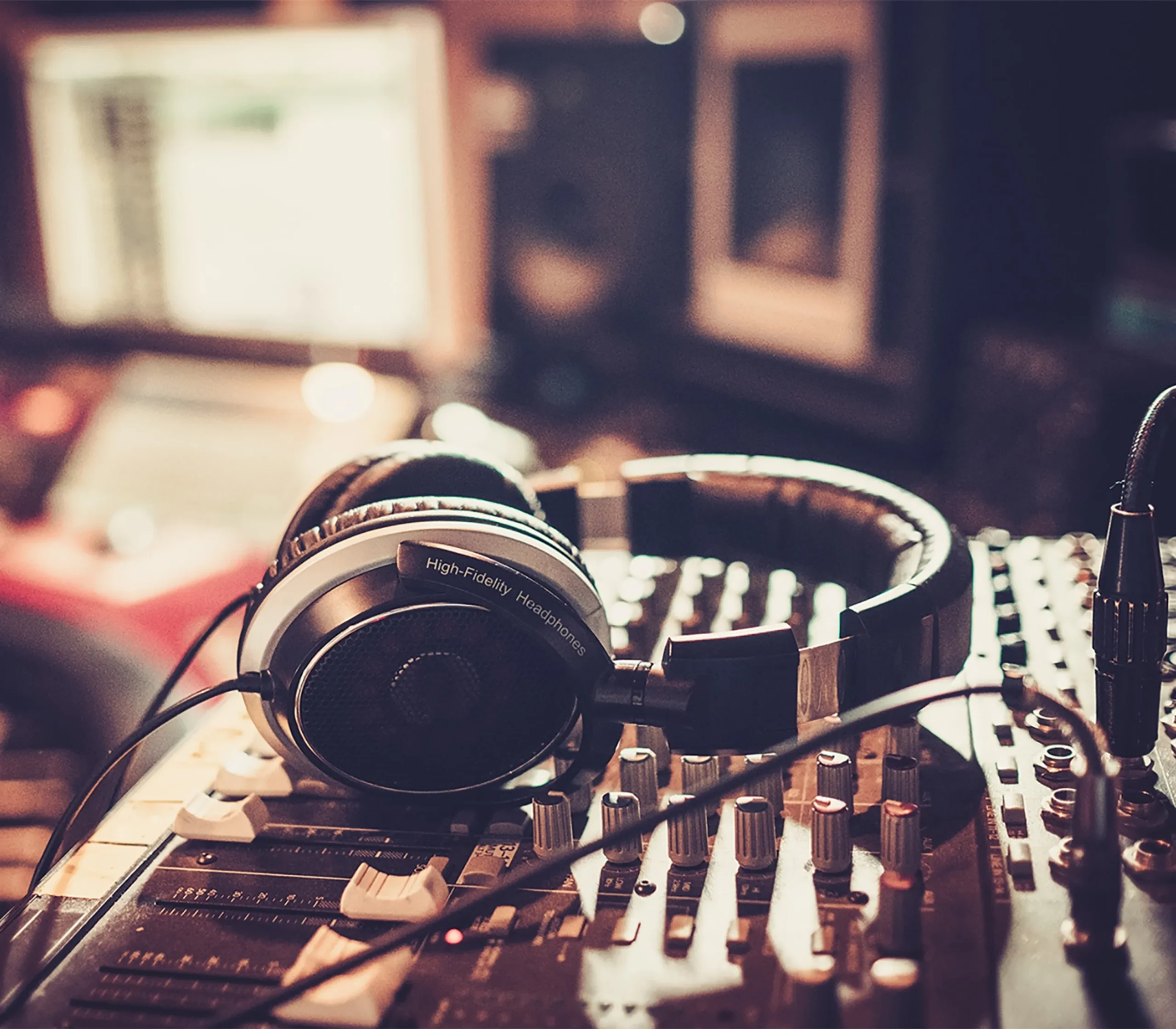
The best studio headphones 2026 has to offer share one defining trait: honesty. Where consumer headphones flatter your music with boosted bass and sparkly treble, studio headphones are built to tell you the truth about your mix. If a frequency is muddy, harsh, or missing, a proper pair of studio cans will show it — and that is exactly what you need when recording, mixing, or mastering.
Choosing the right pair comes down to a flat, neutral frequency response, comfort that lasts through long sessions, the right back design (open or closed) for your job, and an impedance your gear can actually drive. Below are twelve studio headphones that earn their place in real studios — from sub-$100 classics to flagship references that rival nearfield monitors. Every pick is wired: in the studio, reliability and zero latency still matter more than convenience.
Quick Picks: The Best Studio Headphones 2026 at a Glance
- Best overall for tracking and mixing: Beyerdynamic DT 770 Pro
- Best reference for serious mixing: Sennheiser HD 600
- Best open-back value: Audio-Technica ATH-R70x
- Best budget studio headphones: Sony MDR-7506
- Best versatile budget pick: Audio-Technica ATH-M50x
- Best closed-back under $200: AKG K371
- Best high-end reference: Sennheiser HD 800 S
- Best for critical listening: Beyerdynamic DT 1990 Pro
- Best for long fatigue-free sessions: Sennheiser HD 650
- Best for wide soundstage: AKG K712
The 12 Best Studio Headphones 2026 — Full Reviews
1. Beyerdynamic DT 770 Pro — Best Overall for Tracking and Mixing
The Beyerdynamic DT 770 Pro has been a studio fixture for decades, and in 2026 it remains one of the safest recommendations you can make. These closed-back headphones combine excellent isolation with a detailed, balanced presentation, making them equally useful for tracking vocals in the booth and for general mixing work.
Frequency response spans 5 Hz to 35 kHz, clean through the mids with a slight lift in the highs — a signature Beyerdynamic trait that helps small details cut through. Three impedance options exist (32, 80, and 250 ohms); the 80-ohm version is the most flexible for home studios, while the 250-ohm model rewards a proper headphone amplifier. The velour pads are soft, the build is famously rugged, and replacement parts are widely available.
Specs: Closed-back · 5 Hz – 35 kHz · 32/80/250 Ω · Price: around $160
Verdict: The definitive all-rounder — tracking, mixing, and monitoring without complaint.
2. Sennheiser HD 600 — Best Reference for Serious Mixing
If there is one pair engineers trust to tell the truth, it is the Sennheiser HD 600. This open-back classic is the reference point for neutral sound: clear, distortion-free audio with a flat response that makes mix decisions translate reliably to other systems. Vocals sound lifelike, which is why so many engineers reach for the HD 600 on vocal-heavy music.
The trade-offs are well understood. At 300 ohms, these need a dedicated amplifier or capable interface. The open-back design leaks sound and offers no isolation, so they belong in a quiet mixing room. In return you get velour pads, long-session comfort, and a fully repairable construction with spare parts still supplied.
Specs: Open-back · 12 Hz – 39 kHz · 300 Ω · Price: around $449
Verdict: The industry’s neutral yardstick for serious mixing and mastering.
3. Audio-Technica ATH-R70x — Best Open-Back Value
The Audio-Technica ATH-R70x pairs an extremely flat response with a wide-open soundstage and featherlight comfort, delivering accuracy that rivals headphones costing several times more. The 45 mm dynamic drivers cover 5 Hz to 40 kHz, and imaging is strong enough for precise panning decisions.
A spring-loaded wing support system adjusts automatically to your head, and the whole pair is so light you can forget you are wearing it. The one demand is power: with impedance around 470 ohms, a capable amplifier or interface is mandatory. The detachable, replaceable cable keeps long-term maintenance simple.
Specs: Open-back · 5 Hz – 40 kHz · 470 Ω · 45 mm dynamic · detachable cable · Price: around $349
Verdict: Flagship-grade neutrality for mid-range money — the smartest open-back buy if you own decent amplification.
4. Sony MDR-7506 — Best Budget Studio Headphones
The Sony MDR-7506 is the best-known budget studio headphone in history, found in recording studios, broadcast facilities, and editing suites worldwide. It delivers a powerful, detailed sound with strong mids and highs that expose problems in a recording instantly.
These are closed-back, lightweight, and foldable, with a coiled cable that stretches across the studio. At 63 ohms they run happily from almost anything — laptop, interface, or portable recorder. The presentation is slightly forward in the upper mids rather than perfectly flat, which is genuinely useful for spotting sibilance and harshness. Decades of production mean replacement pads are cheap and plentiful.
Specs: Closed-back · 10 Hz – 20 kHz · 63 Ω · foldable · coiled cable · Price: around $99
Verdict: The industry-standard budget pick — no other sub-$100 headphone is this useful in a real studio.
5. Audio-Technica ATH-M50x — Best Versatile Budget Pick
The Audio-Technica ATH-M50x is arguably the best-selling studio headphone of all time: closed-back isolation, punchy detailed sound, and a foldable design that works in the booth and on the commute. It ships with three detachable cables and a carrying pouch.
The 45 mm drivers deliver tight bass, clear mids, and crisp highs, though the low end is slightly emphasised compared with truly flat references — these lean towards production rather than precise mastering. At 38 ohms they are easy to drive, and the 90-degree swivelling cups make single-ear monitoring simple for tracking.
Specs: Closed-back · 15 Hz – 28 kHz · 38 Ω · 45 mm drivers · foldable · detachable cables · Price: around $149
Verdict: The best all-rounder under $150 — a studio workhorse that doubles as an everyday headphone.
6. AKG K371 — Best Closed-Back Under $200
The AKG K371 has become one of the most recommended closed-back studio headphones, thanks to a wide, largely neutral response tuned to the Harman target curve — research-backed tuning most listeners perceive as natural. With a 5 Hz to 40 kHz range and 32-ohm impedance, it sounds detailed and open for a sealed design while running from a phone, laptop, or interface.
The K371 folds flat for transport and ships with three detachable cables. There is a gentle emphasis at the frequency extremes versus strict reference cans, but it is far less coloured than most closed-back alternatives at this price.
Specs: Closed-back · 5 Hz – 40 kHz · 32 Ω · foldable · detachable cables · Price: around $149
Verdict: The modern closed-back reference under $200 — neutral, portable, and easy to drive.
7. Sennheiser HD 800 S — Best High-End Reference
The Sennheiser HD 800 S is the closest headphones get to sitting in front of well-set-up studio monitors. Its enormous soundstage and precise stereo imaging make panning, reverb, and depth decisions feel tangible, while the response stays admirably controlled from 4 Hz to 51 kHz.
These are unapologetically demanding: 300-ohm impedance, a premium price, and a presentation so revealing that poor recordings have nowhere to hide. Comfort is excellent once dialled in, and build quality matches the flagship billing. For final mastering checks in headphones, there is no better tool.
Specs: Open-back · 4 Hz – 51 kHz · 300 Ω · 56 mm drivers · detachable cable · Price: around $1,699
Verdict: The reference against which all flagship studio headphones are judged.
8. Beyerdynamic DT 1990 Pro — Best for Critical Listening
The Beyerdynamic DT 1990 Pro takes the beloved DT range into flagship territory. Built around 45 mm Tesla drivers, it delivers exceptional transient response and detail across 5 Hz to 40 kHz — from sub-bass rumble to airy highs. The open-back design gives an analytical, upfront presentation ideal for dissecting a mix layer by layer.
A standout feature is the two included earpad sets — one voiced balanced, the other analytical — letting you tailor the signature to the task. Build quality is superb with nearly every part replaceable, and 250-ohm impedance keeps performance consistent on proper studio amplification.
Specs: Open-back · 5 Hz – 40 kHz · 250 Ω · Tesla.45 drivers · two earpad sets · Price: around $549
Verdict: A precision instrument for critical listening — built for finding flaws in a mix.
9. Sennheiser HD 650 — Best for Long Fatigue-Free Sessions
The Sennheiser HD 650 has been the mixing headphone of choice for generations of engineers. Its open-back design produces a smooth, relaxed, transparent sound that avoids listening fatigue across marathon sessions — you can work for hours without your ears tiring, which is half the battle in mixing.
The voicing is slightly dark in the low end rather than ruthlessly flat, but mids are natural and the treble gentle. At 300 ohms you will want an amplifier. Velour pads and a lightweight frame keep comfort high, and like its siblings it is fully serviceable. Note that unlike Sennheiser’s consumer flagship — our Sennheiser Momentum 5 review covers the ANC model — the HD 650 carries no noise cancelling or DSP, just an honest signal path.
Specs: Open-back · 10 Hz – 41 kHz · 300 Ω · velour pads · detachable cable · Price: around $499
Verdict: The comfortable classic — gentle voicing and wearability for engineers who mix all day.
10. AKG K712 — Best for Wide Soundstage
The AKG K712 is the open-back pick for anyone who values space and comfort. Its wide, airy soundstage and flat 10 Hz to 39.8 kHz response make it an excellent reference for panning decisions and spatial mixing, while the self-adjusting headband and velour pads rank among the most comfortable in the business.
Crucially, the 62-ohm impedance means most audio interfaces can drive the K712 properly without a dedicated amplifier — a real advantage for bedroom producers. The open design offers no isolation, so keep these for quiet mixing rooms. A detachable cable rounds out a package built for eight-hour sessions.
Specs: Open-back · 10 Hz – 39.8 kHz · 62 Ω · self-adjusting headband · detachable cable · Price: around $359
Verdict: The comfort king of open-backs — wide imaging, easy to drive, wearable all day.
11. Shure SRH1840 — Best Neutral Open-Back for Analytical Mixing
Shure’s flagship open-back delivers a neutral, transparent sound with crystal-clear detail — exactly the honesty mixdowns require — in a lightweight frame that stays comfortable across long sessions. With a 10 Hz to 30 kHz response and 65-ohm impedance, it is notably easier to drive than the 300-ohm Sennheiser references, making it practical for modest setups.
The velour pads and smart headband distribute pressure evenly. The soundstage is a touch more boxed-in than the class leaders, and the leather headband is not replaceable, but for analytical work the SRH1840’s clarity more than compensates.
Specs: Open-back · 10 Hz – 30 kHz · 65 Ω · 40 mm drivers · detachable cable · Price: around $499
Verdict: A precise, easy-to-drive open-back for analytical mixing — a strong alternative to the usual suspects.
12. Beyerdynamic DT 880 Pro — Best Semi-Open All-Rounder
The Beyerdynamic DT 880 Pro blends the airy soundstage of open headphones with some of the focus of a closed pair. The result is a nominally flat response with excellent midrange clarity — many vocal engineers consider these the go-to for mixing vocals — and minimal harmonic distortion.
At 250 ohms these need proper amplification, and the all-replaceable construction means they can be maintained for years. There is a slight peak in the upper treble that can sound sibilant on bright material, but once you learn its character, the DT 880 Pro is one of the most dependable mixing tools under $200.
Specs: Semi-open · 5 Hz – 35 kHz · 250 Ω · replaceable parts · Price: around $199
Verdict: The best of both worlds under $200 — superb for vocal mixing and general studio duties.
Open-Back vs Closed-Back: Which Is Better for Studio Work?
This is the most important decision when buying studio headphones, and the answer depends on the job. Open-back headphones let air flow through the ear cups, producing a more natural, spacious sound with a wide soundstage and minimal resonance. That openness is why engineers prefer them for mixing and mastering: you get the purest, most neutral response the drivers can produce.
The cost is isolation. Open-back headphones leak sound in both directions — you will hear the room, and the room will hear your headphones. That rules them out for recording vocals or tracking near live microphones, where bleed ruins takes. Closed-back headphones seal the driver in a solid shell, providing the isolation tracking demands, and they tend to be more durable since the drivers are protected.
Closed designs do colour the sound slightly: the sealed chamber inevitably emphasises some frequencies. So the practical rule most studios follow is simple — open-back (or semi-open) for mixing and mastering, closed-back for recording, tracking, and monitoring. Many professionals own one of each.
How Are Studio Headphones Different from Regular Headphones?
Regular consumer headphones are tuned for enjoyment: boosted bass, sparkly treble, sometimes digital processing to make music sound exciting. Great for listening, terrible for mixing — a mix that sounds perfect on flattering headphones can fall apart everywhere else.
Studio headphones do the opposite. They aim for a flat, uncoloured response so what you hear matches the actual signal. They prioritise detail retrieval over fun, comfort over style, and durability over fashion — replaceable cables, serviceable pads, and robust headbands are standard. They are also overwhelmingly wired: Bluetooth introduces latency and compression, both unacceptable when timing and precision matter. Studio pairs exist to work, not to entertain.
What to Look for When Buying Studio Headphones 2026
Frequency Response
The headline spec of any studio headphone is its frequency response: the range it can reproduce, written like 5 Hz – 40 kHz. Human hearing covers roughly 20 Hz to 20 kHz, so any pair covering that range is technically sufficient. For mixing, the range matters less than its shape. You want a “flat” response — every frequency reproduced at equal loudness — so the headphones do not mislead you into cutting bass that is fine or boosting treble that is already harsh.
Impedance and Power
Impedance, measured in ohms (Ω), describes how much power headphones demand. Low-impedance pairs (below about 50 Ω) work with almost anything — phones, laptops, portable recorders. High-impedance models (250 Ω and above) need a dedicated headphone amplifier or capable audio interface; plugged straight into a laptop they sound quiet and lifeless. Check this spec against your setup before buying — it is one of the most common beginner mistakes.
Comfort and Durability
Mixing sessions run for hours, so comfort is a working requirement, not a luxury. Look for lightweight frames, soft velour or memory-foam pads, and headbands that distribute pressure evenly. Glasses wearers should favour open-back models with gentle clamping force. On durability, the best studio headphones are built to be repaired, not replaced: detachable cables, replaceable pads, and spare parts availability turn a purchase into a decade-long investment.
Sensitivity, Drivers, and Cables
Sensitivity (in decibels) indicates how loud headphones get from a given power source, though cross-brand comparisons are unreliable with no standardised measurement. Driver size typically ranges from 40 to 55 mm; larger drivers play louder but may be less refined in the highs. Dynamic drivers dominate studio headphones for their balance of accuracy and price. Always favour detachable cables: the cable is the part most likely to fail, and a replaceable one doubles a headphone’s lifespan.
Can You Produce Professional Mixes on Headphones Alone?
Yes — with the right headphones and enough power to drive them, professional-quality results are absolutely achievable. Many touring electronic producers mix entirely on headphones, and modern reference headphones give you the feedback needed to master to a professional level.
The caveats matter. Some headphones colour the sound past what the signal contains, so learn your pair’s character and avoid overcompensating. Headphones also present stereo differently from speakers (no room, no crossfeed), so always check finished mixes on speakers too — a good pair of home speakers, such as those in our best Bluetooth speakers 2026 roundup, plus earbuds, car stereos, and laptop speakers. Testing across systems is how you confirm a mix truly translates.
Safely Mixing with Headphones
Headphones put drivers millimetres from your eardrums, so hearing protection is part of the job. Keep monitoring at or below 85 dB — roughly an alarm clock heard from a foot away — and take regular breaks, because even moderate levels cause damage over long exposures. Your ears are the most important gear you own. If you constantly turn up, your headphones may be underpowered or poorly isolating — fix the monitoring chain, not the volume knob.
Our Verdict on the Best Studio Headphones 2026
For most people building a studio in 2026, the Beyerdynamic DT 770 Pro remains the smartest single purchase: closed-back isolation, honest sound, and a price that leaves budget for an interface upgrade. If your work is mixing and mastering in a quiet room, step up to open-back references like the Sennheiser HD 600 or the remarkable-value Audio-Technica ATH-R70x. On a tight budget, the Sony MDR-7506 and AKG K371 prove accurate monitoring does not require deep pockets.
Whichever pair you choose, remember headphones are a tool, not a crutch. Learn their sound, check mixes on other systems, protect your hearing, and let your ears — not the spec sheet — have the final say.

Frequently Asked Questions (FAQs)
Open-back or closed-back headphones — which are better for studio work?
Neither is universally better; they serve different jobs. Open-back headphones offer a wider, more natural soundstage and a flatter response, making them the better choice for mixing and mastering in a quiet room. Closed-back headphones provide isolation, essential for recording and tracking where microphone bleed must be avoided. Most serious studios keep one of each: closed for the booth, open for the desk.
How are studio headphones different from regular headphones?
Regular headphones are tuned to sound pleasant, usually with boosted bass and treble. Studio headphones are engineered for accuracy: a flat, neutral frequency response that reveals exactly what is in your recording, without flattery. They also prioritise long-session comfort, repairability (replaceable cables and pads), and wired reliability — qualities that matter more in a studio than style or wireless features.
Are studio headphones comfortable to wear?
The good ones are designed for long wear: large over-ear cups with velour or memory-foam pads, lightweight frames, and carefully tuned clamping force. Open-back models tend to feel airier and less fatiguing over hours, while self-adjusting headbands distribute weight automatically. Glasses wearers should look for gentle clamp and deep pads, as on the Sennheiser HD 650 or AKG K712.
How durable are studio headphones?
Professional studio headphones are among the most durable audio gear you can buy. Brands like Beyerdynamic and Sennheiser design models with replaceable cables, ear pads, and headband parts, so a well-maintained pair can last a decade of daily use. Closed-back models are generally tougher since their drivers are sealed. Detachable cables are the most valuable durability feature, as cables fail first.
Can I produce professional-quality mixes using only headphones?
Yes, with proper studio headphones and enough clean power to drive them. Countless professionals mix and master on headphones, especially while travelling. Learn your headphones’ sound signature so you do not overcompensate for their quirks, and verify finished mixes on other playback systems — monitors, speakers, earbuds, car stereos — before release.
Do I need a headphone amplifier for studio headphones?
It depends on impedance. Headphones below about 50 ohms (Sony MDR-7506, ATH-M50x, AKG K371) work fine from laptops, phones, and most interfaces. High-impedance models — 250 ohms and up, like the Sennheiser HD 600, HD 650, and Beyerdynamic DT 880 Pro — need a dedicated amp or powerful interface output to reach full volume and dynamics. Without one, they sound quiet and flat.
Can I use earbuds or wireless headphones for mixing and mastering?
Earbuds are not recommended: even high-end models cannot match over-ear studio headphones for detail, soundstage, and consistent response. Wireless headphones introduce Bluetooth latency and compression that compromise timing accuracy, though ANC models can work for casual reference checks. For critical work, wired over-ear studio headphones remain the standard.
Are headphones better than studio monitors for mixing?
A well-treated room with quality monitors is still the ideal environment, since monitors interact with the room the way listeners’ speakers will. But monitors are expensive, immobile, and useless in an untreated bedroom. Headphones are portable, affordable, immune to room problems, and capable of professional results — which is why most engineers use both, mixing on one and verifying on the other.
What does a flat frequency response mean, and why does it matter?
A flat response means the headphones reproduce every frequency — bass, mids, treble — at equal loudness, without boosting or cutting anything. It matters because mixing decisions are based on what you hear: if your headphones exaggerate the bass, you will mix the bass too quiet, and the track will sound thin everywhere else. Flat-response headphones tell the truth, so mixes translate reliably.
What is the safest volume for mixing with headphones?
Keep monitoring at or below 85 dB and take regular listening breaks. Even moderate volumes damage hearing permanently with long exposure — and damaged hearing ends a mixing career. If a mix only sounds right when loud, the problem is usually the balance, not the volume. Protect your ears first; they are the one piece of studio gear you cannot replace.
