

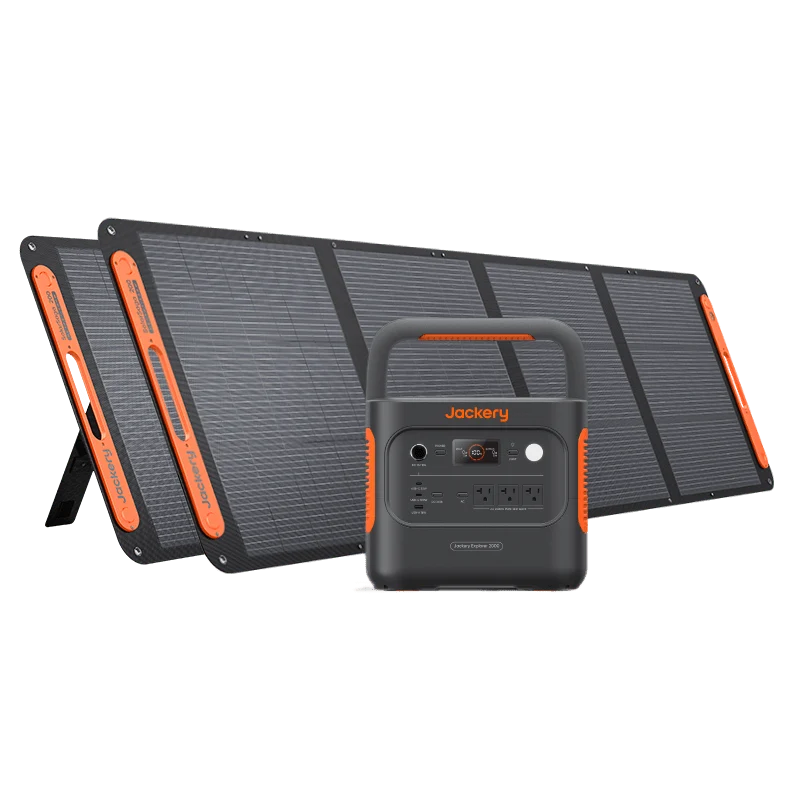
If you are shopping for the best portable power stations 2026 has to offer, the choice has never been better — or more confusing. Modern units combine silent, fume-free battery power with AC and USB output strong enough to run fridges, power tools and home offices, and the current generation of lithium iron phosphate (LiFePO4) cells means they recharge in under an hour and survive thousands of charge cycles. This guide compares twelve of the strongest models from Jackery, EcoFlow, Bluetti, Anker SOLIX, DJI and Goal Zero on capacity, output, solar charging, weight and real-world value, so you can match a station to camping trips, van life, RV use or home blackout backup.
Our Quick Picks: Best Portable Power Stations 2026
- Best overall: Bluetti Elite 200 V2 — 2,073Wh, 2,600W output, 6,000+ cycle LiFePO4 battery
- Best all-rounder: Anker SOLIX C1000 — 1,056Wh, 1,800W, 58-minute full recharge
- Best fast charging: Anker SOLIX C1000 Gen 2 — 1,024Wh, 2,000W, 49-minute UltraFast charge
- Best value: Jackery Explorer 1000 v2 — 1,070Wh, 1,500W, just 24 lb
- Best UPS pick: EcoFlow DELTA 3 Classic — under-10ms switchover, 0–80% in 45 minutes
- Best 2kWh home backup: Jackery Explorer 2000 v2 — 2,042Wh with 20ms UPS
- Best whole-home backup: Jackery HomePower 3000 — 3,072Wh, 3,600W, ZeroDrain storage tech
- Best high capacity: EcoFlow DELTA 3 Ultra Plus — 3,072Wh expandable to 11kWh
- Best for camping: Anker SOLIX C800 Plus — 768Wh with a built-in camp lantern
- Best for off-grid living: Bluetti Apex 300 — expandable to 58kWh capacity
- Best for extreme cold: Bluetti Pioneer Na — sodium-ion cells that work at −13°C
- Best quiet performer: DJI Power 2000 — 2,048Wh, 3,000W output, whisper-quiet charging
How We Chose the Best Portable Power Stations 2026
Every pick below was judged on the same six criteria: usable capacity in watt-hours, continuous AC output in watts, recharge speed from a wall outlet and solar panels, weight and portability, battery chemistry and cycle life, and honest price per watt-hour. Manufacturers’ published specifications were cross-checked against independent hands-on testing wherever available, and only models confirmed in production in 2026 made the cut — many older NMC-based stations from 2019–2022 have been discontinued or lost brand support, so they are excluded no matter how cheap the remaining stock looks.
Testing focused on realistic loads rather than spec-sheet maximums: charging laptops and phones, running a portable fridge in a van conversion, keeping a Wi-Fi router and lights alive through a simulated outage, and measuring how quickly each unit refilled from empty. Durability was weighed too — a station that lives in a car boot or on a campsite needs solid build quality, not flimsy plastic. Just as important as raw numbers, we checked app quality, port selection, UPS switchover behaviour and how each model behaves when pushed near its inverter limit.
The Best Portable Power Stations 2026 Reviewed
Best Overall: Bluetti Elite 200 V2
Capacity: 2,073Wh LiFePO4 · Output: 2,600W continuous (3,900W power-lifting mode) · Weight: 53.4 lb · Recharge: 0–80% in 50 minutes (AC) · Price: around $1,699
The Elite 200 V2 earns the top spot by doing nearly everything well. Its 2,073Wh battery sits in the sweet spot for households — enough to run a full-size fridge, a router and several lights for well over half a day — while the 2,600W inverter handles high-draw appliances such as an electric grill, which testers ran for about an hour straight. A compact, boxy chassis with sturdy integrated handles keeps it manageable despite the 53-pound weight, and the build quality feels a class above most rivals.
Battery longevity is the standout figure: Bluetti rates the LiFePO4 cells at 6,000+ cycles to 80% capacity, roughly double many competitors, and claims a 17-year design life. Recharging is brisk — 0 to 80% in 50 minutes from a wall outlet — and the 1,000W solar input accepts a serious rooftop or ground array for off-grid use. A well-designed app covers monitoring and remote control, and the port spread (AC, USB-A, USB-C and a 120W car port) leaves little to complain about. The only real compromise is weight: this is a garage-to-living-room carry, not a trail companion, and it cannot stretch to whole-home loads without help.
Best All-Rounder: Anker SOLIX C1000
Capacity: 1,056Wh LiFePO4 · Output: 1,800W (2,400W SurgePad) · Weight: 28.7 lb · Recharge: full AC charge in 58 minutes · Solar input: 600W · UPS: under 20ms
The SOLIX C1000 is the cleanest one-box answer for most buyers. Anker’s spec sheet promises 1,056Wh of capacity with an 1,800W continuous inverter, a 58-minute full recharge from a wall socket, and a 3,000-cycle rating to 80% with a 10-year design life — numbers that land it squarely in the sweet spot for home backup, RV weekends and quiet campsites alike. At 28.7 lb it is genuinely portable without feeling flimsy.
The 600W solar input can refill the unit in about 1.8 hours under good sun, and the under-20ms UPS switchover makes it a credible buffer for a modem, router or small office setup during brief outages. Eleven ports mean you can run a laptop, phones, a fan and lights simultaneously without juggling adapters. Independent testers consistently rank it at or near the top of the roughly 1kWh class. The honest flaw: the cooling fans are audible enough that reviewers mention them, which matters if the station lives in a bedroom during an outage.
Best Fast Charging: Anker SOLIX C1000 Gen 2
Capacity: 1,024Wh LiFePO4 · Output: 2,000W (3,000W surge) · Weight: 24.9 lb · Recharge: 49 minutes in UltraFast mode · UPS: 10ms · Price: around $799
The Gen 2 revision takes the already-excellent C1000 formula and turns the speed dial up. Output climbs to 2,000W continuous with a 3,000W surge rating, and Anker’s UltraFast mode refills the 1,024Wh battery in about 49 minutes when cell temperature is above 20°C — the fastest wall recharge in this class. A 10ms UPS switchover lets it sit inline with computers and networking gear without noticeable interruption.
Despite the extra muscle it is lighter than its predecessor at 24.9 lb, roughly the size of a shoebox and easy to stash in a van, truck or cupboard. The 1,024Wh capacity will keep a fridge, lights and devices in a small camper powered for a full day between charges, or cover a few essentials when the lights go out at home. It is not meant for RV-scale loads or large appliances, but as a fast-turnaround portable unit it is difficult to beat for the money.
Best Value: Jackery Explorer 1000 v2
Capacity: 1,070Wh LiFePO4 · Output: 1,500W (3,000W surge) · Weight: 24 lb · Recharge: 1 hour in emergency-charge mode · Warranty: 5 years · Cycles: 4,000
Jackery’s Explorer 1000 v2 slightly edges the Anker on capacity while coming in lighter, and it does so at a price that undercuts most of the 1kWh competition. You get 1,070Wh, a 1,500W continuous inverter and a 4,000-cycle LiFePO4 rating backed by a five-year warranty — strong longevity figures for the money.
The key trade-off is inverter size: 1,500W is plenty for laptops, CPAP machines, fans, small kitchen loads and most RV accessories, but the Anker and EcoFlow rivals publish 1,800W+ continuous ratings, so check your heaviest load before committing. Emergency-charge mode fills the battery in about an hour, and dual 100W USB-C ports handle modern laptops without AC bricks. A foldable carry handle and 24-pound weight make it one of the easiest 1kWh units to move around. If value and low weight matter more than maximum output, this is the pick.
Best UPS Pick: EcoFlow DELTA 3 Classic
Capacity: 1,024Wh LiFePO4 · Output: 1,800W (3,600W surge) · Weight: about 27 lb · Recharge: 0–80% in 45 minutes (X-Stream) · UPS: under 10ms
If the station will sit between the wall and sensitive electronics, UPS switchover speed matters — and the DELTA 3 Classic’s under-10ms transfer is the fastest here, genuinely usable as a desktop UPS for most computer setups. EcoFlow’s X-Stream AC charging takes it from empty to 80% in 45 minutes, so topping up between storm bands or before a trip is never a chore.
The 1,024Wh capacity and 1,800W inverter match the class leaders, and a 100W USB-C port covers direct laptop charging. It is a touch heavier than the newest Anker at around 27 lb, but still very much a one-person carry. For a unit that lives under a desk on weekdays and rides along for backup power on weekends, this is the most UPS-focused choice available.
Best 2kWh Home Backup: Jackery Explorer 2000 v2
Capacity: 2,042Wh LiFePO4 · Output: 2,200W · Weight: about 39.5 lb · Recharge: 0–80% in 66 minutes · UPS: 20ms
The Explorer 2000 v2 hits a rare balance of runtime and portability in the 2kWh class. At under 40 pounds it is one of the lightest 2kWh LiFePO4 stations available, yet it kept a full-size fridge, Wi-Fi router and several lights running for over 12 hours in a simulated outage test. A 20ms UPS auto-switch keeps modems and medical devices online through brief blackouts.
Jackery’s silent charging mode runs at just 30dB — genuinely sleep-friendly for flats and RVs — and the compact, EV-grade cell-to-body design fits easily in a car boot. Solar charging works with dual 200W panels for a full refill in roughly six hours of good sun. The compromises are modest: only three AC outlets for the class, and the bundled panels add bulk when travelling. For fast-charging backup power with near-silent operation, it is a standout.
Best Whole-Home Backup: Jackery HomePower 3000
Capacity: 3,072Wh LiFePO4 · Output: 3,600W (7,200W surge) · Weight: 59.5 lb · Price: around $2,499
The HomePower 3000 is built for one job: keeping a house running through a long outage. Its 3,600W inverter and 7,200W surge rating will start and run large appliances, and the 3,072Wh battery can power a fridge for up to two days. What sets it apart is Jackery’s ZeroDrain technology, which prevents the slow self-discharge that used to leave stored stations flat when you finally needed them — a genuinely important reliability feature for emergency gear.
Despite the big numbers it is smaller and lighter than Jackery’s own 2000 Plus, with a squared-off design that stores neatly and sturdy handles for the 59.5-pound lift. It is pricey, and at this weight you will not be carrying it far, but for whole-home backup that is ready the moment the grid fails, it is among the most dependable options of 2026.
Best High Capacity: EcoFlow DELTA 3 Ultra Plus
Capacity: 3,072Wh, expandable to 11kWh · Output: 3,600W (7,200W surge, 4,600W X-Boost) · Weight: 74.2 lb · Recharge: 89 minutes · Price: around $1,599
Most people do not need a station this big — but if you do, the DELTA 3 Ultra Plus is exceptional. The base 3,072Wh expands to a huge 11,000Wh with extra batteries, and output ranging from 3,600W to 7,200W will run appliances, power tools or an air conditioner without breaking a sweat. Storm Guard Mode watches weather forecasts and tops the unit up automatically when severe weather approaches, with a full charge possible in as little as 89 minutes.
A telescoping handle and wheels make the 74-pound unit movable, and thoughtful touches like sliding rear port covers show real design care. It is heavy and not cheap, especially with expansion batteries, but for a big, reliable, high-spec station that can bridge multi-day outages, EcoFlow’s latest is hard to fault.
Best for Camping: Anker SOLIX C800 Plus
Capacity: 768Wh · Output: 1,200W (1,600W surge) · Weight: 24 lb · Price: around $649.99
Compact, light and thoughtfully camp-focused, the C800 Plus is the station to throw in the car for weekends outdoors. Its shoebox size and 24-pound weight pack easily, yet 768Wh is plenty to keep phones, cameras, lights and a small fan charged for a trip. The party trick is a collapsible, multi-setting camp lantern stored in the station body — a smart feature no rival offers.
Port selection is generous for the size, the companion app handles remote control, and input/output rates are strong for a mid-size unit. It is far too small for RV duty or home backup, but for general camping it is a very well-thought-out power box. Campers who want something even lighter for day hikes should compare pocketable options in our roundup of the best power banks of 2026.
Best for Off-Grid Living: Bluetti Apex 300
Capacity: 5,529.6Wh, expandable to 58kWh · Output: 3,800W, expandable to 11.5kW · Solar input: up to 30,000W with SolarX · Weight: 83.8 lb inverter / 65.4 lb battery · Price: around $3,499
Most portable stations are designed for short-term, low-wattage use. The Apex 300 goes the other direction entirely: capacity expands to a staggering 58,000Wh, output to 11,500W, and — with Bluetti’s SolarX 4K charge controller — solar input to 30,000W, enough for a genuine off-grid solar array. Even without the SolarX, the standard dual 1,200W solar input is excellent.
This is not portable in any normal sense — the inverter and battery modules weigh over 80 and 65 pounds respectively — but for cabins, workshops and full off-grid electrification it is a modular system that grows with your needs. It is very expensive once expanded, but nothing else in this guide scales this far.
Best for Extreme Cold: Bluetti Pioneer Na
Capacity: 900Wh sodium-ion · Output: 1,500W (2,500W surge) · Weight: 35.3 lb · Recharge: 45 minutes · Price: around $1,299
Lithium batteries hate the cold — most cannot charge below 5°C. The Pioneer Na, the first sodium-ion power station, rewrites that rule: it charges at temperatures as low as 5°C, discharges down to −13°C and stores down to −20°C. If you camp, work or live somewhere winters bite, that can be the difference between power and a dead brick.
Sodium-ion chemistry is inherently heavier than lithium, so Bluetti has struck a sensible balance: 900Wh and 1,500W in a compact 35-pound package, with a quick 45-minute recharge. It will keep a fridge, router, TV and laptop going for several hours. Not the highest specs on this page, but in freezing conditions it is simply in a class of its own.
Best Quiet Performer: DJI Power 2000
Capacity: 2,048Wh LiFePO4 · Output: 3,000W · Weight: about 49 lb · Recharge: fast AC top-up · Price: around $1,100
DJI’s entry into power stations brings drone-maker engineering to backup power, and the Power 2000 stands out for fast charging, expansion options and near-silent operation. The 2,048Wh battery and 3,000W continuous output sit at the strong end of the 2kWh class, and reviewers single out how quietly it charges — a real advantage for indoor use, bedrooms and noise-sensitive campsites.
At around 49 pounds it is lighter than most 2kWh rivals, and expansion batteries extend runtime for longer outages. If your priority is a powerful station that refills quickly and stays unobtrusive while doing it, the DJI deserves a place on the shortlist.
Buying Guide: What to Check Before You Buy
What Size Power Station Do You Need?
Capacity is measured in watt-hours (Wh) — think of it as the size of the fuel tank. One watt-hour equals one watt flowing for one hour, so a 100W bulb on a 500Wh station stays lit for about five hours. The maths is simple: add up the watts of everything you will run, multiply by the hours you need them, and buy the smallest station that clears that total with margin.
In practice, a station under 1,000Wh keeps phones, laptops, lights and camera batteries charged — ideal for camping and short trips. A 1,000–1,500Wh unit is the minimum sensible size for multi-day road trips or running a 12V fridge between charges. For a full-size refrigerator, power tools or a home office, look at 2,000Wh and up, ideally with solar input or expansion batteries, because a fridge compressor averaging 150W over a day consumes roughly 3,600Wh. Always overestimate: real-world loads drain faster than spec sheets suggest, and inverter losses eat around 10–15% of the stated capacity.
Battery Chemistry: LiFePO4 vs NMC vs Sodium-Ion
Nearly every current recommendation uses lithium iron phosphate (LiFePO4) cells, and for good reason. LiFePO4 stations are typically rated for 3,000–6,000 charge cycles to 80% capacity — ten times the roughly 500–800 cycles of the older NMC (nickel manganese cobalt) chemistry found in early power stations. They are also more heat-stable, which matters for gear stored in garages and car boots.
The practical result is longevity measured in decades rather than years: well-kept LiFePO4 units carry 10- to 17-year design-life claims and five-year warranties as standard. The notable exception on this page is the Bluetti Pioneer Na, which uses sodium-ion chemistry — slightly heavier than lithium, but able to charge, discharge and store energy at temperatures where lithium cells simply give up. Avoid remaining stock of old NMC models unless you understand exactly what you are buying; many have been discontinued with uncertain support.
Recharging: Wall, Solar and Car
Most stations recharge three ways: a wall outlet (fastest), solar panels (free off-grid top-ups, but slower and weather-dependent), and a 12V car socket (convenient, though often unreliable and slow). What matters is the input rating in watts — a station with 1,000W+ of AC input can refill a 2kWh battery in around an hour, while a 100W-limited unit takes all day.
Solar input deserves its own check if you camp or prepare for outages: look at the maximum solar watts the station accepts (600W on the Anker C1000, 1,000W on the Bluetti Elite 200 V2) and whether panels are bundled or sold separately — “solar generator” usually means station plus compatible panels, and the pair is often priced together. Bluetti’s Charger 1 DC adapter is worth noting for van lifers, as it makes vehicle charging far faster than a standard car socket.
Output Power, Surge Modes and UPS Switchover
Continuous output in watts determines what you can run at once; surge wattage covers the brief spike when motors and compressors start. As a rule of thumb, buy an inverter rated well above your heaviest single load — 1,000W is the practical minimum, and most picks here deliver 1,500–3,600W.
Treat boost modes (SurgePad, X-Boost, power-lifting) with care: they stretch an inverter to run resistive loads like kettles and heaters, but they do not turn a small inverter into a motor-starting monster. UPS switchover time matters if the station sits between the wall and your gear: under 10ms (EcoFlow DELTA 3 Classic) behaves like a true desktop UPS for computers, while 20ms (Anker, Jackery) is fine for routers, modems and most household electronics.
Portability, Ports and Expandability
The bigger the battery, the heavier the box — that trade-off is unavoidable. For camping and van life, the 24–30 lb 1kWh class (about one to two stacked shoeboxes) is the sweet spot; beyond 50 lb you are looking at garage-to-room carries, and the 70 lb+ whole-home units need wheels and telescoping handles. Match the weight to how often you will actually move it.
On ports, insist on a mix: several AC outlets, USB-C with proper Power Delivery wattage for laptops, USB-A for legacy gear, and a 12V car-style DC outlet for fridges and air pumps. Finally, check expandability — many 1–3kWh stations accept extra battery modules (the Apex 300 scales to 58kWh, the DELTA 3 Ultra Plus to 11kWh), which lets you buy small now and grow later instead of replacing the whole unit.
Portable Power Station vs Gas Generator
A power station wins indoors: no engine, no exhaust, zero carbon monoxide, no fuel storage and near-silent operation — you can run one beside a bed, a desk or a campsite table. It is the safer, cleaner choice for overnight and indoor loads like CPAP machines, phones, routers and lights.
The limit is the battery itself. Once the watt-hours are spent, you need wall power, solar, a vehicle or a generator to recharge. For that reason the honest long-outage setup is often a hybrid: the power station handles quiet overnight and indoor loads, while a small inverter generator covers daytime recharge cycles and heavy work. If storms are your main worry, size the battery for the overnight gap and plan the recharge — that combination beats either device alone. For a broader look at useful home tech, see our roundup of the best gadgets for everyday life.

Frequently Asked Questions (FAQs)
What is the best portable power station in 2026?
There is no single winner for every use case, but the Bluetti Elite 200 V2 is the best overall pick: 2,073Wh of LiFePO4 capacity, 2,600W of continuous output, a 50-minute 0–80% recharge and a 6,000+ cycle rating cover the widest range of needs. If you want the best all-round 1kWh unit, the Anker SOLIX C1000 (1,056Wh, 1,800W, 58-minute recharge) is the sweet spot for most households. Campers should look at the Anker SOLIX C800 Plus, and anyone preparing for multi-day blackouts should step up to the Jackery HomePower 3000 or an expandable EcoFlow.
What size solar generator do I need?
Do the load maths first. Add up the wattage of everything you plan to run and multiply by the hours you need: two 60W bulbs for two hours need 480Wh, so a 500Wh station covers it. A 60W fan running 8 hours uses 480Wh; a CPAP drawing 40W for 8 hours uses 320Wh. As a rule of thumb, under 1,000Wh suits device charging and short trips, 1,000–1,500Wh is the minimum for multi-day road trips, and 2,000Wh+ is where fridge backup and home essentials become realistic. Whatever you calculate, round up — real loads and inverter losses always take more than the raw numbers suggest.
Can a portable power station run a refrigerator?
Yes, but the maths gets big fast. A typical fridge compressor averaging 150W over 24 hours consumes about 3,600Wh — more than a 1kWh station holds. For genuine full-day fridge backup you want 2kWh or more, meaningful solar input to top up during the day, or an expandable model. Several picks here manage it: the Bluetti Elite 200 V2, Jackery Explorer 2000 v2 (12+ hours in testing with a full-size fridge) and Jackery HomePower 3000 (up to two days). Check both the running watts and the compressor’s startup surge against the station’s surge rating.
Can you take a portable power station on a plane?
No — none of the stations in this guide qualify. Aviation rules cap lithium batteries at 100Wh for carry-on without airline approval (101–160Wh with approval), and even the smallest pick here, the 245Wh EcoFlow RIVER 3, is well over that limit. Power stations travel by car, van or RV only.
How long do LiFePO4 power stations last?
Far longer than the old NMC generation. Current LiFePO4 models are rated at 3,000 cycles to 80% capacity (Anker SOLIX C1000), 4,000 cycles (Jackery Explorer 1000 v2) and 6,000+ cycles (Bluetti Elite 200 V2), with design-life claims of 10 to 17 years and warranties of up to five years. The old NMC stations managed roughly 500–800 cycles. With sensible care — avoiding extreme heat and storing at partial charge — a LiFePO4 station bought today should still be serving well into the 2030s.
Is it safe to use a portable power station indoors?
Yes. A power station has no engine, no exhaust and produces zero carbon monoxide, which is the main reason it is the indoor-safe alternative to a petrol generator. You can run one in a bedroom, office or living room during an outage. You still need to follow the manufacturer’s limits on heat, ventilation around the vents, maximum load and charging — and never attempt to charge one from an ungrounded or damaged outlet.
What is the difference between LiFePO4 and lithium-ion?
LiFePO4 (lithium iron phosphate) is a type of lithium-ion chemistry, but it is more heat-stable and far longer-lived than the older NMC lithium-ion chemistry used in early power stations. Where NMC cells were rated around 500–800 cycles, LiFePO4 cells typically deliver 3,000–6,000 cycles to 80% capacity. That is why the entire current market has moved to LiFePO4: for anyone keeping a station for years of outages and trips, the longevity advantage is decisive.
Can a power station replace a petrol generator for outages?
For indoor, silent, overnight loads — yes; for unlimited runtime — no. A power station’s finite watt-hours handle CPAP machines, phones, routers, lights and fridges beautifully, but once empty it needs wall power, solar, a vehicle or a generator to recharge. The most resilient setup for long outages is a hybrid: the battery covers quiet overnight and indoor loads while a small inverter generator handles recharge cycles and heavy daytime work. For whole-home coverage, expandable stations like the EcoFlow DELTA Pro Ultra (up to 90kWh) or a home integration panel bridge the gap further.
How long does it take to charge a portable power station?
It varies enormously by model and method. The fastest current units refill from a wall outlet in under an hour: the Anker SOLIX C1000 Gen 2 manages about 49 minutes in UltraFast mode, the EcoFlow DELTA 3 Classic hits 80% in 45 minutes, and the Bluetti Elite 200 V2 reaches 80% in 50 minutes despite its 2kWh battery. Solar charging is slower and weather-dependent — typically 1.5 to 6 hours depending on panel wattage and sun. Car-socket charging is the slowest option and best treated as a trickle top-up.
Can I run my whole house on a portable power station?
With the largest expandable systems, yes — with caveats. Units like the EcoFlow DELTA Pro Ultra (expandable to 90kWh) or Bluetti Apex 300 (expandable to 58kWh) can power a home for days to weeks, and with a professionally installed transfer switch or integration panel they can switch over automatically during a blackout. But a single portable unit in the 1–3kWh range will only cover essential circuits — fridge, lights, router, phones — not central heating, electric cookers or air conditioning. Size the system to your essential loads first, then expand.
Final Verdict
The best portable power stations 2026 has produced share the same winning formula: LiFePO4 cells rated for thousands of cycles, sub-hour fast charging, honest inverter ratings and solar input worth using. The Bluetti Elite 200 V2 is our overall pick for its superb balance of 2,073Wh capacity, 2,600W output and 6,000+ cycle longevity. Value hunters should grab the Jackery Explorer 1000 v2, speed freaks the Anker SOLIX C1000 Gen 2, and desk workers the EcoFlow DELTA 3 Classic for its true-UPS switchover. For serious blackout preparation, the Jackery HomePower 3000 and expandable EcoFlow DELTA 3 Ultra Plus stand ready.
Whichever you choose, do the sizing maths before you buy: total your running watts, add surge headroom for motors, and buy the smallest station that clears the number with margin. A right-sized station stays charged and ready; an oversized one is just a heavier box you will never fill.
