

Oscal Pilot 8 Review 2026
This Oscal Pilot 8 review looks at a rugged phone that tries to break the usual rugged-phone bargain. Most tough phones ask you to accept a dim screen, a slow chip and a clumsy camera in return for surviving a drop. The Pilot 8, announced on 17 July 2026 and released on 10 August 2026, promises something different: a Qualcomm chip, a bright AMOLED screen, a 108MP camera and a 10,000mAh battery, all in a body that still fits in a normal pocket.
That promise matters because rugged phones are work tools first and lifestyle gadgets second. They are bought by people on building sites, in warehouses, on farms and in the field, where a broken phone means lost work. A phone that is tough but painful to use every day is a false economy. A phone that is pleasant to use but fails at the first splash is worse. The Pilot 8 aims at the middle ground, and on the evidence of the full TechRadar review and the published specifications, it gets surprisingly close.
The headline numbers are strong. The phone measures 178.7 by 85.4 by 17.9mm and weighs 389g. That is thick by ordinary phone standards, but slim and light for a rugged phone with a 10,000mAh battery. It is powered by the Qualcomm Dragonwing QCM6690, runs DokeOS 5.0 based on Android 16, and carries a 6.83-inch AMOLED display with a 120Hz refresh rate. Its rear cameras are a 108MP main sensor and a 20MP night-vision camera, with a 50MP front camera for selfies and video calls.
Quick Verdict: Oscal Pilot 8 Review Summary
The Pilot 8 is a genuinely practical rugged phone with upper-mid-range performance, a lovely display, good cameras and multi-day battery life, all at a sensible price. TechRadar scored it 4 out of 5 overall, with 4 out of 5 for value, design, hardware, cameras and performance alike. That consistency is telling: there is no single weak area that sinks the phone, and no single feature that makes it unbeatable either.
Buy it if you want a rugged phone you can actually live with every day, you work outdoors or in dusty and wet conditions, and you value battery life and a good screen over flagship speed. Think twice if you need a guaranteed long update policy, a charger in the box, wireless charging, or a drop rating above 1.2 metres. Availability is also a real drawback at the time of writing: the phone was only available from AliExpress, not from Oscal regional sites or Amazon.
Oscal Pilot 8 Price and Availability
Price is one of the Pilot 8’s strongest arguments, but it comes with a warning about where you can actually buy it. TechRadar quoted $360, £350 and €405, and reported a launch price of $356.99 on AliExpress from 17 to 26 August 2026. After that offer ended, the reviewer saw a $329 list price for the only available version, with 12GB of RAM and 256GB of storage. At the time of writing, AliExpress was the only retailer the reviewer could find, with prices of $356.99 in the USA, £343.39 for UK delivery and €402.39 for European buyers.
That limited availability matters more than the headline price. A phone you cannot buy from a familiar retailer, with local warranty and returns, is a harder purchase even when the specification looks like a bargain. TechRadar also notes that a 16GB and 512GB version was originally expected, but evidently did not appear, possibly because of rising memory and storage prices. PhoneArena still lists a 16GB and 512GB configuration in its specification table, so buyers should treat that larger version as unconfirmed unless a retailer actually stocks it. Do not pay extra for a version that may not exist yet.
For comparison, TechRadar points to two Oukitel rivals with a similar profile. The Oukitel WP500 Ultra uses a Dimensity 8300 chip, has 1TB of storage and a thermal camera, but costs more than double the Pilot 8. The Oukitel WP210 is closer, at around $450 for 12GB of RAM and 512GB of storage, but it has a slightly smaller 8,800mAh battery. On that comparison, the Pilot 8 looks like good value, provided its price holds and availability improves.
Design and Durability: Slim for a Rugged Phone
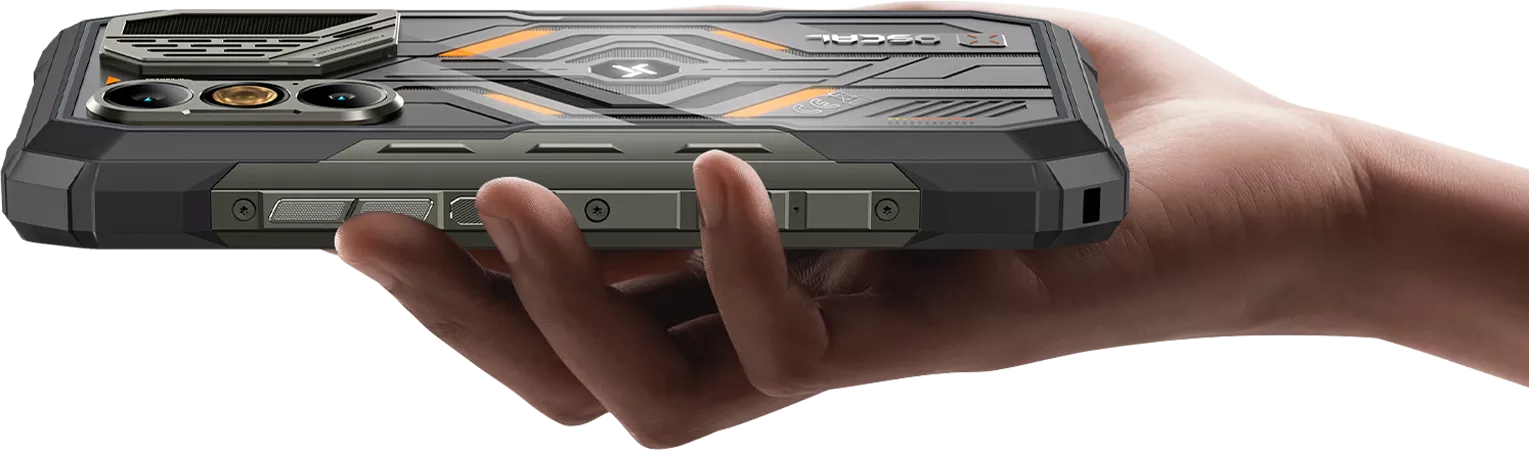
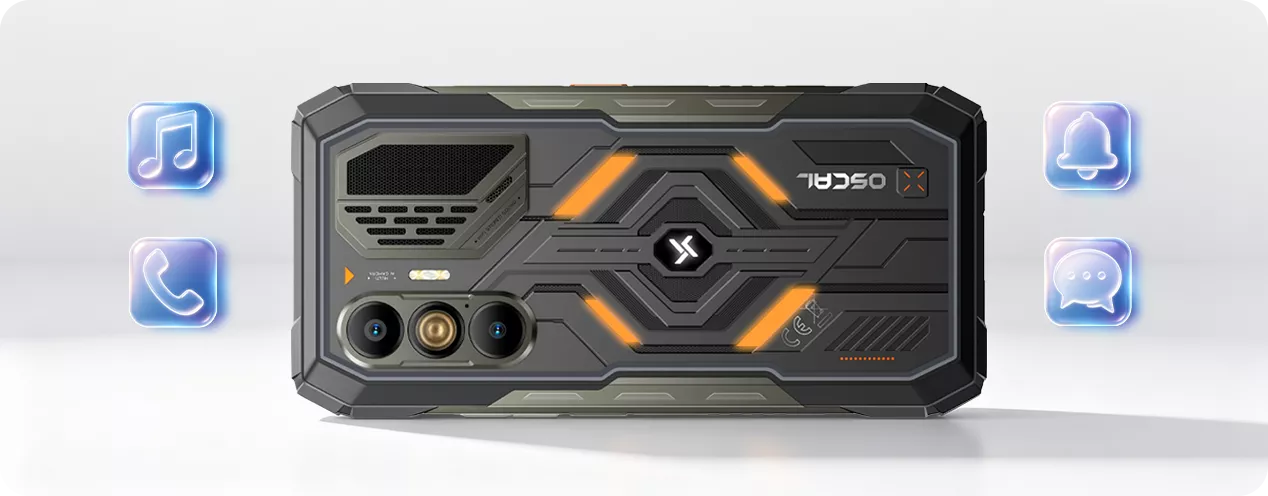
The Pilot 8’s design is its most surprising achievement. At 17.9mm thick and 389g, it is far from a slim mainstream phone, yet it is remarkably manageable for a device carrying a 10,000mAh battery and full rugged protection. The frame is aluminium alloy with reinforced corners made from a stiff TPU polymer, and the back panel is transparent acrylic through which you can see Oscal graphics. That see-through back gives the phone a high-tech look that most rugged phones, with their plain rubberised backs, simply do not attempt.
Protection is rated at IP68 and IP69K, with MIL-STD-810H certification. In plain terms, that means protection against dust, immersion in water and high-pressure water jets, plus testing against the military standard for harsh conditions. Root-Nation adds that the phone operates reliably from minus 20 degrees Celsius to 60 degrees Celsius, which covers most outdoor work from a cold morning to a hot summer site. Those ratings are genuinely useful, but they are not the whole story.
The drop rating is only 1.2 metres, which TechRadar flags as modest for a rugged phone. Many rivals claim 1.5 metres or more, so if you regularly drop phones from scaffolding or vehicle cabs, this is a real consideration. The screen protection is CSG KK9 scratch-resistant glass, which Oscal says is up to eight times more scratch-resistant than ordinary glass. That may be true, but it is not Gorilla Glass, and buyers who specifically want Gorilla Glass should know the difference before they buy.
Practical touches fill out the design. The phone has glove mode and rain-touch modes for the screen, so it stays usable with work gloves and in wet weather. The side key can launch the torch, the underwater camera, push-to-talk or an SOS alert, and the power button can launch the digital assistant or the camera. There is even a settings function to clear dust and water from the rear speaker. The one design detail the reviewer disliked was the tiny rubber bung protecting the USB-C port, which looked like a prime candidate to be ripped off and lost. That is a small complaint, but on a phone built for rough use, small seals matter.
One omission stands out. Despite a mostly flat back that looks ready for it, the Pilot 8 has no wireless charging. That is a budget decision, and an understandable one at this price, but it means you will always charge with a cable. There is also no 3.5mm headphone jack, according to PhoneArena, so wired headphone users will need a USB-C adapter or Bluetooth headphones.
Display: A 6.83-Inch AMOLED Screen That Works Outdoors
The display is where the Pilot 8 most clearly breaks from rugged-phone tradition. Instead of a dim LCD panel, it uses a 6.83-inch AMOLED display with a resolution of 1280 by 2772 pixels, a density of 446 pixels per inch, a 120Hz refresh rate and 240Hz touch sampling. Scrolling feels smooth, text looks sharp, and the panel supports Widevine L1, so Netflix and Disney stream at 1080p rather than being limited to standard definition.
Brightness is the one display claim to treat with care, because the sources disagree. TechRadar’s specification table quotes 600 nits typical and 2,000 nits peak as claimed by Oscal, but the reviewer says testing was inconclusive and that 2,000 nits seems implausibly high. PhoneArena lists 600 nits, and some secondary sources list 600 nits as the maximum. The honest summary is that the screen is bright and significantly more readable in sunlight than most phones, according to the reviewer, but the 2,000-nit peak figure should not be taken as proven.
For outdoor work, that distinction matters less than it sounds. A screen that stays readable in bright sunlight, responds with gloves, and keeps working in rain is more useful than a headline brightness number. The 120Hz refresh rate also helps when scanning documents, maps and inspection photos, because motion stays smooth and text stays legible while scrolling. Combined with the large 6.83-inch size, the display makes the Pilot 8 a credible replacement for an ordinary phone, not just a second work handset.
Performance: Qualcomm Dragonwing QCM6690 Tested
Performance is the Pilot 8’s headline feature, and it is also where careful reading pays off. The Qualcomm Dragonwing QCM6690 is a 4nm octa-core chip with an Adreno 7-series GPU and a Qualcomm Hexagon NPU. It first appeared in late August 2025 and was, according to TechRadar, the world’s first enterprise mobile processor with fully integrated ultra-high-frequency RFID capabilities built directly on-chip. That enterprise angle matters: this chip was designed for professional devices, not just consumer phones.
Clock speeds reported by DevCheck run from 480MHz to 2,965MHz, matching Oscal’s claim of up to 2.9GHz. Oscal quotes an AnTuTu score of 1,151,934, which it presents as 2.7 times a MediaTek Helio G100, with a CPU score of 466,080 and a GPU score of 201,028. TechRadar warns that the Helio G100 is a modest target, so that comparison flatters the Pilot 8. A fairer rival is the Dimensity 8300 or even the 8400, and on that fairer test the Pilot 8 still holds up well.
In TechRadar’s own benchmarking against the Oukitel WP500 Ultra, which uses a Dimensity 8300, the Pilot 8 scored 1,341 single-core and 3,702 multi-core on Geekbench, against 1,239 and 3,525 for the Oukitel. Its PCMark 3.0 score was 16,453 against 15,219, and its PCMark battery test ran for 23 hours and 22 minutes. Its Passmark score was 17,326 against 18,554. Graphics tests favoured the Oukitel’s Mali GPU, with 3DMark Wildlife at 4,619 against 7,958, but for everyday work, apps and multitasking, the Qualcomm chip matched or slightly beat the Dimensity 8300.
The honest conclusion is that this is upper-mid-range performance, not flagship performance. Oscal’s description of the chip as flagship-level is, in TechRadar’s words, a stretch. That does not make the Pilot 8 slow. It means buyers should expect smooth everyday use, confident multitasking and decent gaming, rather than the fastest phone on the market. For construction, logistics, manufacturing and field work, that is the right trade-off, especially when power efficiency is excellent.
Memory and storage need the same careful reading. The phone has 12GB of physical RAM, confirmed on the review sample, plus up to 36GB of virtual RAM. Oscal markets this as 48GB, with 12GB plus 36GB in small print on the box. Virtual RAM borrows storage space and is not real memory, so buyers should judge the phone on its 12GB of real RAM, which is plenty for most smartphone purposes. Storage is 256GB of UFS 2.2, with microSD support up to 2TB. UFS 2.2 is an older standard, so speeds are decent rather than rapid, at around 1,000Mb/s, but that is fine for a work phone. The microSD card shares a slot with the second SIM, so you must choose between two physical SIMs and extra storage, unless you use the phone’s eSIM support to keep two numbers and the card together.
Connectivity is modern and complete. The phone supports Wi-Fi 7, Bluetooth 6.0, dual SIM 5G and eSIM, plus GPS, GLONASS, Galileo, BeiDou, NavIC and QZSS navigation. Wi-Fi 7 and 5G give faster downloads, lower latency and a more stable connection, which matters when syncing project data, sending inspection reports or joining remote meetings from site. If you want a mainstream flagship alternative rather than a rugged work phone, our Samsung Galaxy S26 review covers a very different kind of phone for a very different buyer.
Cameras and Audio: 108MP Main, Night Vision and a Loud Speaker
The Pilot 8’s camera system is stronger than most rugged phones offer, with one software warning. The rear cameras are a 108MP Samsung ISOCELL HM6 main sensor with a 1/1.67-inch sensor and an f/1.9 lens, plus a 20MP Sony IMX376 night-vision camera backed by infrared lights. The front camera is a 50MP Samsung ISOCELL JN1. There is no macro or depth sensor, but the main sensor’s optics offer plenty of zoom levels, even if close-up shots of small subjects are not its strength.
Video capture is good on paper. TechRadar reports up to 4K resolution at 60 frames per second on both rear and front sensors. PhoneArena agrees on 4K at 60 frames per second for the rear camera, but lists 4K at 30 frames per second for the front camera. That disagreement should be noted: buyers who need 4K 60fps selfies should verify the front-camera frame rate on the exact version they buy. Either way, 4K video from a rugged phone at this price is a genuine strength.
Night vision is the camera feature that sets the Pilot 8 apart for field work. The 20MP night-vision camera works well within the range of its infrared illumination, which is useful for inspections, asset tracking and security work in low light. The review sample was the standard model, so it had no thermal camera and no thermal app, even though PhoneArena’s specification table lists a FLIR thermal camera as a third camera. TechRadar also notes that thermal-camera and satellite versions of the Pilot 8 are planned. Buyers should therefore check exactly which version they are buying: the standard model reviewed here has night vision, not thermal imaging.
Two camera software problems spoiled an otherwise good result. The camera app occasionally locked up, and the only fix was to reset the phone. This happened twice during the review. Taking pictures also took longer than expected, with at least two and a half seconds before the app reset after capturing an image and was ready for the next shot. Deleting the camera app’s cache or storage did not fix either problem. TechRadar hopes Oscal will issue a fix, and buyers should watch for software updates before judging the camera finally. For field surveys from the air rather than the ground, our guide to the best drones for every budget and skill level covers a useful companion tool.
Audio is built for noisy environments. The phone has a 4.5-watt Smart PA speaker with a claimed maximum of 98dB, so calls and navigation prompts stay audible on a busy site. That loud speaker, plus the dust and water clearing function for the rear speaker, shows that Oscal thought about real work conditions rather than just laboratory specifications.
Software and AI: DokeOS 5.0, Hi Doki and the Update Question
The Pilot 8 runs DokeOS 5.0 based on Android 16. Root-Nation describes DokeOS 5.0 as delivering improved responsiveness, efficiency, personalisation and AI capabilities, built around a Doke AI ecosystem that integrates models including DeepSeek-R1, ChatGPT-4o mini and Gemini AI 2.0. Built-in AI Chat, AI Photos, AI Video and AI Music tools handle tasks from searching for information and editing photos to creating videos and generating music.
The Hi Doki AI assistant is the most practical part of that system. It can interact directly with the device to adjust brightness, turn on the flashlight, adjust volume, manage power settings, launch apps, make calls or search for information. It supports Smart Interruption, which lets users change commands, pause current tasks or continue conversations, and it supports nine languages with automatic adaptation to the language being used. For hands-busy work, voice control of basic functions is genuinely useful.
Smaller software touches add everyday value. The Smart Ambient Light feature lets users customise orange and white lighting effects for calls, notifications and power-on signals, with visual indicators for charging and low battery. The Music Sync backlight changes in time with music, and the updated Always-On Display shows key information without turning on the screen. These are not reasons to buy a phone on their own, but they make the Pilot 8 feel more considered than a bare work handset.
The update question is the software story’s weak point. TechRadar reports no stated update policy from Oscal, and notes that Blackview, Oscal’s parent brand, does not maintain a public, centralised archive or changelog history of its firmware updates. Some Blackview devices, like the XPLORE series, tend to get more updates than budget devices, but the reviewer would be surprised if the Pilot 8 saw any Android version above the one it ships with, though it might get tweaks and security patches. The review hardware’s last security update was dated 5 July 2026. Buyers who plan to keep a phone for several years should weigh that uncertainty carefully.
Battery Life: 10,000mAh for Multi-Day Work
Battery life is the Pilot 8’s most practical strength. The 10,000mAh battery, charged at 55W wired with 5W reverse charging for earbuds and small gadgets, should last through three working days, or a full workweek of light use, according to TechRadar. The PCMark battery test result of 23 hours and 22 minutes supports that claim, and the reviewer suggests that, managed properly, the phone could last a week away from civilisation.
Oscal’s own claims are more dramatic, and the sources disagree about them, so they should be read carefully. TechRadar reports Oscal’s claims of 43 hours of calls, 24 hours of music, 11 hours of gaming and 1,080 hours of standby, which works out to 45 days. Root-Nation, by contrast, reports up to 28 days of standby. That gap between 45 days and 28 days is a reminder that standby claims depend heavily on settings and signal conditions. The safe conclusion is multi-day battery life in real use, not a precise number of days in standby.
Charging is the battery story’s weak point. There is no charger in the box, at least in Europe, and the reviewer’s 100W chargers only charged the phone at about half the expected 55W rate. TechRadar’s test showed only 18 percent charge in 30 minutes, against 42 percent for the Oukitel WP500 Ultra in the same test. Buyers will therefore need to find a 55W charger that the Pilot 8 actually accepts, because it did not like the reviewer’s Ugreen Nexode power packs. That is an annoying extra purchase and an extra thing to test before relying on the phone for field work.
Reverse charging at 5W is a small but useful bonus, letting the Pilot 8 top up earbuds and small gadgets from its huge battery. For a work phone that already lasts for days, that turns the phone into a backup power source as well, which is a sensible use of a 10,000mAh cell.
Specifications at a Glance
The table below gathers the key specifications from TechRadar and PhoneArena. Where the sources disagree, the disagreement is noted in the text above and should be checked before purchase.
- Display: 6.83-inch AMOLED, 1280 by 2772 pixels, 446ppi, 120Hz, 240Hz touch sampling, CSG KK9 glass
- Chip: Qualcomm Dragonwing QCM6690, octa-core, 4nm, Adreno 7-series GPU, Hexagon NPU
- Memory: 12GB RAM plus up to 36GB virtual RAM, 256GB UFS 2.2 storage, microSD up to 2TB
- Rear cameras: 108MP Samsung ISOCELL HM6 main, f/1.9, plus 20MP night-vision camera with infrared lights
- Front camera: 50MP Samsung ISOCELL JN1
- Video: 4K up to 60fps rear, with front-camera frame rate disputed between sources
- Battery: 10,000mAh, 55W wired charging, 5W reverse charging, no charger in the box
- Protection: IP68, IP69K, MIL-STD-810H, 1.2-metre drop rating, minus 20 to 60 degrees Celsius operating range
- Connectivity: Wi-Fi 7, Bluetooth 6.0, dual SIM 5G, eSIM, NFC, infrared, USB-C
- Software: DokeOS 5.0 based on Android 16, Hi Doki AI assistant
- Audio: 4.5W Smart PA speaker, 98dB claimed maximum
- Dimensions and weight: 178.7 by 85.4 by 17.9mm, 389g, black only
- Price at review: around $360, £350 and €405, AliExpress only at the time of writing
FAQs About the Oscal Pilot 8
No source published an FAQ section for this phone, so the questions below are drawn from the issues the sources themselves raise, answered only with sourced facts.
Is the Oscal Pilot 8 waterproof?
Yes, in the sense that matters for work. The phone is rated IP68 and IP69K, which means protection against dust, immersion in water and high-pressure water jets, and it carries MIL-STD-810H certification. It also has a glove mode, a rain-touch mode and an underwater camera shortcut. It is not, however, a phone to treat carelessly: the drop rating is only 1.2 metres, and the small rubber bung on the USB-C port needs to stay in place to keep that protection intact.
How long does the Oscal Pilot 8 battery last?
Expect multi-day battery life in normal work use, and up to three working days or a full workweek of light use, according to TechRadar’s testing. The PCMark battery test ran for 23 hours and 22 minutes of continuous use. Oscal’s standby claims differ between sources, at 45 days in one report and 28 days in another, so treat any single standby number as an estimate, not a guarantee.
Does the Oscal Pilot 8 have a thermal camera?
The standard model reviewed by TechRadar does not. It has a 108MP main camera and a 20MP night-vision camera, but no thermal camera and no thermal app. PhoneArena’s table lists a FLIR thermal camera, and TechRadar notes that thermal and satellite versions are planned, so buyers must check which version a retailer is actually selling before paying for thermal imaging.
Is the Oscal Pilot 8 really a 48GB RAM phone?
No. The phone has 12GB of physical RAM, plus up to 36GB of virtual RAM that borrows storage space. Virtual RAM is not real memory, and the 48GB figure on the box is marketing. Judged on its real 12GB, the phone still has plenty of memory for everyday apps and multitasking, but it should not be compared with phones that genuinely have more physical RAM.
Where can I buy the Oscal Pilot 8?
At the time of the TechRadar review, only AliExpress stocked it, and it was not available on Oscal regional sites or Amazon. Prices quoted were around $360 in the USA, £350 in the UK and €405 in Europe, with a $329 list price seen for the 12GB and 256GB version. Availability may improve, but buyers should confirm the seller, the exact version and the warranty before ordering.
Does the Oscal Pilot 8 get Android updates?
That is unknown. Oscal states no update policy, and its parent brand Blackview does not publish a centralised update archive. The review hardware’s last security update was dated 5 July 2026. The reviewer expected tweaks and security patches, but would be surprised if the phone received a newer Android version. Buyers who need guaranteed long-term updates should choose a phone with a published update policy instead.
Does the Oscal Pilot 8 have wireless charging?
No. Despite a flat back that looks suitable for it, the Pilot 8 has no wireless charging. Charging is wired only, at up to 55W, and no charger is supplied in the box, at least in Europe. You will also need to check that your charger actually delivers 55W to this phone, because the reviewer found that some high-power chargers did not.
Final Verdict: Should You Buy the Oscal Pilot 8?
The Oscal Pilot 8 is a rugged phone that succeeds in feeling like a normal phone, which is exactly what TechRadar’s review headline claims. Its slim-for-a-rugged-phone body, bright AMOLED display, capable Qualcomm chip, strong cameras and multi-day battery make it easy to live with, and its price is sensible for what it offers. TechRadar’s 4 out of 5 overall score, repeated across value, design, hardware, cameras and performance, is a fair summary: this is a good phone with no fatal flaw.
Its flaws are real but manageable for the right buyer. The 1.2-metre drop rating is modest, the camera app needs a fix, wireless charging is missing, no charger is included, the update policy is unknown, and availability is limited to AliExpress at the time of writing. None of those flaws matters equally to every buyer. A field worker who values a readable screen, a loud speaker and a battery that lasts for days will forgive most of them. A buyer who needs guaranteed updates, a local warranty and the toughest drop rating available should look elsewhere.
If you need a tough phone for real work and you are happy to buy from AliExpress, check the exact version carefully, and budget for a compatible 55W charger, the Pilot 8 is a strong choice and one of the most interesting rugged phones of 2026. If any of those conditions is a deal-breaker, wait until availability and update support become clearer, because the phone’s strengths will still be there when they do.
