

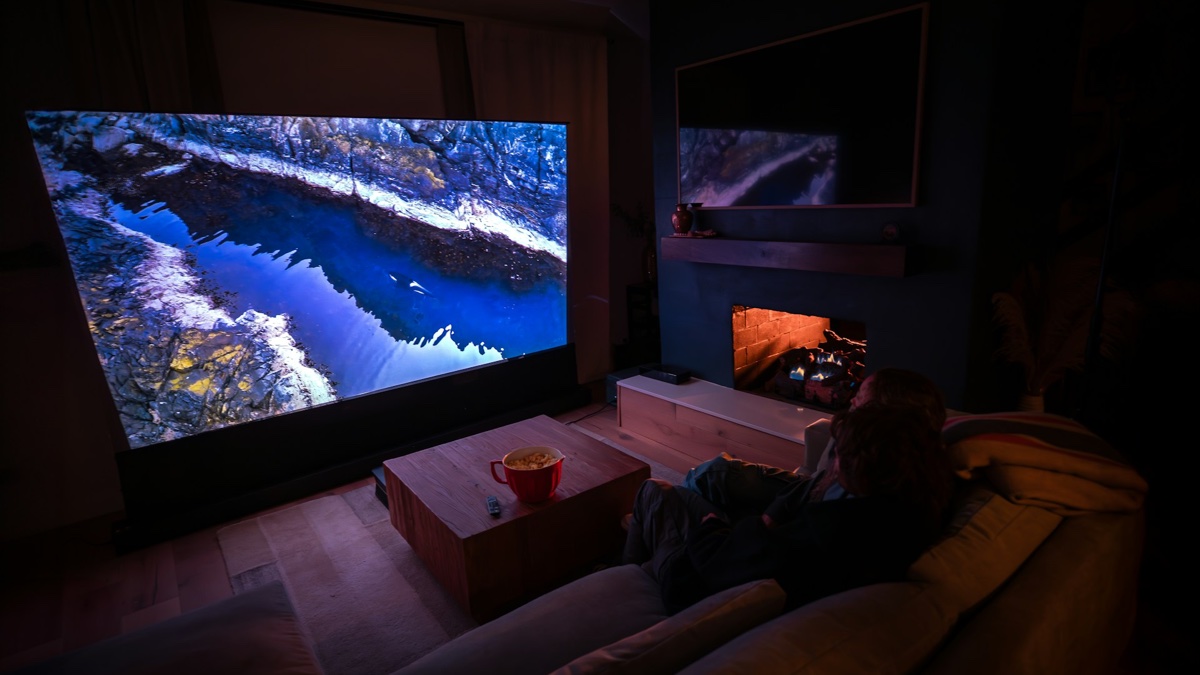
Best TVs 2026
Choosing the best TVs 2026 has to offer is no longer a simple question of picking the biggest screen in the shop. The best TV for a dark home cinema, a sunlit living room, a competitive gaming setup and a small bedroom are often four completely different televisions, even when they share the same 4K badge on the box. That is why the expert guides disagree at the top: one names an LG OLED as the best all-rounder, another puts a Samsung QD-OLED first for sheer picture impact, and a third argues that a bright Mini-LED is the smarter buy for most real living rooms.
This guide brings those five leading 2026 round-ups together, compares their picks side by side, and explains the technology in plain language, so you can match a television to your room, your viewing habits and your budget rather than chasing a single “best” label. Where the sources disagree — and they do, notably on model years, brightness measurements and whether Samsung’s newest flagships should be called S95F, S95H or S99H in different regions and listings — this guide says so plainly instead of pretending there is one settled answer.
The short version is reassuring: almost every television recommended below is a strong 4K HDR television with a modern smart platform. The differences that matter are panel type, peak brightness, reflection handling, gaming ports, sound quality and price. Get those six things right for your room, and you will be happy for years.
Best TVs 2026 at a Glance: Quick Picks
- Best overall for most people: LG C5 OLED — near-perfect blacks, wide viewing angles, four HDMI 2.1 ports and, after price drops reported by Tom’s Guide, much stronger value than at launch.
- Best premium OLED: LG G5 OLED — brighter than the C5, with a gallery-style wall-mount design, but at a steep premium that several reviewers question.
- Best for movies in a dark room: Sony Bravia 8 II — exceptionally natural colour, fine shading and strong shadow detail, praised by Trusted Reviews as arguably the best picture quality on the market.
- Best for bright rooms: Samsung S95F / S95H QD-OLED family and Sony Bravia 9 II — high brightness plus anti-glare or matte screens that hold up in daylight.
- Best under $1,000: Hisense U8QG — a Mini-LED with over 3,000 nits of peak brightness in Tom’s Guide testing and a $997 sticker price quoted there.
- Best under $500: TCL QM6K — a Mini-LED QLED that Tom’s Guide calls the television to get for gamers on a tight budget, with a native 144Hz panel on the models it tested.
- Best value OLED: LG C6 OLED — most of the G-series picture at a lower price, with 4K gaming at up to 165Hz, according to the 2026 round-ups.
- Best for art and living-room design: Samsung The Frame Pro — a matte, canvas-like screen that displays artwork when it is not showing television.
- Best giant screen: TCL 98C7K — a 98-inch Mini-LED that Trusted Reviews describes as feeling more like a cinema than a television.
- Best 8K option: Samsung QN900F — sharper upscaling than 4K sets, but with almost no native 8K content, so buy it for upscaling and scale, not for 8K programmes.
A note on names before you shop: model suffixes change by year and region. Tom’s Guide and Crutchfield discuss the 2026 Samsung flagship as the S95H, Trusted Reviews discusses a newer S99H, and several 2025 listings still call the previous flagship the S95F. They are related QD-OLED generations, not identical sets, so check the exact model number, year and size on the retail listing before comparing prices.
How to Choose the Right Size
Size is measured diagonally, corner to corner, and the most common sizes in 2026 are 32, 43, 50, 55, 65, 75, 85 and 98 inches, with OLED models also available in 42 and 48 inches and some flagships stretching to 115 inches. Crutchfield’s advice is blunt and widely repeated: buy the largest screen your room, viewing distance and budget will comfortably accommodate, because a television that is too small is a far more common regret than one that is slightly large.
That advice needs one practical check. Measure the wall or stand first, including the width between the feet on larger sets. Trusted Reviews warns that the Samsung S99H has widely set feet and really wants to be wall-mounted, and that the 98-inch TCL needs a very large piece of furniture. A 65-inch television is the sweet spot for most living rooms, a 55-inch set suits bedrooms and smaller flats, and 75 inches and above only work if you have both the wall space and a viewing distance of roughly two to three metres or more.
Small-screen buyers should not assume that smaller means worse. The 48-inch Samsung S90H impressed Trusted Reviews with over 1,000 nits of peak brightness, rich colour and an anti-glare coating, making it a genuine small-room flagship rather than a cut-down afterthought. At the other extreme, a portable 24-inch set such as the Metz model in Trusted Reviews’ list trades picture impact for a rechargeable battery and a matte screen, which is a different product entirely.
OLED vs Mini-LED vs QLED: What the Panel Actually Does
OLED televisions light each pixel individually. When a pixel is off, it is truly black, which is why OLED contrast looks so deep in a dark room and why reviewers consistently call OLED the best choice for films. The trade-off, historically, has been lower peak brightness than the brightest LCD televisions and a small long-term risk of burn-in from static images, although Trusted Reviews notes that burn-in factors far less in modern sets than in early OLED generations.
Mini-LED and QLED televisions are LCD televisions with a backlight behind a liquid-crystal layer. Mini-LED uses thousands of tiny dimming zones to control that backlight more precisely, and a quantum-dot layer adds richer colour. The result is much higher brightness — Tom’s Guide measured over 3,900 nits from the Hisense U8QG and over 3,000 nits in its earlier summary of the same set — which makes Mini-LED the natural choice for bright rooms, daytime sport and viewers who watch with lamps on.
QD-OLED sits between those two ideas: it pairs OLED’s self-lit pixels with a quantum-dot layer for brighter, more saturated colour. Samsung’s QD-OLED flagships are the clearest example, and reviewers praise their colour volume and highlight brightness while noting that Samsung does not support Dolby Vision, instead backing HDR10+. That format split matters if most of your viewing is on Netflix, Disney+ or Apple TV+, which prioritise Dolby Vision.
For most buyers, the rule from the five sources is consistent: choose OLED for a light-controlled cinema room, choose bright Mini-LED or QLED for a sunny living room, and do not pay for panel technology you will never notice. A mid-range Mini-LED in a bright room will look better in daily use than a flagship OLED fighting glare, just as a flagship OLED in a dark room will beat a bright LCD on contrast every time.
Brightness, HDR and Colour: The Numbers That Matter
Peak brightness, measured in nits, tells you how bright highlights such as sunlight, explosions and specular reflections can get. Tom’s Guide explains that up to around 2,000 nits, brighter generally means a better HDR experience, and its lab table puts the LG C5 at 1,165 nits, the Samsung S95F at 2,286 nits, the Sony Bravia 9 at 2,713 nits and the Hisense U8QG at 3,916 nits in a 10% window. Trusted Reviews’ different test setup gives different numbers for different models — nearly 4,500 nits for the Samsung S99H in a 5% window, for example — so treat cross-site brightness figures as indicative, not directly comparable.
HDR formats are the second half of the story. Dolby Vision, HDR10, HDR10+ and HLG are all ways of carrying brighter, more colourful pictures, but not every television supports every format. LG, Sony, TCL, Hisense and Philips models in these guides generally support Dolby Vision; Samsung models support HDR10+ instead. If you watch a lot of Dolby Vision content, that single omission can be a deal-breaker for an otherwise excellent Samsung set, and several reviewers say exactly that.
Colour accuracy matters as much as brightness. Tom’s Guide measures Delta-E, where a lower number means colour closer to the reference, and reports 1.1 for the Samsung S95F against 1.2 for the LG C5 — both excellent. Trusted Reviews, meanwhile, praises the Sony Bravia 8 II for fine colour shading and purity, and the Samsung S99H for images that are simultaneously accurate and vivid. In practice, all of the premium picks here are colour-accurate enough that room lighting and picture settings will affect what you see more than small lab differences will.
One honest warning runs through every source: showroom settings lie. Televisions in shops run in vivid, over-bright modes designed to stand out under fluorescent lights. At home, the Filmmaker Mode or Cinema mode that reviewers praise on LG, Sony and Samsung sets will look darker at first and far more natural after a few evenings. Give any new television a week in its accurate mode before judging it.
Gaming on the Best TVs 2026: Ports, Refresh Rate and Input Lag
For PlayStation 5, Xbox Series X and PC gamers, three specifications decide whether a television is genuinely good for gaming or merely marketed that way. The first is HDMI 2.1 ports: four is ideal, two is workable, and one is a frustration waiting to happen once a console, PC and soundbar all need a port. LG’s C5, C6 and G5 all offer four HDMI 2.1 ports, while the Hisense U8QG and TCL QM6K offer two, and the Sony Bravia 8 II offers only two full-featured HDMI 2.1 inputs — a limitation every source flags.
The second is refresh rate and variable refresh rate. A native 120Hz panel is the baseline for current consoles, while 144Hz and 165Hz panels, found on the LG C6, Samsung S95 family and TCL QM6K in PC mode, smooth out PC gaming further. Variable refresh rate, in the form of Nvidia G-Sync, AMD FreeSync or HDMI VRR, stops tearing and stutter, and Auto Low Latency Mode switches the television into game mode automatically. Sony is the notable exception: Trusted Reviews notes that the Bravia 8 II has no certified FreeSync or G-Sync support, despite its PlayStation-specific Auto Tone Mapping feature.
The third is input lag, the delay between a controller input and the action appearing on screen. Tom’s Guide measured 9.1ms for the LG C5, 9.5ms for the Samsung S95F and 9.7ms for the Hisense U8QG, while Trusted Reviews measured 9.7ms for the Samsung S99H, 11.1ms for the Sony Bravia 9 II and 16.4ms for the Sony Bravia 8 II. Anything under 20ms is described by Tom’s Guide as almost imperceptible, so all of these are fine for most players, but competitive gamers should favour the sub-10ms LG and Samsung models. If you are choosing between a television and a dedicated gaming display, our guide to portable projectors for big-screen viewing anywhere is a useful contrast, because projectors trade input lag and HDR punch for sheer image size.
Smart Platforms: Google TV, webOS, Tizen and the Rest
Every television in these guides is a smart television, but the platforms feel very different in daily use. Google TV, found on Sony, TCL and Hisense sets, is repeatedly called the best smart platform by Tom’s Guide, thanks to strong content discovery and every major streaming app. LG’s webOS is described as slick and quick, though Trusted Reviews notes that LG now requires an account to access nearly every app, and Tom’s Guide calls webOS a very close second to Google TV.
Samsung’s Tizen is the most divisive. Trusted Reviews calls the newest version the best yet, cleaner and faster than before, while Tom’s Guide warns that it has a learning curve and requires a Samsung account to download extra apps. Both agree that Tizen is packed with features, including Samsung TV Plus free content, a Gaming Hub and, on newer sets, AI-backed search. Roku OS and Amazon Fire TV appear on budget sets and are praised for simplicity, though Fire TV is criticised in some budget guides for being ad-heavy.
The practical lesson is that smart software ages faster than panels. Several reviewers and commentators recommend pairing any good television with an external streamer if the built-in platform slows down after a few years, because a £50 streaming stick is cheaper than replacing a £1,000 screen. Check that your must-have apps are actually available in your country before buying, since Trusted Reviews notes missing apps such as BBC iPlayer at launch on some Samsung and portable models in the UK.
Sound: Why Even Great TVs Often Need a Soundbar
Built-in television sound has improved, but it remains the weakest link on most picks. The Sony Bravia 9 II is the exception that proves the rule: Trusted Reviews calls it the best sound it has heard from a television in 2026, with heft in the lows, clarity in dialogue and audible height channels. The Hisense U8QG also earns praise for a 72W 4.1.2-channel system with a 20W subwoofer, and the Sony Bravia 8 II’s Acoustic Surface Audio+ places dialogue accurately on screen.
Most other flagships are merely adequate. The LG G5 is repeatedly criticised for thin sound that does not match its picture, the LG C6 is described as detailed but lacking bass depth, and the TCL 65C7L is called narrow and flat at volume despite Bang & Olufsen badging. The Samsung S95 family fares better, with Object Tracking Sound anchoring effects to the right part of the screen, but even there reviewers recommend a soundbar for films. Budget sets are thinner still: the TCL QM6K’s 40W Onkyo 2.1 system is a step above typical budget speakers, yet Tom’s Guide is clear that it is no match for a soundbar.
If dialogue clarity matters to you, prioritise a television with a centre-focused sound mode or budget for a soundbar from the start. Dolby Atmos support is widespread, but Atmos from built-in speakers is a pale imitation of Atmos from a dedicated soundbar or surround system, and no reviewer in these five guides pretends otherwise.
Best TVs by Room and Budget
Best Overall: LG C5 OLED
The LG C5 is Tom’s Guide’s best television of 2026 for now, with a perfect 5-star rating, and it appears near the top of almost every other list, including RTINGS’ best-TV rankings and PCMag’s summary of the best OLED value. Its strengths are textbook OLED: perfect blacks, excellent contrast, wide viewing angles and colour accuracy that needs little adjustment out of the box. Four HDMI 2.1 ports, 120Hz native refresh rising to 144Hz with variable refresh rate, and a measured 9.1ms input lag make it a gamer’s television as well as a film lover’s.
Its weaknesses are modest: no ATSC 3.0 tuner for NextGen over-the-air broadcasts, no HDR10+ support, an unusual remote that divides opinion, and sound that is unexceptional. The more interesting question is value. At launch the 65-inch C5 cost $2,500, but Tom’s Guide reports it falling to around $1,400, at which point it becomes very hard to beat. If you find the newer C6 at a similar discount, the choice between them narrows to remote design and small brightness gains.
Best Premium OLED: LG G5 OLED
The LG G5 uses LG’s latest four-stack OLED panel to push brightness well beyond the C5 — Tom’s Guide measures 1,897 nits against 1,165 nits for the C5 in a 10% window — with vivid HDR highlights, accurate colour and gaming at up to 165Hz. RightWei calls it the strongest all-round pick in its group, and Tom’s Guide calls its picture simply stunning and the closest currently available to perfection.
The catch is price and sound. Tom’s Guide’s editor puts the G5 at around $3,000 and admits he cannot convince himself he needs a $3,000 television, while RightWei and Tom’s Guide both say its built-in sound does not match its picture. Buy the G5 if you want the brightest, most gallery-like OLED and you plan to wall-mount it with a soundbar; otherwise the C5 or C6 gives you most of the experience for far less.
Best for Movies: Sony Bravia 8 II
Trusted Reviews argues that the Sony Bravia 8 II offers arguably the best picture quality of any television currently on the market, with fantastically fine colour shading, excellent sharpness and detail, and strong shadow detail in dark scenes. It is brighter than its predecessor, the A95L, and uses that brightness for a wider range of colours rather than merely for brighter whites. Its Professional picture mode, praised on the Bravia 9, reflects Sony’s cinema heritage, and its Acoustic Surface Audio+ system is energetic and dynamic.
Its limitations are real for gamers: only two HDMI 2.1 inputs, no certified FreeSync or G-Sync, and a measured 16.4ms input lag that is slower than LG and Samsung rivals, though still fine for most players. In a dark room, for films and prestige television, those compromises fade; for a shared family television that also serves as a gaming monitor, the LG C5 is the safer all-rounder.
Best for Bright Rooms: Samsung QD-OLED and Sony Bravia 9 II
Bright rooms punish glossy OLED screens and reward brightness plus reflection control. Samsung’s QD-OLED flagships answer with a second-generation matte anti-glare finish that Tom’s Guide calls the best in the business, capable of standing up to any amount of ambient light, plus peak brightness approaching 2,300 nits on the S95F. Trusted Reviews’ newer S99H goes further, with nearly 4,500 nits in a 5% window and a measured 9.7ms input lag.
The Sony Bravia 9 II takes a different route: a True RGB Mini-LED backlight with individually controlled red, green and blue LEDs, described by Crutchfield as Sony’s brightest and most colourful television ever, plus a premium anti-glare screen. Trusted Reviews praises its faithful picture, excellent matte screen and the best television sound of 2026, while noting that blooming can appear off-axis and that it cannot match OLED’s pixel-level dimming. Either route works; the Samsung suits viewers who also game heavily, while the Sony suits viewers who prioritise accurate cinema colour and built-in sound.
Best Value and Budget Picks: Hisense U8QG and TCL QM6K
The Hisense U8QG is the value hero of Tom’s Guide’s list: a Mini-LED with quantum dots, Google TV, over 3,000 nits of brightness and a $997 sticker price quoted there. Its colours are vibrant, its HDR impact is serious, and its sound is unusually strong for the price. Its downsides are fewer HDMI 2.1 ports than LG rivals, out-of-the-box colour that runs slightly oversaturated, and upscaling and motion processing that lag Sony, LG and Samsung.
The TCL QM6K is cheaper still, under $500 in Tom’s Guide’s testing, and it earns its place with Mini-LED brightness of 695 nits in SDR testing, 94.71% coverage of the UHDA-P3 colour spectrum, Google TV and a native 144Hz panel for gamers. Its compromises are a basic plastic build, only two HDMI 2.1 ports, weaker off-axis viewing and glare handling, and sound that still benefits from a soundbar. For a bedroom, a first flat or a second television, it is the pick that reviewers keep returning to. The same match-the-device-to-the-habit principle applies across the gadget shelf: just as our guide to e-readers for every kind of reader starts from how and where you actually read, a television choice should start from your room and your viewing habits, not from the headline specification.
Common Buying Mistakes to Avoid
The first mistake is buying on resolution alone. Every recommended television here is 4K, and 8K remains a niche: Trusted Reviews notes that there is not much native 8K content, so the Samsung QN900F’s real achievement is upscaling 4K and HD beautifully, not showing native 8K programmes. Unless you sit very close to a very large screen, 4K is enough, and money is better spent on panel quality, brightness and processing.
The second mistake is ignoring reflections. A television that looks stunning in a dark shop demo can wash out completely beside a south-facing window. Check whether the set has a matte or anti-glare screen, and if possible, view it with the lights on. Samsung’s matte QD-OLED finish and Sony’s anti-glare screens exist precisely for this problem.
The third mistake is assuming that a premium brand guarantees a premium model. Several sources warn that budget models from top brands share little with their flagships beyond the badge. Judge the exact model, its panel, its ports and its measured brightness, not the logo on the bezel. The same discipline applies to other gadgets: a famous name is not a specification.
The fourth mistake is forgetting the extras. Wall mounts, soundbars, HDMI cables rated for 4K at 120Hz, and, for very large sets, a second pair of hands for installation all add cost and hassle. Crutchfield’s mounting advice — locate studs, use a level, and bring a friend — sounds obvious until you are holding a 65-inch screen halfway up a wall.

Frequently Asked Questions About the Best TVs 2026
What is the best TV overall in 2026?
There is no single answer that all five sources agree on, and that disagreement is informative. Tom’s Guide names the LG C5 OLED as the best television of 2026 for now, Trusted Reviews names the Panasonic Z95B as its best all-in-one set while praising the Sony Bravia 8 II’s picture above all others, and RTINGS’ list is headed by the Samsung S95 family. The consensus pick for most people is the LG C5 or its newer C6 sibling, because they combine OLED contrast, gaming features and, after discounts, strong value. If your room is bright, the consensus shifts to Samsung QD-OLED or Sony Mini-LED instead.
What size TV should I buy?
Buy the largest screen your room, viewing distance and budget allow, then check the physical width and the stand or wall mount before ordering. A 55-inch set suits most bedrooms, 65 inches suits most living rooms, and 75 inches and above needs a large wall and a viewing distance of several metres. Measure first, because returning a 98-inch television is not a casual errand.
Is OLED better than QLED or Mini-LED?
OLED is better for contrast, black levels and viewing angles in a dark room. Mini-LED and QLED are better for peak brightness, daytime viewing and value at large sizes. QD-OLED tries to combine both strengths and largely succeeds, at a premium price and without Dolby Vision on Samsung sets. Choose by room lighting first and by brand second.
How important is refresh rate?
For films and ordinary television, 60Hz is enough, and most content is made at 24, 30 or 60 frames per second. For gaming, 120Hz or above matters, especially on PlayStation 5 and Xbox Series X titles that support 120 frames per second, and for PC gaming at 144Hz or 165Hz. Trusted Reviews notes that 120Hz or above is important for gaming, while standard refresh rates are fine for most shows, movies and streaming.
Should I worry about OLED burn-in?
Burn-in, where a static image leaves a faint permanent ghost, was a serious issue for early OLED televisions and factors far less in modern sets, according to Trusted Reviews. It can still occur if the same static image — a news channel logo or a game HUD — is displayed for very many hours every day. If that is your viewing pattern, a QLED or Mini-LED set removes the worry entirely.
Is a 4K TV worth it, and do I need 8K?
Yes to 4K: it lets you enjoy the large and growing library of 4K streaming content, supports HDR for more lifelike contrast and colour, and upscales older content well. No to 8K for most buyers: there is almost no native 8K content, and an 8K set’s benefit is mainly sharper upscaling on very large screens. Crutchfield makes the same point in its own FAQ, and Trusted Reviews reaches the same conclusion for the Samsung QN900F.
What is a smart TV, and which platform is best?
A smart television connects to Wi-Fi and runs streaming apps directly, with voice control via Alexa, Google Assistant or the manufacturer’s own assistant. Google TV is the most widely praised platform in these guides, LG’s webOS is a close second, and Samsung’s Tizen is feature-rich but busier. Because platforms age faster than panels, an external streaming stick is a cheap insurance policy if the built-in software slows down.
Is it hard to mount a TV on the wall?
Wall mounting is straightforward with the right bracket, a stud finder, a level and a second person, and Crutchfield’s guide recommends exactly that approach. Large and heavy sets — the 98-inch TCL weighs over 50kg in Trusted Reviews’ measurements — need a bracket rated for the weight and fixings into studs or masonry, not plasterboard alone. If in doubt, pay for professional installation; a falling television is an expensive and dangerous mistake.
Verdict: Which of the Best TVs 2026 Should You Buy?
If you want one recommendation and you watch in a typical mixed-light living room, buy the LG C5 OLED — or the C6 if the price gap is small — in the largest size your room allows, and add a soundbar when your budget recovers. It is the pick that appears most consistently across the five sources, it games brilliantly, and its picture in a dark or dim room is genuinely cinematic.
If your room is bright, change the answer: buy a Samsung QD-OLED flagship for its matte anti-glare screen and colour volume, or a Sony Bravia 9 II if you value accurate cinema colour and the best built-in sound in these guides. If your budget is tight, buy the Hisense U8QG under $1,000 or the TCL QM6K under $500, and spend the saving on a soundbar rather than on a larger but dimmer screen.
Finally, remember what the sources agree on even when their top picks differ: panel quality lasts, smart software can be replaced, and the best television is the one that fits your room, your light and your viewing habits. Measure the wall, check the exact model number, confirm the HDMI ports you need, and then enjoy the films, sport and games that made you want a new television in the first place.
