

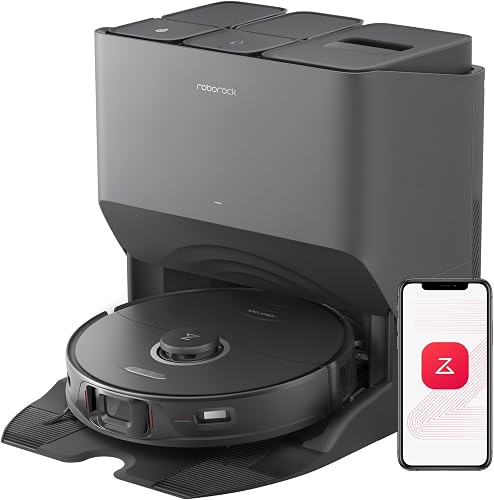
Finding the best robot vacuums 2026 has to offer is less about chasing the biggest suction number and more about buying the right navigation and dock for your home. We studied the leading buying guides and lab-tested rankings, merged everything they cover, and rebuilt it into one complete resource — top picks for every budget, a practical buying checklist, and honest answers to the questions shoppers actually ask.
Best Robot Vacuums of 2026 at a Glance
If you want the short answer: the Eufy X10 Pro Omni is the best all-rounder for most homes, the Roborock Qrevo 2 Pro is the value sweet spot, the Roborock Q7 M5 is the budget buy that does not feel cheap, and the Dreame X50 Ultra is the pick for pet-heavy homes. Each earns its place through a mix of cleaning ability, autonomy, and everyday reliability — not just the spec sheet.
Best Overall: Eufy X10 Pro Omni
The X10 Pro Omni keeps showing up at the top of independent rankings for one reason: it automates nearly everything. The dock empties the dustbin, washes and dries the mop pads, and refills the water tank, so the only recurring chore is swapping the water every week or so and changing a dust bag every couple of months.
Its object-avoidance system was trained like a self-driving car and steers around more than a hundred household objects, from cables to socks. The dual mops do not just drag a wet cloth — they scrub, which makes a visible difference on dried spills. At around £699 it undercuts the ultra-flagships while delivering roughly 90% of their autonomy.
Best Value: Roborock Qrevo 2 Pro
This is the “sweet spot” machine that reviewers keep recommending to friends. With 20,000 Pa of suction, a dual anti-tangle brush system, and a multifunctional dock, it hits the balance of price and daily usefulness that flagships overshoot. Observed at $549.99, it costs half of what the top-tier all-in-ones do.
What you give up versus the flagships is mostly luxury: no hot-water mop washing, slightly less refined obstacle avoidance on tiny cords. What you keep is the stuff that matters daily — systematic LiDAR cleaning, mopping with pads that lift over carpet, and Roborock’s famously polished app with room-specific schedules and no-go zones.
Best Budget Pick: Roborock Q7 M5
Budget robot vacuums used to mean random bounce navigation and crossed fingers. The Q7 M5 breaks that pattern by bringing LiDAR mapping, 10,000 Pa suction, and an optional self-emptying dock down to around £180. It builds accurate 3D maps, cleans in efficient rows, and lets you target specific rooms from the app.
The compromises are honest ones: basic obstacle avoidance means you should pick up cables first, and the mopping is a simple wipe rather than a scrub. But for a small apartment or a first robot vacuum, those are smart trade-offs — you get the core high-end experience without the premium price. Pair it with our guide to the latest tech accessories of 2026 to round out a budget smart home.
Best for Pet Hair: Dreame X50 Ultra
Pet hair is the torture test that separates marketing from machinery, and the X50 Ultra passes it with engineering rather than brute force. Its base station washes the mop pads with hot water, a built-in hair-cutting roller shreds tangles off the main brush automatically, and a small robotic arm swings the mop pad out to clean edges and corners other robots miss.
The headline party trick is a set of extendable legs that climb thresholds and small steps up to 6cm — genuinely useful in homes with awkward transitions. At $799.99 it sits firmly in premium territory with a bulky dock to match, but for multi-pet households it removes the two most hated chores: untangling brushes and babysitting the mop.
Best Vacuum-Mop Combo: Roborock S8 Pro Ultra
If mopping matters as much as vacuuming in your home, this is the benchmark. The dock empties the dustbin, refills the mop water, drains the dirty water, and self-cleans the mop pads with hot water. After setup, you genuinely do not touch the device between monthly maintenance — that autonomy, more than raw cleaning scores, is what sets it apart.
The sonic mopping system scrubs at 3,000 strokes per minute instead of dragging a damp pad, which actually lifts dried-on grime from hard floors. Dual rubber brushes resist pet-hair tangles far better than bristle designs. At $1,099 it is expensive, but for large hard-floor homes it is the closest thing to set-and-forget cleaning that exists.
Navigation and Mapping: LiDAR vs Camera vs Bump
Navigation is the single biggest quality divider in 2026, and the hierarchy is settled. LiDAR builds an accurate floor map on the first run, cleans in efficient rows, and enables room selection and no-go zones. Camera-based systems identify objects well but struggle in the dark and vary more by model. Random-bounce navigation belongs to history — the price gap to LiDAR has shrunk enough that buying a blind bumper robot today just wastes your time.
Some flagships now hide the LiDAR turret entirely — solid-state sensors embedded in the bumper give the Roborock Saros 10R and Dreame X60 Max Ultra a slim 3.1-inch profile that slides under low couches where taller robots get stuck. If clearance under your furniture is tight, measure it before you buy; the robot’s height spec does not include the dock.
Suction Power: What the Pa Numbers Actually Mean
Here is the industry’s open secret: suction ratings in Pascals are manufacturer-provided and nobody outside a lab can verify them. They loosely correlate with carpet performance, but the number on the box is the least reliable part of the spec sheet. Brands also measure differently, so compare within a brand rather than across brands.
What the testing actually shows: 2,500–4,000 Pa is plenty for hard floors, 4,000+ Pa helps on medium-pile carpet and pet hair, and above roughly 6,000 Pa the gains go marginal while battery drain climbs. Brush design and navigation quality move the needle far more than an extra 10,000 Pa. Do not get spec-sheet catfished.
Obstacle Avoidance: The Feature That Decides Everything
Ask owners what they love about their robot vacuum and the answer is rarely suction — it is that the thing runs without drama. Obstacle avoidance is the difference between “I run it every night” and “I only run it when I’m home to watch it.” If your floors collect cables, socks, or pet toys, this is the feature to prioritize above all else.
The Roomba j7+ built its reputation here: it identifies solid obstacles and even pet waste, flagging the latter for manual cleanup instead of smearing it across the floor — backed by iRobot’s famous replacement promise. Newer AI systems from Eufy and Dreame recognize 100+ object types with millimetric precision. Budget models still eat charging cables, so match the avoidance tech to the messiness of your floors.
Self-Emptying Bases: Are They Worth It?
Yes — for most people, this is the single biggest quality-of-life upgrade in the category. A self-emptying dock sucks debris into a bag you replace every 30–60 days instead of emptying a tiny dustbin after every run. Owners consistently call it the most-loved feature they did not know they needed.
The math: bases add roughly $100–200 to the price and $15–20 a year in replacement bags. If you run the vacuum daily or share your home with shedding pets, it pays for itself in convenience within weeks — you stop skipping runs because the bin is full. If you only clean weekly, save the money and spend it on better navigation instead.
Brushes and Pet Hair Handling
Long hair — human or pet — wraps around brush rolls relentlessly, and this is where cheap robots reveal themselves. Rubber roller brushes (Roborock’s S8 series, Roomba’s dual rubber extractors) tangle dramatically less than bristle brushes. Expect about five minutes of maintenance a month with rubber rollers versus five to ten minutes a week untangling a bristle roll.
The newest flagships go further: Dreame’s X60 has a hair-cutting roller that shreds wrapped hair automatically, and Eufy’s X10 uses an active anti-tangle roller that slices through wrapped strands. If a dog or cat sheds in your home, brush design should be a deciding factor — arguably more important than the suction number.
Mopping Systems Compared
Not all robot mops are mops. The honest ones drag a damp pad (fine for dust, useless on dried spills); the good ones scrub. Roborock’s sonic system vibrates at 3,000 strokes per minute, Dreame’s pads oscillate, and Eufy’s HydroJet uses a self-cleaning roller — all meaningfully better than a passive wet cloth.
Two details decide whether you will actually use the mop: pads that auto-lift over carpet (so rugs stay dry) and a dock that washes and dries the pads (otherwise the mop becomes a smelly chore you abandon). Treat robot mopping as maintenance between deep cleans, not a replacement for a real mop — and if your home is mostly carpet, skip the mop entirely and buy more vacuum for the money.

Battery Life and Coverage
Battery specs look dramatic on paper — 90 minutes here, five hours there — but matter less than they used to. Recharge-and-resume is now standard on mid-range and up: the robot tops up mid-clean and continues exactly where it left off, so even a 90-minute runtime covers large homes.
As a rule of thumb, look for 90+ minutes for homes over about 1,500 square feet, and remember that max-suction modes drain the battery fast. The TP-Link Tapo RV30 Plus stretches to five hours and runs at a quiet 55 dB, which matters more than raw runtime if you have thin walls or a sleeping baby. For apartments under 1,000 square feet, even basic runtime is plenty.
App Control and Smart Home Integration
The app matters more than shoppers expect. A good one lets you set no-go zones, schedule by room, adjust suction per area, and map multiple floors — Roborock’s app is the benchmark for polish, while some rivals need more taps to do the same job. Multi-floor mapping and room-specific routines are standard on mid-range models now.
Voice control via Alexa and Google Home covers start/stop commands on nearly every model; Apple HomeKit support remains rare, so check specifically if you are in the Apple ecosystem. For advanced automations — vacuum when you leave home, avoid the nursery during nap time — look for Matter or IFTTT support. And if you are building out the rest of a connected home, see our best tech accessories of 2026 for compatible gear.
Maintenance and Running Costs
A robot vacuum is worth buying only if you will maintain it — a mid-range model you service beats a neglected flagship every time, because suction degrades fast with a clogged filter. Budget five minutes a week: empty the dustbin (or check the dock), cut hair from the brush roller, wipe the sensors.
Consumables add up predictably: filters every 2–3 months ($10–15), a new brush yearly ($20–30), dust bags for self-empty docks ($15–20 a year). Batteries degrade after roughly two years of heavy use, and most robots last 3–5 years total. Models with easily replaceable parts — Dyson’s bagless dock design, for instance — stretch that lifespan and cut the replenishment treadmill.
Mistakes to Avoid When Buying
The most expensive mistake is buying bump navigation in 2026 — random-navigation robots get stuck, miss spots, and waste the time they were supposed to save. Second is chasing suction numbers instead of navigation and brush quality. Third is buying a mop combo without a pad-washing dock, then never mopping because the pads turn gross.
Other traps: ignoring the dustbin — a tiny onboard bin that fills mid-run ruins the “automatic” promise; expecting any robot to deep-clean thick high-pile carpet like an upright (they are maintenance cleaners, keep the big vacuum for monthly deep cleans); and forgetting to measure where the dock will live, since flagship stations are genuinely bulky pieces of furniture.
Robot Vacuum Buying Checklist
Run through this before you buy: do I want self-emptying (yes if you will run it daily)? Is my floor messy (prioritize obstacle avoidance)? Do I actually want mopping, or just less dusty floors? Pets or long hair (prioritize anti-tangle brushes)? Rugs (check real-world reviews for your rug type)? And can I live with the dock’s size where it has to go? Answer those six and the right tier picks itself.
Frequently Asked Questions
Do robot vacuums work on carpet?
Yes on low- and medium-pile carpet — look for 4,000+ Pa suction and a brush roll suited to carpet fibers. On thick high-pile carpet, performance drops and wheels can struggle; treat the robot as between-deep-clean maintenance rather than a replacement for your upright.
Are vacuum-mop combos worth it?
For homes with large hard-floor areas, yes — especially models with auto-lifting mop pads and a dock that washes the pads. For mostly-carpet homes, no; put the money toward a better vacuum-only model with stronger suction and navigation.
How often should a robot vacuum run?
Daily or every other day for pet owners; two to three times a week is enough for most other homes. More frequent short runs beat one long weekly run — less debris per run means fewer clogs and missed spots.
Do I need a self-emptying base?
Not strictly, but it is the most-loved feature among owners. If you run the vacuum daily or have pets, get the base. If you clean weekly, save the money for better navigation.
How long do robot vacuums last?
Typically three to five years. Brushes and filters are consumables — replace them every 6–12 months — and batteries degrade after about two years of heavy use. Models with replaceable parts last noticeably longer.
Can a robot vacuum replace my regular vacuum?
For daily maintenance, largely yes. For deep cleaning thick carpets, stairs, upholstery, and car interiors, no. Most owners keep a traditional vacuum for monthly deep cleans and let the robot handle everything in between.
The Bottom Line
Buy the Eufy X10 Pro Omni if you want the most hands-off experience for the money. Buy the Roborock Qrevo 2 Pro if $550 is your ceiling and you want 90% of flagship functionality. Buy the Roborock Q7 M5 if you are budget-constrained but refuse to buy obsolete navigation. And buy the Dreame X50 Ultra if pets rule your household. Whatever you choose, prioritize navigation and the dock over the suction number — that is what determines whether the robot still feels worth it a year from now.
