

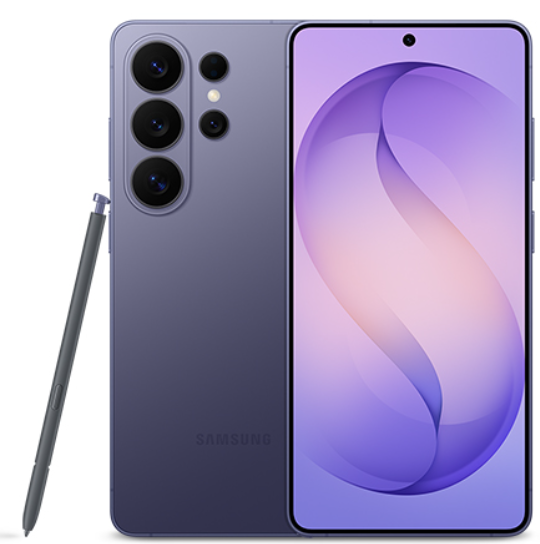
Shopping for the best Android phones 2026 has to offer is a different game from shopping for phones in general. Android isn’t one device — it’s a dozen competing philosophies: Samsung’s do-everything Ultra, Google’s AI-first Pixel, OnePlus’s endurance play, and a mid-range that now embarrasses flagships.
This guide cuts through that noise using published lab measurements, reviewer testing and verified owner reports — not launch-event claims. Every pick below earns its place for a specific kind of buyer, so you can match the phone to your actual life instead of someone else’s spec sheet. If you also want to compare against iPhones, our best phones of 2026 covers both sides of the ecosystem divide.
Quick Verdict: The Best Android Phones of 2026
Best overall: Samsung Galaxy S26 Ultra — the consensus flagship with a 200MP f/1.4 camera system, Privacy Display, S Pen and a 60W charge that fills the phone in 49 minutes. Street prices have already fallen roughly $250 under launch.
Best camera and AI: Google Pixel 10 Pro XL — PhoneArena’s pick for the best overall Android of the year on sheer consistency, with a 3,300-nit display reviewers call the brightest in its class and magnetic Qi2.2 charging. Frequently discounted to the $899–$949 range.
Best battery life: OnePlus 15 — a 7,300mAh silicon-carbon cell and 120W charging behind the highest endurance score on GSMArena’s chart. The trade is cameras that stepped back a generation — and US stock is drying up, so treat it as buy-while-it-lasts.
Best value: Google Pixel 10 — the same Tensor G5 and seven-year update promise as the Pro XL plus a real 5x telephoto, for roughly $330 less at around $785.
Best budget: Google Pixel 10a — $499 with seven years of updates and flagship-grade photo processing, or the Nothing Phone (4a) Pro at the same price if you’d rather have a periscope telephoto and the Glyph light interface.
Best Overall: Samsung Galaxy S26 Ultra
Here’s the honest picture: two of the biggest roundups in the business converge on this phone, while at least one respected outlet dissents — arguing the price-to-performance crown belongs to the battery champion instead. That split is the story of “best overall” in 2026, and understanding it matters more than any single ranking.
It comes down to what you weight. Weight display quality, camera range and support length, and the consensus pick wins comfortably. Weight endurance per dollar, and the 23-hour active-use score at $900 becomes very hard to argue with. Neither camp is wrong; they’re answering different questions.
What settles it for most buyers is the absence of compromises. Seven-year software guarantees are now the standard at the top — Samsung and Google both commit — so “overall” increasingly means the phone with the fewest weak spots across display, cameras and longevity, sold by a brand whose flagships reliably get much cheaper within months of launch.
Who should look elsewhere: constant photographers get more from Google’s computational lead, anyone whose phone dies before dinner should chase the endurance chart, and bargain hunters will find the $785 Pixel keeps the same update promise with a telephoto lens included.
Best Camera and AI: Google Pixel 10 Pro XL
The stills crown in 2026 is decided by software as much as glass. That’s why one major outlet ranks this phone the best Android of the year on consistency alone — reliable results in every lighting condition — while the most exotic camera hardware on the planet (dual 200MP sensors, 10x optical telephoto) never officially reaches American shelves.
“AI camera” now means concrete things: on-device assistants that adapt to you, generative editing that actually works, and zoom that reconstructs detail computationally. The honest caveat every serious reviewer repeats: judge the real optical reach, not the 100x headline number — at the extreme end, you’re looking at reconstruction, not capture.
The rest of the package carries the camera. You get the same seven-year update commitment as Samsung’s best, a display measured as the brightest in its class, and magnetic wireless charging that opens up a whole accessory ecosystem. The camera is the headline; the phone around it is why people stay.
Two things to know before buying: it’s a big, heavy, expensive device with no apology for it — and availability has been patchy, with major retailers showing it out of stock at times. If you want this phone, buy it when you see it at a discount, not when you need it tomorrow.
Best Battery Life: OnePlus 15
Battery is the one category where you should ignore the spec sheet entirely. A 7,300mAh phone and a 4,870mAh phone can end the day in exactly the same place — because capacity is the size of the tank, not the efficiency of the engine burning through it.
What actually decides endurance: how efficient the chip is, whether the high-refresh panel steps its rate down when you’re reading static text, and how hard the modem works on 5G. That’s why serious testers measure real-world drain on 5G instead of quoting milliamp-hours, and why standardized active-use scores exist at all.
Charging speed is the other half of the equation most buyers forget. A smaller battery that refills in under an hour can beat a bigger one that trickles — and the gap between call-time endurance and gaming endurance on a single phone can be nearly 3x, so match the breakdown to your day, not the headline number.
The usual trade with battery-first phones: cameras rarely lead the pack. If your camera roll matters as much as your screen-on time, look at the mid-range overachievers instead — a 5,300mAh budget phone that reviewers say outlasts flagships proves you don’t always have to choose.
Best Value: Google Pixel 10
The value sweet spot in 2026 is where the old “flagship killer” idea grew up. The phones winning it keep the premium chip and a genuine telephoto lens while cutting a third or more off the flagship price — no asterisks, no “lite” compromises that matter.
Below that, the mid-range is honestly contested for the first time in years. $279 buys a 120Hz OLED with a 2x telephoto; $499 buys either the longest update promise in the business or a periscope zoom with a light-up back; $549 gets you a device one major outlet says genuinely feels like a flagship.
Judge “value” by a short checklist: the same update guarantee as the $1,100 tier, a telephoto lens (the first thing cheap phones lose), and a battery that doesn’t embarrass the flagships. The picks that clear all three are the ones worth your money.
Timing is a value feature too. With new generations landing — fresh foldables in late summer, a confirmed Pixel event on the calendar — last year’s flagships at clearance prices can easily beat this year’s mid-rangers. Buy the discount, not the spec sheet.
Best Budget: Google Pixel 10a
Under $500, the real question is what you refuse to give up. One camp keeps the seven-year update promise and photo processing borrowed from flagships costing twice as much. The other hands you a periscope telephoto, day-long battery and a glowing glyph interface for the same money. Both are legitimate — they just serve different buyers.
Drop to the ultra-budget tier and the punishment stops: $279 still gets you a smooth 120Hz OLED and a dedicated 2x telephoto. The floor for “acceptable phone” has risen dramatically, and that’s good news for everyone.
The budget trap to avoid is the carried-over chip. When a manufacturer reuses last year’s silicon, there’s no performance upgrade to pay for — if you already own the previous model, the smart move is waiting a year, not switching sideways.
And if the 6.3-inch class feels small in your hand, there’s a bigger-screen alternative one rung up with faster wired charging — but every step up in budget land asks for a trade, wireless charging here or a year of updates there. Decide which one you’d actually miss before you pay.
Best Compact Flagship: Small Phones That Don’t Compromise
Small phones are nearly extinct, which perversely makes shopping for one easy: the shortlist is genuinely short. If you want flagship power without the 6.8-inch slab, you’re choosing between a handful of devices, not dozens.
What you give up going small is mostly battery — capacity shrinks with the body, so expect a smaller cell than the 5,000mAh-plus big phones carry. Moderate users still get through the day comfortably; heavy users should be honest with themselves first.
What you keep is more than people expect: the same top-tier chip as the Ultra models, the same AI feature set, and — on the best small options — a real triple-camera system rather than a cut-down one. Compact no longer means compromised.
The ergonomic argument is underrated. One-handed use, a phone that fits a front pocket without announcing itself, a weight class around 160 grams — if your phone lives in your pocket all day, size is a feature, not a sacrifice.
Best Gaming Phone: Asus ROG Phone 9 Pro
Gaming phones are the only category honest about what it is: sustained performance under load, cooling hardware that actually works, and physical controls the slab phones simply don’t have. No pretense of being for everyone.
The spec sheet tells half the story. Benchmark apps measure bursts; long sessions are about thermals — a phone that holds its clocks in hour three beats a faster one that throttles in hour one. That’s the entire engineering brief of this category, and it’s why standard reviews underrate these devices.
The honest trade: you get the highest refresh rates on the market and marathon sessions, but you pay with bulk, a camera system nobody brags about, and software support that can lag years behind the seven-year guarantees becoming standard elsewhere.
Who it’s for is narrow and clear. If your most demanding app is a game and your sessions run long, the specialist wins outright. Everyone else is better served by a mainstream flagship — whose chip is already overkill for anything in the Play Store.
Best Foldable: Samsung Galaxy Z Fold 7
Foldables finally grew up this year. The new generation is thinner, brighter and tougher than anything before it, and the book-style inner display is now a genuine small tablet — good enough that “phone that opens into a tablet” stopped sounding like a compromise.
The price of admission is still real money — roughly double a conventional flagship — plus extra thickness when folded and the occasional app that doesn’t know what to do with all that canvas. For a specific buyer — the multitasker, the traveler, the reader — none of that matters next to having a tablet in a pocket.
The smart money right now may be on last year’s model at clearance. You get the same polished multitasking experience for a much smaller bill — buy it for the discount, not the spec sheet, and confirm the update window still has years left in it.
Flip-style foldables are the cheaper on-ramp: they cost less, fit pockets better, and scratch the foldable itch — but you trade the big inner display, which is rather the whole point. Choose the form factor that matches the job you actually want done.
How to Choose the Right Android Phone
Start with your primary use case, not the spec sheet. The phone that wins benchmarks can still be wrong for you if your day is calls and photos rather than games and spreadsheets. Use case first, specs second — always.
Read measurements, not marketing. Independent battery and display tests plus verified owner reports beat any launch-event claim, and it pays to check what kind of number you’re looking at: manufacturer-rated, lab-measured, or merely reported. They’re not the same thing.
Decide how long you’ll keep the phone before anything else. That single answer sorts the seven-year-update flagships from the buy-while-it-lasts deals — and tells you whether to pay for longevity or hunt the clearance rack instead.
Then match your shortlist to the non-negotiables: 5G bands where you actually live, a size your hand agrees with, water resistance if your life needs it. Let the cameras be the tiebreaker between finalists, not the starting point of the search.
Why mAh Is a Bad Battery Comparator
Two phones — one with 7,300mAh, one with 4,870mAh — can end the day in exactly the same place. Capacity tells you how much energy the cell stores; it says nothing about how fast the phone spends it.
An inefficient chip, a high-refresh panel that refuses to step down, and a modem straining on 5G can drain a big battery faster than a well-tuned phone sips a small one. Comparing phones by milliamp-hours is like comparing cars by fuel-tank size while ignoring the engine.
That’s why standardized endurance testing matters: fixed workloads, fixed brightness, every phone measured the same way. Those scores are directly comparable in a way raw capacity never will be — and they expose where endurance actually lives, workload by workload.
So compare tested endurance and charging speed, not capacity. And remember that video-playback hours and gaming hours are different sports entirely — the phone that streams all day can still die in an afternoon of gaming.
Where the Experts Disagree
Ask three respected outlets for the best Android phone and you’ll get three different answers. One names Samsung’s Ultra, another gives it to Google’s Pro XL for consistency across every lighting condition, and the spec tables keep a third candidate in the fight on raw hardware.
Nobody’s cheating — they’re weighting different things. Camera consistency versus versatility, endurance versus display brilliance, dollars-per-unit-of-performance versus no-compromise flagship. The disagreement isn’t noise; it’s the actual information, once you see it.
Read roundups the way reviewers read spec sheets: skeptically. Check whether the ranking follows evidence or affiliate incentives, whether prices are launch-day or street, and whether the “testing” is a lab’s work or a synthesis of others’. Then follow the outlet whose priorities look most like yours.
2026 Buying Tips
Never pay launch price if patience is an option. Android flagships discount hard and early — a few months of waiting routinely saves two to three hundred dollars, and the phone hasn’t changed at all.
Time your purchase around generation changes. When the new foldables or the next Pixel land, last year’s models slide into clearance — excellent phones at a fraction of their debut price, provided the update window still has years left.
Before paying, verify the unglamorous details: the update guarantee in writing, the seller’s reputation, and whether that tempting price comes from an authorized retailer or a marketplace gamble. A bargain from a shady seller isn’t a bargain.
And read real-world tests — battery drain on 5G, camera consistency across lighting conditions, not just the spec sheet. Specs tell you what’s inside the phone; tests tell you what it’s like to live with it.

Ready to buy? Our best mobile phones to buy guide rounds up the safest picks across every budget.
Frequently Asked Questions
Which is the best Android phone in 2026 overall?
Tom’s Guide and TechRadar both put the Samsung Galaxy S26 Ultra on top for its display, camera versatility and seven years of updates — while PhoneArena argues the Pixel 10 Pro XL’s consistency makes it the better pick. If you weight endurance per dollar instead, the OnePlus 15’s chart-topping battery score makes a strong rival case. There’s no single wrong answer among the three.
Should I buy a foldable or a regular phone?
Buy the foldable if you’re a multitasker, reader or traveler who’ll actually use the big inner display daily — the new generation is thinner, brighter and tougher than ever. Stick with a traditional flagship if you want the best cameras, a pocketable size and the lowest price; it’s still the safest all-around choice, and last year’s foldables at clearance narrow the price gap considerably.
How long will my Android phone keep getting updates?
It depends entirely on the brand. Samsung and Google now promise seven years of OS and security updates on their flagships — and even on the $499 Pixel 10a and $549 Galaxy A57. OnePlus offers four OS upgrades, Nothing promises three, and some gaming phones stop at two. Check the guarantee in writing before you buy, because it’s the biggest hidden spec on the sheet.
Samsung or Google — which Android should I pick?
Pick Samsung if you want hardware maximalism: the most versatile camera array, the S Pen, the brightest displays and DeX-style productivity. Pick Google if you want software intelligence: the most consistent cameras, the cleanest Android, the smartest AI features and day-one updates. Both now match each other on the seven-year support promise, so it really comes down to hardware versus software priorities.
Are older or refurbished flagships worth buying in 2026?
Often yes — this is one of the best value plays in Android. Last year’s Ultra-class phones at clearance prices can undercut this year’s mid-rangers while offering better cameras and displays. Just confirm two things: that the update window still has several years left, and — for used devices — that battery health is verified. A two-year-old flagship with a fresh battery beats a new budget phone for most buyers.
Is the OnePlus 15 still worth buying?
For battery life, nothing touches it — but buy with eyes open. Cameras stepped back from the previous generation, software support is shorter than Samsung’s or Google’s, and US inventory is drying up with major retailers listing it as discontinued. If you can find one at its $900 street price and battery is your top priority, it’s a great buy-while-it-lasts pick; otherwise the Pixel 10 is the safer value choice.
