

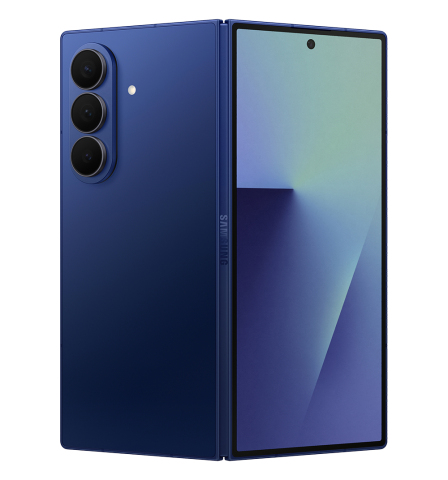
The Samsung Galaxy Z Fold 7 is the foldable Samsung fans have been waiting seven generations for. Thinner, lighter, with a proper 200MP flagship camera and the first Android 16 launch on any phone, it finally behaves like a normal handset when folded — then opens into an 8-inch workspace.
In this Samsung Galaxy Z Fold 7 review for 2026, we break down the design, both displays, performance, cameras, battery life and software, so you can decide whether the flagship foldable is worth its flagship price.
Samsung Galaxy Z Fold 7: Key Specs at a Glance
- Displays: 6.5-inch cover + 8.0-inch folding, both 120Hz LTPO Dynamic AMOLED 2X
- Chipset: Snapdragon 8 Elite for Galaxy (4.47GHz peak)
- RAM/storage: 12GB/256GB or 512GB, 16GB/1TB, UFS 4.0
- Cameras: 200MP main (OIS) + 12MP ultrawide (autofocus, macro) + 10MP 3x telephoto
- Battery: 4,400mAh, 25W wired, 15W wireless, reverse wireless
- Build: 215g, 8.9mm folded, Armor Aluminum, Gorilla Glass Ceramic 2, IP48
- Software: Android 16 with One UI 8, 7 years of updates
- Price: from $1,999 / £1,799 / €2,100
Design and Build: The Thinnest Fold Yet
The headline figure is the thickness. Folded, the Z Fold 7 measures just 8.9mm — down from 12.1mm on the Fold 6 — and unfolded it is a mere 4.2mm. At 215g it is 24g lighter than its predecessor and actually 3g lighter than the Galaxy S25 Ultra, a phone that does not fold in half. It is finally within normal smartphone territory in both pocket and hand.
The slimming comes from a redesigned Armor FlexHinge with a water-droplet, multi-rail structure that spreads stress more evenly and makes the crease less visible. To achieve the thin profile, Samsung removed the S Pen digitiser layer entirely — there is no stylus support on this Fold, which stings for the few who used one, though the digitiser’s removal also let Samsung thicken the ultra-thin glass and simplify the hinge.
Materials are flagship-grade: an Advanced Armor Aluminum frame, Gorilla Glass Ceramic 2 on the cover display, Gorilla Glass Victus 2 on the back, and an IP48 rating (submersion up to 1.5m for 30 minutes; dust protection only against particles larger than 1mm). The fingerprint reader sits in the power button, which is now so thin it can take two or three tries to register.
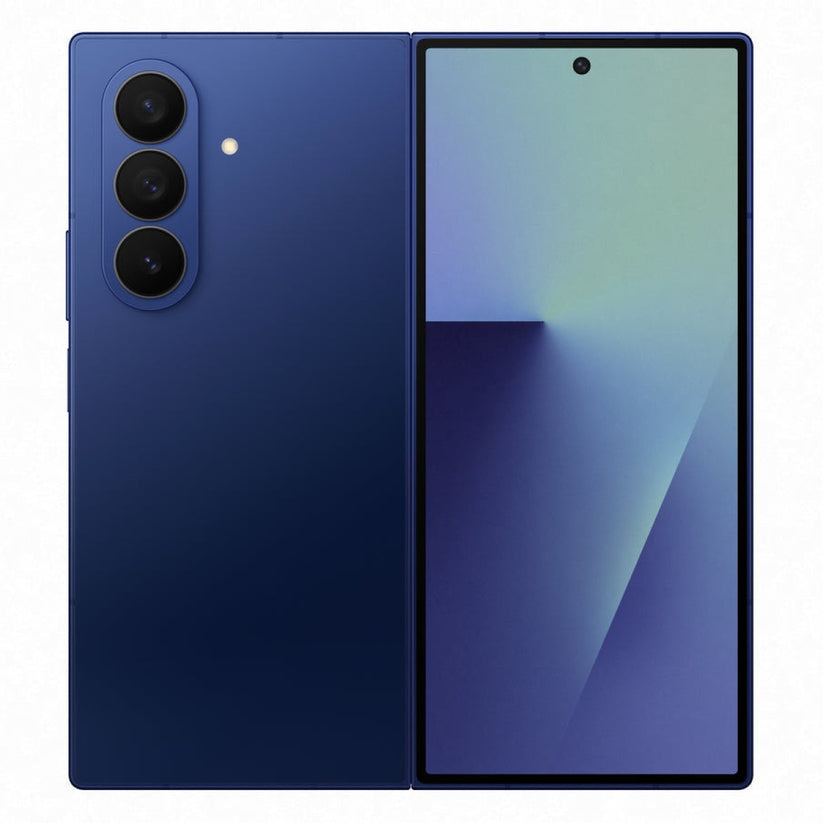
One design misstep is the camera bump, which is more pronounced than before and makes the phone wobble on a table. Colours are Blue Shadow, Silver Shadow, Jet Black, plus a Samsung-exclusive Mint.
Displays: Two Screens, Both Brilliant
The cover screen grows to 6.5 inches with a more conventional 21:9 aspect ratio, up from the cramped 6.3-inch panel of old. It is a Dynamic AMOLED 2X panel at 2520×1080 with LTPO 1–120Hz, pin-sharp and vivid, with brightness that ramps up instantly outdoors. Typing on the closed phone finally feels like typing on a normal phone.
Unfolded, you get an 8.0-inch folding panel at roughly 2184×1968, also LTPO 120Hz with HDR10+ support. The crease is subtle — noticeable only on dark content if you go looking for it. Both screens peak at 2,600 nits, and measured automatic brightness sits around 1,400 nits, comfortable outdoors.
Stereo speakers live in the cover half; they are reasonably loud but a touch flat in the bass. If you are comparing foldables overall, our best foldable phones of 2026 roundup puts the Fold 7 against every serious rival.
Performance: Class-Leading, With Heat
The Snapdragon 8 Elite for Galaxy is a slightly overclocked 8 Elite, with custom Oryon cores peaking at 4.47GHz and an Adreno 830 GPU. Benchmarks confirm the speed: Geekbench 6 scores of 3,009 single-core and 9,385 multi-core, roughly 40% faster CPU and 35% faster GPU than the Fold 6, and AnTuTu crosses 2 million. It is comfortably the fastest foldable silicon you can buy.
The thin body pays a thermal tax. There is no vapour chamber, and sustained loads cause heavy throttling — 3DMark’s stress test drops to about 55% stability, and the phone runs hotter than the Fold 6 under load, though never uncomfortably hot to hold. In day-to-day use there are no slowdowns at all, even with three apps on the big screen, and games like Genshin Impact run fluidly on both displays.
Software and Galaxy AI: Android 16 First
The Fold 7 was the first phone in the world to launch with Android 16, running One UI 8 on top. Samsung promises seven major OS upgrades and seven years of security patches — matched only by Google among Android makers.
One UI 8 is visually familiar, but most of its new ideas are AI. Multimodal AI now works better on the big screen: you can share the display with Gemini Live, move and resize Gemini snippets, and drag AI-generated images into Samsung Notes. Circle to Search now works inside games, Gemini runs in a floating window, and the Gallery’s AI Audio Eraser can isolate or remove speech, music, wind and crowd noise from your videos after capture.
Multitasking is where the software earns its keep. The taskbar, split-screen and pop-up windows are all smooth, and a new 90:10 multitasking split lets one app take almost the whole screen while another sits alongside. Samsung’s foldable software remains the benchmark everyone else is measured against.
Cameras: The 200MP Upgrade
For the first time in years, Samsung gave its big foldable a flagship camera. The main sensor is the 200MP ISOCELL HP2 borrowed from the Galaxy S25 Ultra — a 1/1.3-inch unit with f/1.7, multi-directional PDAF and OIS. Alongside it sit a 12MP ultrawide that finally gains autofocus (and macro shooting) and a familiar 10MP 3x telephoto.
In daylight, the main camera is excellent: clean detail, vibrant but restrained colours and broad dynamic range, virtually matching the S25 Ultra. The ultrawide is one of the better ultrawides on any phone. The 3x telephoto is the weak link — strong in good light but soft as light drops, and no match for the 5x zooms on top slab phones.
Low-light results split depending on Night mode, which rarely fires on its own. Forced manually, it transforms main-camera shots with better contrast, sharpness and colour; at night the telephoto struggles badly and the ultrawide is merely decent. The inner selfie camera is now a 10MP punch-hole (up from a weak 4MP under-display unit) and is actually better than the cover selfie, which can render skin pale. Video tops out at 8K/30fps with 10-bit HDR and Galaxy Log grading, plus the most versatile video suite on any foldable.
Battery and Charging: The Biggest Compromise
The 4,400mAh battery is unchanged for the fifth generation in a row, and it is the Fold 7’s clearest weakness against rivals. Lab tests give an Active Use Score of 11:44 hours on the inner display and 12:56 on the cover — improved over the Fold 6 thanks to chip efficiency, but behind big-battery Chinese rivals.
Real-world life is decent rather than great: expect a full day of 5–7 hours of screen-on time with a charge to spare, though camera-heavy days with 5G will need a top-up. Charging is stuck at 25W wired and 15W wireless — 50% takes 30 minutes and a full charge takes nearly an hour and a half. For battery-first buyers, our best battery life phones guide lists the endurance kings instead.
Price, Colours and Rivals
The Z Fold 7 starts at $1,999 / £1,799 / €2,100 — $100 more than the Fold 6 — topping out at $2,419 for the 16GB/1TB model. It comes in Blue Shadow, Silver Shadow, Jet Black and Mint, and ships with just a USB-C cable in the box.
In the US, its only real rival is last year’s Pixel 9 Pro Fold, which is hard to recommend over the Samsung. In Europe and Asia the competition is fiercer: the Honor Magic V5 offers faster charging and better ingress protection, the Oppo Find N5 matches the battery and keeps stylus support, and the vivo X Fold5 beats Samsung on charging and battery. The Fold 7 counters with the fastest chip, arguably the best main camera, and the best foldable software.
Samsung Galaxy Z Fold 7: FAQs
How much does the Samsung Galaxy Z Fold 7 cost?
It starts at $1,999 / £1,799 / €2,100 for the 12GB/256GB model and rises to about $2,419 for the 16GB/1TB version.
Does the Galaxy Z Fold 7 support the S Pen?
No. Samsung removed the S Pen digitiser layer to make the phone thinner, so no stylus works on this Fold.
Is the Galaxy Z Fold 7 waterproof?
It is IP48 rated — safe in up to 1.5m of water for 30 minutes, but only protected against dust particles larger than 1mm, not fine dust.
How long does the Galaxy Z Fold 7 battery last?
A full day of typical use (5–7 hours screen-on) with some reserve. Charging is 25W wired — 50% in about 30 minutes, a full charge in roughly 1.5 hours.
How many years of updates will the Galaxy Z Fold 7 get?
Seven major Android upgrades and seven years of security patches, launching on Android 16 with One UI 8.
Is the crease on the Galaxy Z Fold 7 visible?
It is subtle in normal use and mostly noticeable only on dark content. The redesigned hinge and thicker glass have reduced it, though reviewers note creases tend to grow over time.
Verdict: Should You Buy the Samsung Galaxy Z Fold 7?
Samsung is back in the game. The Z Fold 7 is the first Fold that does not ask you to compromise on size and weight, and the 200MP camera, bigger screens and class-leading performance make it an exceptional device — arguably the best book-style foldable of its generation.
It is not perfect. The battery and charging lag behind cheaper rivals, the telephoto is middling, the speakers took a small step back, and losing the S Pen removes one of Samsung’s old advantages. At $1,999 it is still a lot of money for a phone.
Buy it if you want the thinnest, most polished foldable with the best software and flagship cameras. Skip it if battery life, charging speed or stylus support are your priorities — the Honor Magic V5 and Oppo Find N5 make strong cases there. For everyone else, this is the foldable to beat.
