

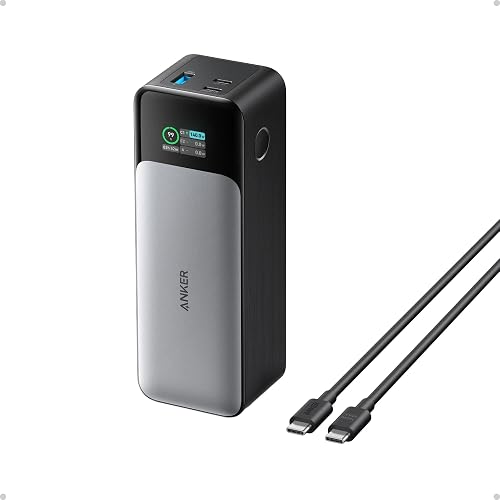
Choosing the best power banks 2026 has to offer is not as simple as picking the biggest battery. A slim 10,000mAh bank lives in your bag for daily phone top-ups, while a laptop-class PD 3.1 battery can meaningfully charge a MacBook or gaming handheld — buy the wrong type and you get a brick you never carry or a cute little charger that cannot keep your devices alive.
This guide ranks the top portable chargers of 2026 by output, capacity, weight and real-world usefulness. We synthesized lab-measured efficiency numbers, published specs and long-term owner reports across the leading roundups from TechRadar’s tested rankings and the top review sites, then picked winners for every situation: phones, laptops, travel, hiking and magnetic wireless charging.
Best Overall Pick of the Best Power Banks 2026
Our top all-rounder is the INIU P50-E1. At roughly 160g it carries 10,000mAh with 45W USB-C output, giving it the best power-to-weight ratio seen in this year’s tested lineups, and lab testing confirmed it fast-charges a Galaxy S25 Ultra at full speed.
What sets it apart is the integrated USB-C lanyard cable that handles the full 45W, solving the perpetual forgot-my-cable problem, plus an accurate digital percentage display and measured conversion efficiency better than most rivals. It is the default answer for most buyers at about $33 with a 3-year warranty.
Best Power Bank for Laptops
Laptop users should look at the Anker 737 PowerCore 24K or the Anker Prime 26K (300W). The 737 delivers 140W total output with lab-verified 89% efficiency at a 100W draw, holds rock-steady voltage under full load and recharges in under an hour. The Prime 26K pushes the ceiling to 300W combined with 140W from a single USB-C port.
Both stay just under the 100Wh airline threshold despite their large capacities, so they fly in carry-on. If you run a MacBook Pro or creator laptop off battery regularly, the single-port wattage matters far more than the headline total — check that your laptop’s PD profile accepts what the bank offers.
Best Budget Power Bank
You do not need to spend much for reliable backup power. The INIU P41-E2 delivers 10,000mAh and 45W output for under £25, weighs less than 200g, and packs two USB-C ports plus one USB-A. It fast-charges an iPhone at full speed and still covers Samsung and Pixel phones that demand up to 45W.
For a little more, the INIU 20,000mAh 45W model is close to unbeatable value: genuine capacity, honest quick top-ups and a travel-friendly body. These budget banks skip frills like Bluetooth apps and per-port wattage readouts — and for pure phone backup, you will not miss them.
Best Magnetic Wireless Power Bank
For iPhone users who hate cables, Qi2 is the magnetic standard to buy now. The Anker MagGo 10K Slim snaps on with strong magnets and delivers 15W Qi2 wireless charging — double the effective rate of the old 7.5W magnetic banks still on sale — with testing showing a full iPhone charge in under two hours.
The INIU magnetic bank offers 25W wireless speeds and a 45W wired fallback over a built-in cable. Wireless charging runs warmer and less efficiently than wired, so expect less usable capacity than the rated number, but for pocketing and go it is the cleanest daily experience.
Best Ultralight Power Bank for Travel
When every gram matters, the NITECORE NB10000 Gen4 stands out at a claimed 143g for 10,000mAh with IPX7 water resistance and two USB-C ports. Hikers, runners and ultralight travelers get real phone and headlamp backup without the weight penalty.
Its 22.5W single-port ceiling makes it a phone-first specialist rather than a laptop charger, and there is no USB-A port. If weight is not your top concern, the 20,000mAh INIU P51L-E1 gives 3+ real phone charges with a built-in cable and flashlight at a fraction of the price.
Best Thin Power Bank for Laptop Bags
The Baseus Blade Pro packs 20,000mAh and 100W into a 0.8-inch slab that slides into a laptop sleeve. Its live voltage, current and estimated-runtime display is genuinely informative rather than decorative, and pass-through charging lets one wall adapter refill the bank and your laptop at the same time.
Caveats: it runs hot at full 100W draw and its footprint is large, so it is a bag item rather than a pocket item. The Blade 2 variant trades capacity down to 12,000mAh with 65W output in an even slimmer 7.3mm body for commuters who value shape over stamina.
How Much Capacity Do You Actually Need?
Rated milliamp-hours tell you surprisingly little about what reaches your phone. Cells store energy at 3.7V while your phone charges at 5V or 9V, and conversion burns energy as heat — a “10,000mAh” bank realistically delivers 60–70% of that, good for one solid phone refill.
Think in watt-hours instead: a 10,000mAh cell at 3.85V holds about 38.5Wh. For phone-only days, 10,000–20,000mAh covers 2–4 full charges. If you charge a laptop too, look for 25,000mAh+ paired with 100W+ single-port output, since capacity alone does not guarantee laptop-charging speed.
Wattage Explained: Matching Output to Your Device
Wattage is the laptop compatibility key. Roughly: 20–30W covers modern phone fast charging, 45W adds tablets and lightweight laptops, 65W suits ultrabooks, 100W+ reliably charges laptops, and 140W (PD 3.1 EPR) is best for MacBook Pro and creator machines.
Watch the difference between a bank’s total combined output and its single-port rating — 300W across three ports is not 300W to one laptop. Peak power is not constant power either: heat, low battery level and protocol negotiation can reduce output, so keep margins for demanding devices covered in our tech reviews.
Charging Multiple Devices at Once
Shared output changes everything. The INIU P50-E1 gives 45W from one port but only 15W total with multiple devices connected. Check the model’s multi-port power-distribution table rather than trusting the biggest number on the box.
For a laptop plus phone plus tablet travel kit, choose banks with high aggregate budgets and published per-port allocations — models like the UGREEN Nexode 200W (dual 100W ports) or Zendure SuperTank Pro (four USB-C ports with 138W total) genuinely run several devices at once. Cables matter too: a 140W claim may need an e-marked 5A USB-C cable to deliver it.
Qi2 Magnetic Charging: Why It Matters in 2026
Wireless charging came of age this year. Qi2’s magnetic alignment finally makes cable-free charging quick and consistent at 15W, moving magnetic banks from novelty to genuinely useful — the old 7.5W standard turns “convenient” into “overnight.”
When shopping magnetic, skip anything that is not Qi2 certified, and remember wireless transfer introduces losses and heat, so a USB-C cable remains the better choice when conserving stored energy or chasing higher power.
Flying With a Power Bank: The 100Wh Rule
The base rule has not changed: keep any battery under 100Wh and carry it in cabin baggage, never in checked luggage. The sweet spot for big banks is roughly 24,000–27,000mAh because so many land just under that threshold.
However, 2026 flight rules got stricter. Since March 2026 a new ICAO global standard limits passengers to two power banks in carry-on and bans recharging them in flight across member countries, with airlines layering their own restrictions on top. Always check your specific airline’s policy before you fly.
Displays, Cables and Extras Worth Paying For
Built-in and retractable cables solve the most annoying part of portable charging. The UGREEN Nexode 20000mAh 165W’s 65cm retractable cable is rated for 25,000+ retractions, and models like the Anker Laptop Power Bank and Anker Nano integrate cables rated up to 100W and 45W respectively.
Smart displays showing real input/output wattage, voltage and estimated runtime beat simple LED dots for managing charging speed — though port-level temperature and charge-cycle readouts are overkill for most people. Pass-through charging, app alerts and semi-solid-state cells that reduce fire risk are niche but meaningful extras for heavy users, and they pair well with other top travel gadgets from our 2026 roundup.
How We Chose These Picks
We compared leading 2026 roundups head-to-head, prioritizing published lab measurements (real efficiency percentages, measured charge counts, power-to-weight math) over manufacturer claims, then cross-checked against long-term owner reports that catch swelling cells and fading charge counts.
We weighted charging suitability, practical energy delivery, portability, connections and value. No single bank wins for everyone: the mistake is buying the wrong wattage for how you actually charge — a 300W flagship for a phone is wasted money, and a 10K budget bank cannot feed a 16-inch laptop.

FAQs
What is the best power bank overall in 2026?
For most people it is the INIU P50-E1 — the best power-to-weight ratio in the tested field with genuine 45W output. For demanding multi-device users with USB-C laptops, the Anker Prime 26K (300W) is the research-backed overall pick. There is no single best pack across all weight and output needs.
Is a 10,000mAh power bank enough for a phone?
Usually for one useful extra charge and sometimes more, depending on the handset, battery age, temperature and conversion efficiency. Do not calculate exact full charges by dividing advertised milliamp-hours — voltage conversion losses mean you only get 60–70% of the rated figure into your phone.
Can a 65W power bank charge a laptop?
Often yes for laptops that accept 65W USB-C Power Delivery, but some performance notebooks demand higher power or restrict USB-C charging. Verify your exact laptop’s requirements, and note that charging under heavy load is slower than when the laptop is sleeping.
Does 300W mean 300W to one USB-C port?
No. On 300W banks like the Anker Prime 26K and EcoFlow RAPID Pro, 300W describes total output across multiple ports; the highest individual USB-C paths are rated up to 140W. Always check the model’s port-sharing documentation before assuming.
Are magnetic power banks as efficient as wired ones?
Generally not. Wireless transfer and magnetic alignment introduce losses and heat, so less stored energy reaches your phone. Qi2 improves convenience and consistency, but a USB-C cable remains preferable when conserving energy or reaching higher power matters.
Can I take a 27,650mAh power bank on a plane?
It depends on its watt-hour rating, not just milliamp-hours. A 27,650mAh bank rated at 99.54Wh sits under the FAA’s ordinary 100Wh threshold, but it must be in carry-on luggage and your airline may enforce stricter rules. Confirm the printed label and policy before departure.
What is the lightest good power bank for hiking?
The NITECORE NB10000 Gen4 at a claimed 143g for 10,000mAh with IPX7 water resistance. Its 22.5W output makes it a phone and headlamp specialist rather than a laptop charger, but for trail use where every gram counts it is the standout.
Why does a power bank recharge slower than advertised?
Fast recharge claims usually require a specific charger, cable or dock. A “50% in 13 minutes” claim is not a promise when using a generic 20W wall adapter. Battery temperature, charge level and the bank’s own input circuitry also shape the real curve.
How many watts do I need for fast charging?
For iPhones, at least 20W over USB-C. Samsung Galaxy and Google Pixel phones want 25–30W, with newer Galaxy Ultra models going higher — but only if the bank supports PPS and you use a 5A USB-C cable. Laptops start at 65W for ultrabooks and 100W+ for pro machines.
Should I buy a 20,000mAh or 10,000mAh power bank?
20,000mAh lasts longer, charges more devices and often comes with higher output for only slightly more bulk — ideal for days out and weekends. 10,000mAh banks are great when you want something truly pocket-sized for a commute or night out, giving one to two full phone charges.
Do I need a power bank with a display?
It is not essential, but a display showing exact battery percentage and real-time input/output stats makes it much easier to manage charging speed across devices. Simple LED dots only show a rough estimate and leave you guessing when it matters.
What is the difference between a power bank and a power station?
Power banks are pocket- or bag-sized and typically under 100Wh for airline carry-on. Power stations hold far more energy (200Wh+) but are too large to fly with — they are built for camping, outages and off-grid work rather than daily carry.
Conclusion
The best power bank 2026 buyers can get is the one that matches their device reality. Most people should grab the INIU P50-E1 and stop worrying about batteries. Laptop travelers get measured value from the Anker 737, iPhone-only households from the MagGo 10K Slim, and ultralight hikers from the NITECORE Gen4.
Match the wattage to your hungriest device, keep capacity under 100Wh for flights, and favor measured efficiency over marketing numbers — then buy on a discount, because this category discounts constantly.
