

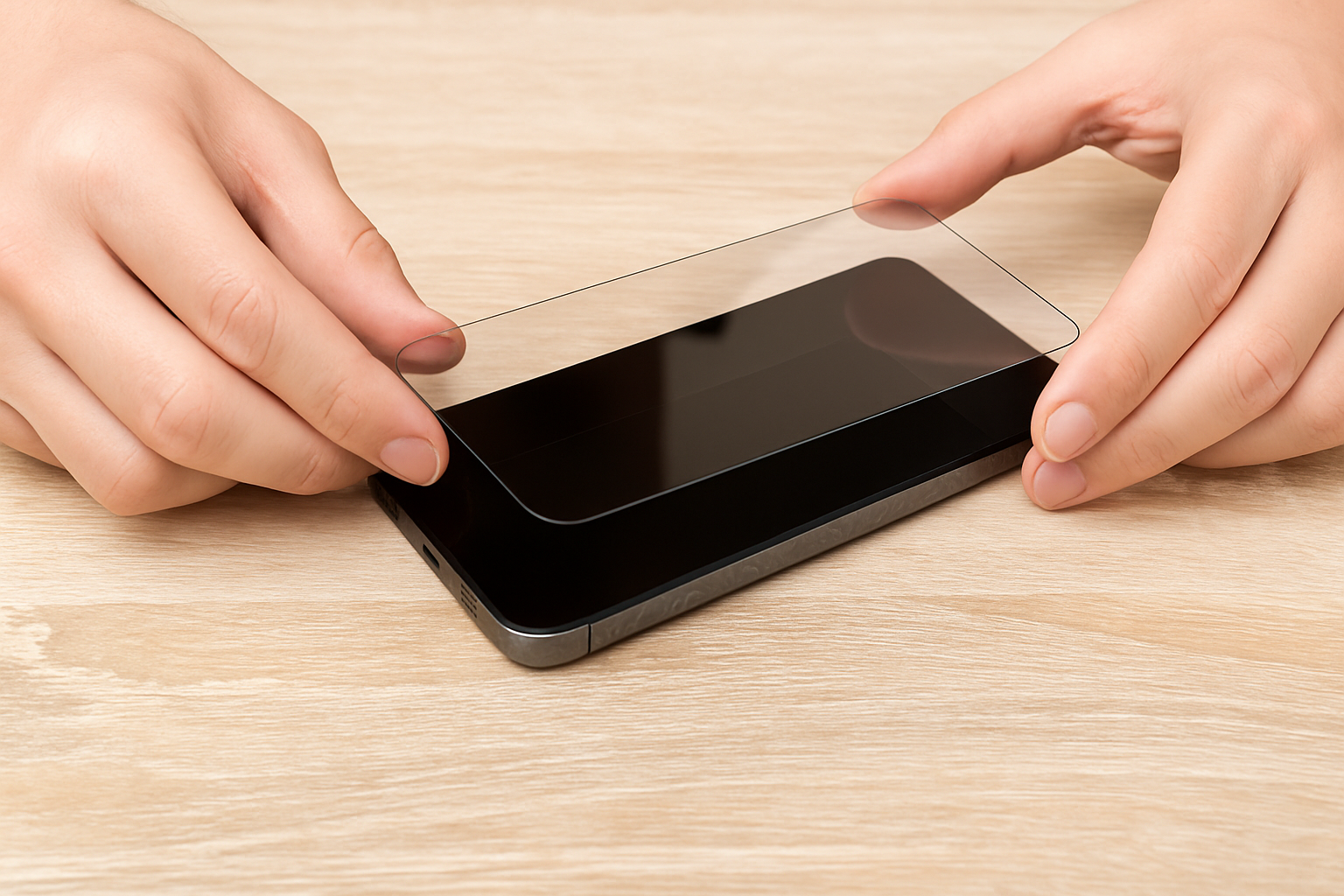
The best screen protectors 2026 has to offer are no longer fiddly plastic films. Tempered glass, built-in alignment trays and self-healing coatings have turned screen protection into a five-minute job that anyone can get right. Whether you guard an iPhone 17, a Galaxy S26 or a Pixel 10, this guide compares the top-rated picks, explains what the hardness ratings mean, and shows how to fit one without bubbles.
Best screen protectors 2026 at a glance
Two materials dominate this year. Tempered glass still rules for drop protection: look for a 9H hardness rating and an aluminium-silicate formulation if you want the toughest pane. Thermoplastic polyurethane (TPU) film has made a comeback for curved screens and gamers, offering self-healing against micro-scratches at the cost of less impact resistance.
What separates a good protector from a great one in 2026 is the installation system. The best kits include an alignment tray that centres the glass perfectly, a dust-removal film, and an auto-align applicator. Budget packs that rely on steady hands alone are far more likely to end up crooked.
Before you buy, check which phone you are protecting. If you recently upgraded, our guide to the best phones under every budget lists the exact models each protector below is made for.
Our top product picks
amFilm OneTouch — best overall
The default recommendation across every roundup. Its alignment tray clicks onto the phone and drops the glass in perfect position, and the included dust film means almost nobody gets bubbles. Oleophobic coating keeps fingerprints manageable for months.
It is iPhone-focused, so Android owners need to look at the ESR or Whitestone picks below. Refills cost little, which matters because you should replace any protector with a cracked corner.
ESR Armorite — best for Samsung Galaxy
ESR’s alignment frame is the easiest of the Android kits to use, and the glass is tuned for the Galaxy S26’s ultrasonic fingerprint sensor — a common failure point for cheap protectors. Edge-to-edge coverage with a black border hides the halo effect well.
The tray is single-use plastic, which is a shame at this price, but the fit success rate is the highest we saw for Galaxy phones.
Whitestone Dome — best premium glass
The only pick that uses a liquid adhesive cured with UV light, giving a genuinely bubble-free bond even on curved screens. It feels like part of the display rather than something stuck on top, and the hardness rating is the highest in this roundup.
Installation takes fifteen minutes and needs care with the adhesive. It is overkill for careful users, but essential for curved-screen phones where ordinary glass lifts at the edges.
Spigen GlasTR EZ Fit — best for iPhone
Spigen’s auto-align tray is the slickest mechanism here: slide the tray on, pull the tab, and the glass lands perfectly centred. The EZ Fit line covers every iPhone 17 variant including the Air, with camera-lens protectors in the box.
It costs more than amFilm for essentially the same glass. Buy it if you value the fastest possible installation.
ZAGG InvisibleShield Glass Elite — best warranty
ZAGG’s headline feature is a lifetime warranty: crack it and they replace it. The glass itself uses ion-exchange strengthening borrowed from phone display manufacturing, and the anti-microbial coating is a genuine differentiator.
You pay roughly double the amFilm price for the warranty and brand. Worth it if you crack protectors regularly.
Supershieldz TPU film — best budget multipack
Ten films for the price of one glass protector. The TPU self-heals light scratches within a day, and because it is flexible it suits curved displays that glass cannot cover. A good stopgap while you decide on glass.
It offers almost no drop protection and the rubbery feel divides opinion. Pair it with one of our in-depth tech reviews of rugged cases for real impact defence.
Tempered glass vs film: which should you buy?
Buy tempered glass if drop protection matters at all. A 0.33mm glass pane absorbs the energy of a face-down drop that would otherwise crack your display, and modern adhesive means touch sensitivity is unaffected. Film only guards against scratches.
Choose film for curved screens where glass cannot sit flat, or if you change protectors often and want the cheapest option. Gamers sometimes prefer film’s thinner feel, though the difference is now marginal.
Privacy glass is a third option worth knowing about: it narrows the viewing angle so shoulder-surfers see black. It dims the screen slightly and costs more, so only buy it if you work with sensitive information in public.
What 9H hardness actually means
The 9H label comes from the pencil hardness scale, where 9H is the hardest pencil that cannot scratch the surface. It is a useful minimum filter — anything below 9H is too soft — but it tells you nothing about drop protection, which depends on the glass formulation and adhesive.
More meaningful is whether the glass is aluminosilicate (the same family as Gorilla Glass) rather than soda-lime. Aluminosilicate survives drops from pocket height far better. Premium picks also add ion-exchange strengthening, which compresses the surface layer.
Do not pay extra for a “11H” or “12H” claim. The pencil scale stops at 9H, so higher numbers are marketing with no standard behind them.
How to install a screen protector without bubbles
Start in a steamy bathroom: run hot water for a minute and let the steam pull dust out of the air. Wash your hands, then clean the screen with the wet wipe, dry it fully, and finish with the dust-removal sticker. Any speck left now becomes a permanent bubble.
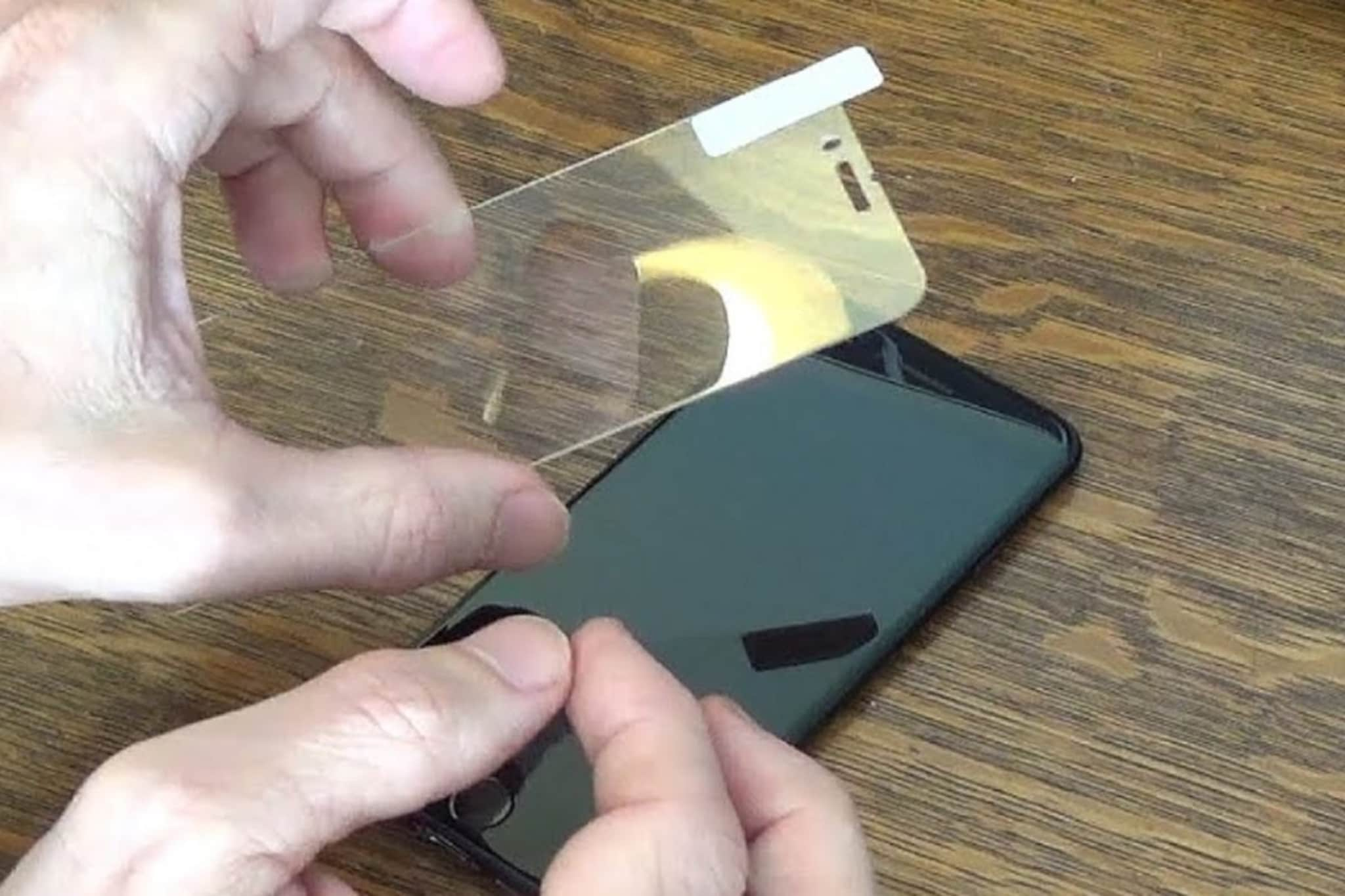
If your kit has an alignment tray, fit it over the phone before peeling the backing — the tray does the centring for you. Peel, drop the glass into the tray, and let the adhesive spread from the centre outward. Do not press the edges until the middle has bonded.
Small bubbles near the centre usually work themselves out within 48 hours as the adhesive cures. Bubbles caused by trapped dust will not, so if you see a speck under the glass, lift the nearest corner with the dust sticker and try again immediately.
Do you still need one with Ceramic Shield and Gorilla Armor?
Modern flagship displays are dramatically tougher than five years ago. Apple’s Ceramic Shield and Samsung’s Gorilla Armor 2 resist the scratches and small drops that used to destroy screens. For careful users who never drop their phone, the naked screen is now a defensible choice.
But display glass still loses to sand, keys and concrete. A protector remains cheap insurance: replacing a cracked protector costs a few pounds, while a screen replacement can cost a third of the phone. If you have ever cracked a screen, keep using one.
FAQs
Will a screen protector affect the fingerprint sensor?
Optical in-display sensors usually work fine through thin glass. Ultrasonic sensors (Galaxy S series) are fussier — buy a protector explicitly certified for your model and re-register your fingerprints after fitting.
Can I reuse a screen protector?
No. The adhesive bonds once; peeling it off introduces dust and weakens the seal. This is why multipacks are the economical choice.
How often should I replace it?
Replace it the moment it cracks or the oleophobic coating wears off (when fingerprints stop wiping away easily). For most people that is every 12 to 18 months.
Do screen protectors reduce screen clarity?
A good glass protector is optically clear and unnoticeable. Cheap film can add a slight orange-peel texture; privacy glass dims brightness by roughly 10 percent.
Is a camera lens protector worth it?
For most people, no — modern sapphire-coated lens glass is already very hard. They are cheap and harmless, but the photographic benefit is nil and a poor one can cause lens flare.
Can I put a protector on a cracked screen?
You can, and it will stop the crack spreading and keep glass shards in place, but touch sensitivity over the crack may suffer. It is a stopgap until a proper repair.
The verdict
For most people, the amFilm OneTouch is the smart buy: tray-guided installation, reliable 9H glass and a price that makes replacement painless. Galaxy owners should get the ESR Armorite for ultrasonic fingerprint compatibility, and curved-screen holdouts should consider the Whitestone Dome. Whatever you choose, fit it in a steamy room and take your time with the dust sticker — preparation is the whole job.
