

Choosing the best smart speakers 2026 has to offer is really a decision about ecosystems, not hardware. We studied the leading expert comparisons and hands-on tests, merged everything they cover, and rebuilt it into one complete guide — top picks for music lovers, smart-home builders, and budget buyers, a plain-English buying breakdown, and honest answers to the questions shoppers actually ask.
Best Smart Speakers of 2026 at a Glance
The short answer: the Amazon Echo (4th Gen) ($99) is the best all-rounder for most homes, the Sonos Era 100 ($249) is the best-sounding compact speaker you can buy, the Echo Pop (~$50) is the budget way into Alexa, the Apple HomePod (2nd Gen) ($299) is the pick for Apple households that prioritize music, and Google’s new Home Speaker ($99) is the current choice for Gemini-powered Google homes.
Best Overall: Amazon Echo (4th Gen)
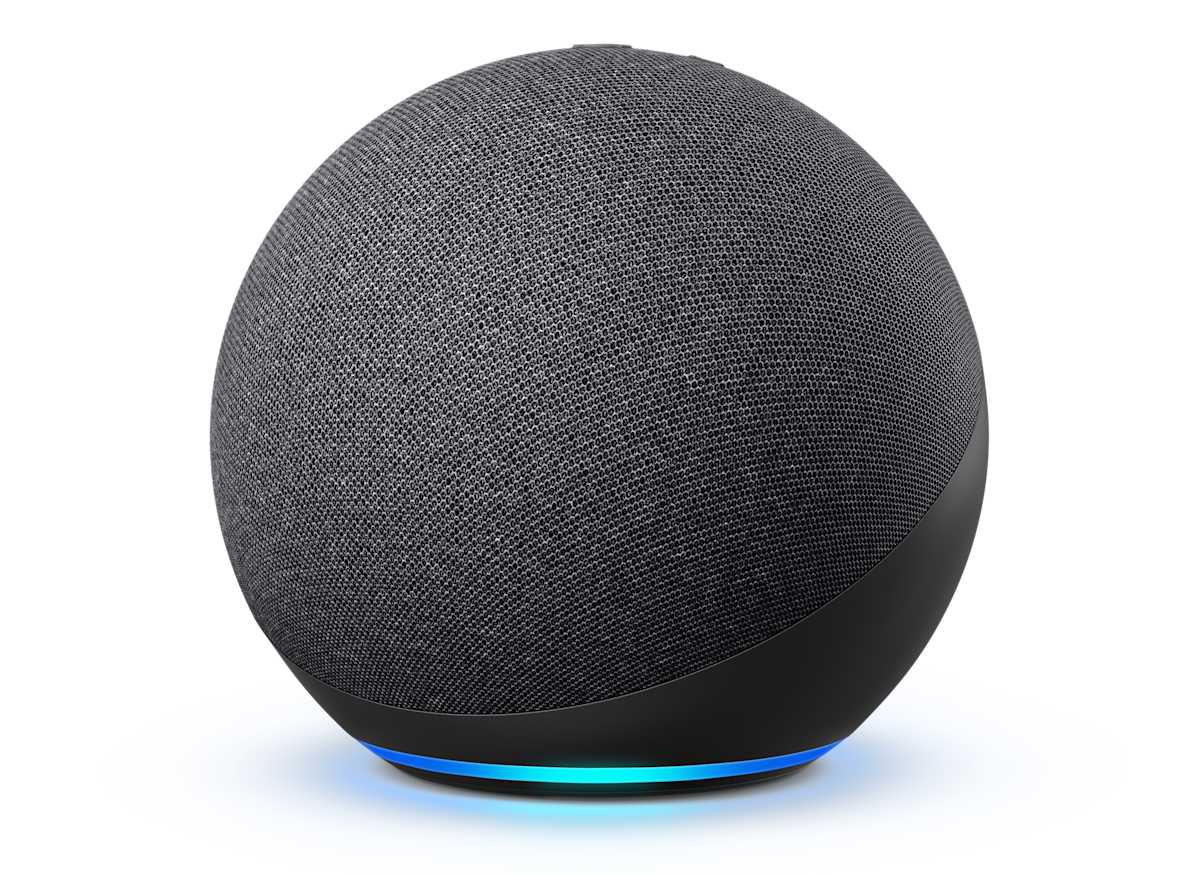
The Echo remains the smart speaker to beat when you factor in features, sound, and price together. The spherical design provides genuine 360-degree dispersion that suits open floor plans, and the 3-inch woofer with dual tweeters delivers clean vocals with decent bass down to about 60Hz — surprisingly balanced for $99.
But the real moat is the platform: over 100,000 Alexa skills, compatibility with more smart-home devices than any rival, and a built-in Zigbee and Matter hub that connects bulbs and sensors with no extra hardware. Alexa’s generative-AI upgrade handles follow-up questions and complex routines far better than before. For most households, this is the safe, reliable default. See how it earned that status in our best gadgets of 2026 roundup.
Best for Music: Sonos Era 100
If audio quality is the priority, stop comparing smart speakers and buy the Era 100. Two angled tweeters and a mid-woofer produce a wide, genuinely stereo soundstage from a single compact box, and independent measurements show flat response from 50Hz to 15kHz — better than speakers costing twice as much. Pair two and you have separation that rivals dedicated bookshelf speakers.
The trade-offs are honest: smart-home chops are thinner than Echo or Nest (complex routines live in the Sonos app), there is no Google Assistant support, and Trueplay room tuning needs an iPhone. But for pure listening — the thing a speaker does most — nothing at $249 touches it. Start with one and expand; the Sonos app makes multi-room growth painless.
Best Budget: Echo Pop
You do not need $100 to get a capable smart speaker. The Echo Pop delivers full Alexa intelligence — skills, routines, smart-home control, timers, questions — in a compact semi-sphere for around $50. It is the ideal way to scatter voice control through bedrooms, offices, and bathrooms without a big investment.
Sound is the compromise: noticeably weaker bass and thinner tone than the full-size Echo, and no built-in smart-home hub radios. Do not buy it as your main living-room music speaker. But as a second, third, or fourth speaker — or a first step into the smart home — its value is unbeatable.
Best for Apple Households: HomePod (2nd Gen) and HomePod Mini
The full-size HomePod ($299) sounds extraordinary for its footprint: a 4-inch high-excursion woofer, five horn-loaded tweeters, computational audio that adapts to the room in seconds, and Spatial Audio with Dolby Atmos. Handoff from iPhone works brilliantly, and on-device Siri processing makes it the privacy leader — your automations keep running even if the internet drops.
The catch is the walled garden: Siri still trails Alexa and Google badly on general-knowledge questions, Spotify needs AirPlay for full control, and there is no Bluetooth streaming at all. The $99 HomePod mini keeps the seamless Apple integration and surprisingly good sound in a smaller package — the smarter starting point. Either way, only buy in if your household is already all-in on Apple.
Best for Google Homes: Google Home Speaker
Google retired the Nest Audio and replaced it with the $99 Google Home Speaker, built around Gemini for Home. The assistant is the star: natural follow-up questions without repeating context, genuinely useful answers to complex queries, and tight Gmail, Calendar, and YouTube Music integration. For households that ask their speaker questions constantly, this matters daily.
It doubles as a Matter hub and Thread 1.3 border router, future-proofing a Google smart home. The caveats: audio is tuned for general listening rather than serious music, some reviewers report inconsistent Gemini responsiveness, and the best conversational features sit behind the $8/month Home Premium plan. If your family lives in Google’s world, though, nothing else fits as naturally.
Ecosystem First: The Decision That Matters Most
Here is the truth every comparison dances around: once you commit to Alexa, Google, or Siri, you will likely stay for years — devices, routines, and habits all compound. So choose by the phone in your pocket and the services you already pay for, not by a spec sheet.
Alexa suits mixed-device homes and smart-home builders (broadest compatibility, best routines). Google suits question-askers and Workspace families (smartest answers, tightest service integration). Siri suits Apple-only households that prize music quality and privacy. The wrong choice is not one of these three — it is running two ecosystems at once, with different wake words that cannot control each other’s devices.
Sound Quality: What Actually Differs
Driver size and tuning matter more than marketing terms. The sweet spot for balanced room sound is a 3–4 inch woofer with dedicated tweeters; anything smaller rolls off bass below 100Hz and shouts in the vocal range at volume. The Sonos Era 100 and HomePod sit in a different league from budget options — flat, full, and composed where cheap speakers strain.
Room adaptation narrows the gap: HomePod’s computational audio re-tunes itself to wall reflections within seconds of placement, Sonos Trueplay does the same via iPhone, and even the Echo adjusts volume to ambient noise. And remember placement physics — six inches from walls, out of cabinets, away from the dishwasher — because a $50 speaker well placed often beats a $200 speaker stuffed in a corner.
Smart Home Control: Hubs, Matter and Thread
The best smart speaker is also a smart-home hub, and the radios inside matter. The Echo (4th Gen) and Echo Show 8 pack Zigbee and Matter, connecting Hue bulbs, Aqara sensors, and similar gear with no extra hub — owners have run 45+ Zigbee devices off one Echo. HomePods and Google’s new speaker serve as Thread border routers for the low-power mesh standard.
Matter promises cross-ecosystem compatibility, but implementation still varies — devices pair most smoothly with Google Home, then HomeKit, with Alexa needing more manual steps. Before buying, list your actual lights, locks, and thermostats and verify each one works with your chosen platform. The standards are converging, but “check, don’t assume” remains the rule.
Privacy: What the Microphones Really Do
Every smart speaker listens locally for its wake word — network monitoring confirms audio only transmits after detection on properly functioning units. The differences are in what happens next. Amazon and Google process most commands in the cloud and store recordings by default (deletable on a schedule you control). Apple processes more on-device, sends nothing until Siri activates, and uses anonymous identifiers.
Every major speaker has a physical mute button that electrically disconnects the microphones — verified by teardown testing, not just software promises. If privacy is a top-three concern, the HomePod mini is the strongest pick; if it is the top concern, consider whether you want an always-listening speaker at all. A Bluetooth speaker with no assistant remains a legitimate choice.
Speaker vs Smart Display
A display earns its space in exactly two rooms: the kitchen (recipes, timers you can see, video calls) and anywhere you watch camera feeds or calendars at a glance. The Echo Show 8’s 8.7-inch screen, 13MP camera, and full hub radios make it the best Alexa countertop hub; Google’s Nest Hub deliberately omits the camera for bedroom-friendly privacy.
Everywhere else, buy the speaker. Displays cost more, complicate privacy, and add nothing to music or voice control. The family-lesson from long-term owners: the kitchen display gets used daily, the living-room speaker gets used for music, and the bedroom is better without a camera staring at the bed.

Multi-Room Audio and Expanding Later
One speaker becomes three faster than you expect, so consider the expansion path. Sonos offers the tightest multi-room sync in the business — no detectable timing drift between rooms — plus stereo pairing that genuinely upgrades music. Amazon’s multi-room works well within Alexa but can show 50–100ms delays that keen ears catch on acoustic music.
Start with the room that matters most, then expand inside the same ecosystem. Mixing brands across rooms is the classic regret: different apps, different wake words, no grouped playback. And for the rest of your connected home, our latest tech accessories of 2026 covers compatible add-ons worth pairing with your speakers.
How to Choose: A Five-Question Filter
One: what phone and services dominate your household — that picks the ecosystem. Two: is music or voice control the primary job — that sets the budget tier. Three: are you building a smart home — that demands hub radios. Four: how much does privacy matter — that may point to Apple or away from speakers entirely. Five: which rooms — that decides speaker versus display.
The common answers: mixed household wanting the safe default, Echo (4th Gen). Music-first listener, Sonos Era 100. Apple everything, HomePod mini to start. Google everything, Google Home Speaker. Tight budget or secondary rooms, Echo Pop. Answer the five questions honestly and the shortlist is obvious.
Frequently Asked Questions
Is Alexa better than Google Assistant in 2026?
For smart-home control and third-party device support, yes — Alexa’s breadth is unmatched. For answering questions and conversational follow-ups, Google’s Gemini-powered assistant is better. Pick by which job matters more in your home.
Which smart speaker has the best voice recognition in noisy environments?
The top performers hold 95%+ accuracy even with background music at moderate volume, thanks to multi-microphone arrays and noise cancellation. In practice, all three major platforms handle kitchen noise well; placement away from the noisiest appliances matters more than brand.
How do Echo, Nest, and HomePod compare for smart home control?
Alexa leads on device compatibility (tens of thousands of devices) and routine complexity. Google is strong and improving, especially for newer Matter devices. HomeKit is the most limited (~300 certified devices) but the most private, with local execution.
Do smart speakers prioritize privacy?
Apple does most — on-device processing and minimal data collection. Amazon and Google store recordings by default but let you review, delete, and auto-delete them. All have physical mic-mute buttons. None is perfectly private by nature of being always-listening.
Are premium smart speakers worth it for audio quality?
If music is a daily activity, yes — the Sonos Era 100 and HomePod are in a different league from $50–100 speakers. If the speaker mostly sets timers and answers questions, the premium buys you little; spend the difference on room placement instead.
Should I get a smart speaker or a smart display?
Get the display for the kitchen (recipes, video calls, visible timers) or anywhere you check cameras and calendars. Everywhere else, the speaker sounds better per dollar and raises fewer privacy questions.
Can I mix Alexa and Google speakers in one home?
You can, but you will regret it — different wake words, separate apps, no grouped multi-room playback, and routines that cannot span platforms. Pick one ecosystem per household and commit.
Do I need a smart home hub if my speaker has one built in?
Usually not to start. The Echo’s Zigbee/Matter radios and the HomePods’ Thread support cover mainstream bulbs, plugs, and sensors directly. You only need a dedicated hub for Z-Wave devices or advanced automation platforms.
The Bottom Line
Buy the Amazon Echo (4th Gen) if you want the best all-around smart speaker for most homes. Buy the Sonos Era 100 if music quality is the whole point. Buy the Echo Pop for budget rooms, the HomePod mini for Apple households, and Google’s Home Speaker for Gemini-powered Google homes. Choose the ecosystem first, match the speaker to the room second, and you will end up with a setup that still makes sense years from now.
