

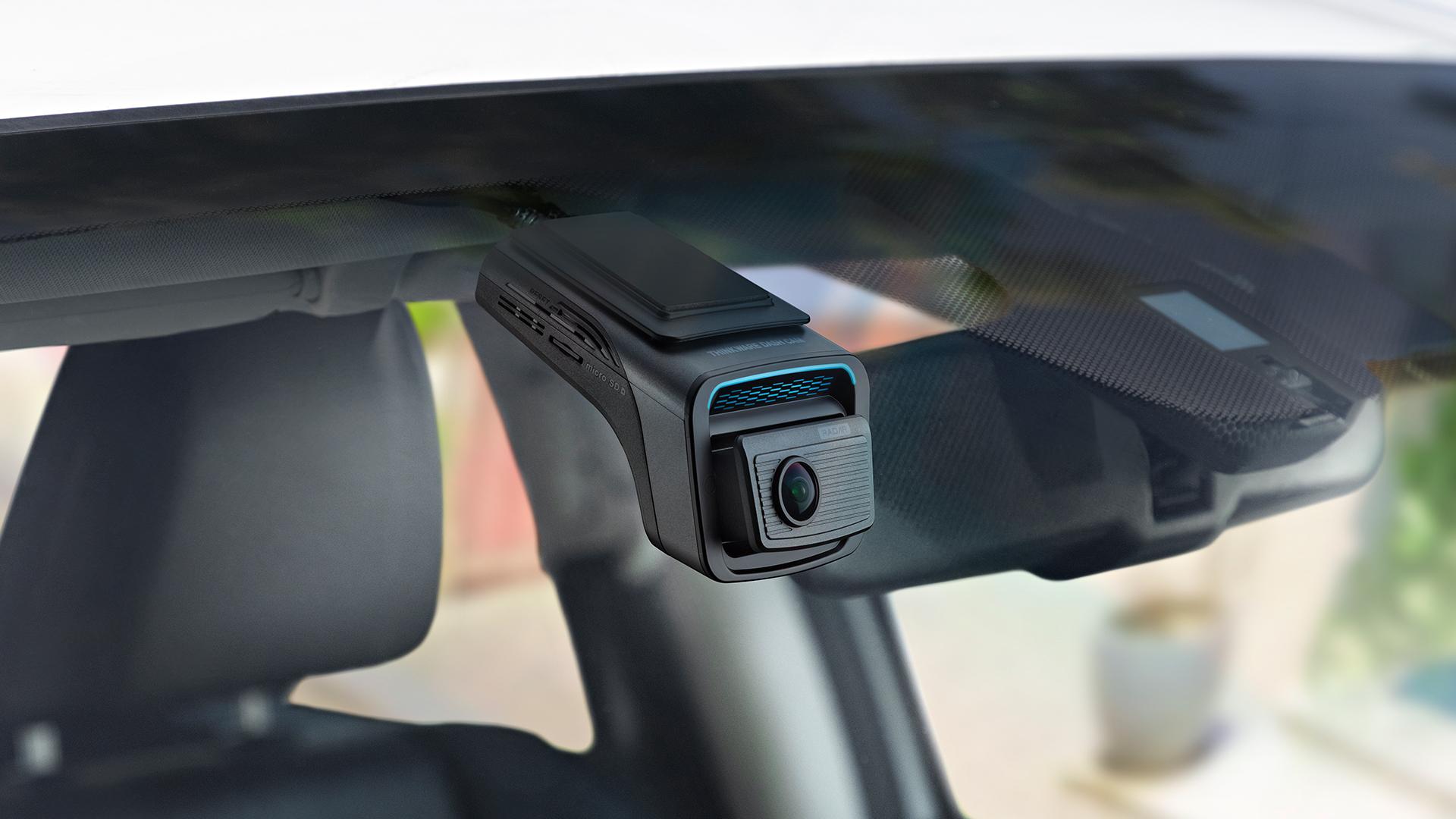
A dash cam is the cheapest insurance policy you can bolt to your windshield. The best dash cams in 2026 record automatically every time you drive, and the good ones keep watch while you are parked too. When a crash, scrape, or hit-and-run happens, you get video evidence instead of just your word against theirs.
Why You Need a Dash Cam
The main reason is simple: footage instead of only a story. Dash cam video can document accident fault, protect you from staged crash fraud, record hit-and-run plates, and capture parking-lot bumps and break-ins while you are away from the car.
Most drivers overbuy resolution and underbuy coverage. Rear-end collisions are among the most common accidents, yet most entry-level cameras only look forward. A dual-channel kit protects you in the scenarios that actually generate claims.
How to Choose the Best Dash Cam
Front-Only vs Dual-Channel vs 3-Channel vs 360°
Pick your camera configuration before you compare models. Front-only cameras suit tight budgets, private-garage parking, and discreet installs, but leave you unprotected from rear impacts and parking-lot clips.
Dual-channel (front + rear) is the practical minimum for most drivers. Three- and four-channel setups add interior or side coverage — mainly for rideshare and commercial drivers documenting passenger interactions.
The “360°” label covers two different products: motorized rotating cameras for remote viewing, and fisheye panoramic cameras that record all angles simultaneously but with distortion and a higher price.
Resolution Is Not the Whole Story
The sensor decides far more than the number on the box. Sony STARVIS 2 sensors — especially the IMX678 variant — are the benchmark for low-light and motion clarity, reading plates under oncoming headlights and at dawn far better than generic-sensor models at the same resolution.
Night Performance, HDR, and Bitrate
Good night vision needs more than resolution. HDR handles bright skies against dark roads, while bitrate decides how much fine detail survives compression. High resolution recorded at a low bitrate throws away exactly the detail you need to read a plate at night.
Supercapacitor Beats Battery Every Time
A dash cam lives on a windshield in full sun, and parked car interiors climb past 140°F. Lithium batteries swell and fail under repeated heat cycling. Supercapacitors handle it — which is why serious testers have standardized on them. For hot climates, a capacitor-based design is close to mandatory.
Parking Mode Needs a Proper Power Setup
Parking mode records with the engine off, so it needs power while parked — a hardwire kit to the fuse box, an OBD power cable, or a dedicated battery pack. These kits are almost never included, so budget roughly $20–30 extra, and use a hardwire kit with a low-voltage cutoff to protect your car battery.
Use a High-Endurance Memory Card
Dash cams write continuously and overwrite in a loop, which chews through ordinary microSD cards within months — and the failure is silent. Buy a high-endurance card from a reputable brand, format it in the camera, and replace it about once a year. Check a random recording occasionally, because mounts loosen and lenses fog without announcing it.
The Best Dash Cams of 2026 at a Glance
| Dash Cam | Best For | Video | Key Spec | Approx. Price |
|---|---|---|---|---|
| Viofo A229 Pro | Most drivers | 4K front + 2K rear | Dual Sony STARVIS 2 | Mid-range |
| Viofo A329S | Premium flagship | 4K front + 2K rear | Modular cameras, Wi-Fi 6 | $399–$470 |
| Thinkware U3000 Pro | Parking mode | 4K front + 2K rear | Radar parking detection | Premium |
| Vueroid S1 4K Infinite | Long-term parking | 4K + 2K + 1080p interior | Ultra-low power parking | High-end |
| Rove R2-4K Dual | Amazon value | 4K front + 1080p rear | 128GB card included | ~$108–$150 |
| REDTIGER F7NP | Budget dual-channel | 4K front + 1080p rear | Consumer Reports #1 | ~$130 |
| Viofo A229 Plus | Affordable front + rear | 2K front + 2K rear | Optional interior cam | Budget |
| Viofo A119 Mini 2 | Budget front-only | 2K STARVIS 2 | Compact, voice control | ~$100–$120 |
| Garmin Dash Cam Mini 3 | Discreet install | 1080p | Car-key size, polarizer | ~$130–$180 |
| Vantrue N4 Pro S | Rideshare drivers | 4K + 1080p cabin + 2.5K rear | Triple STARVIS 2 |
The 10 Best Dash Cams in 2026
Best Overall: Viofo A229 Pro
The most rigorously evidence-backed pick in the category. Wirecutter researched over 400 models and tested 61 cameras hands-on since 2013, concluding this gives drivers the best chance of reading another car’s plate across real-world conditions.
It pairs a 4K front camera with a 2K rear, using Sony STARVIS 2 sensors on both channels — most competitors cut corners on the rear. Add 5GHz Wi-Fi, GPS logging, HDR, and up to 512GB card support. It costs more than the Amazon bargains, but it is the best balance of footage quality, price, and reliability.
Best Premium Dash Cam: Viofo A329S
If you want to buy near the top of the market, this is the pick. It records 4K front footage at a high bitrate — a real differentiator over budget 4K cameras with aggressive compression — and keeps full front quality even in a three-channel setup.
The headline is flexibility: the widest range of add-on cameras tested (2K rear, wide interior, waterproof exterior, front telephoto for plates), a low-power parking mode stretching past a week, and Wi-Fi 6 for faster clip transfers. For a newer car or a serious commute, it is the future-facing choice.
Best for Parking Mode: Thinkware U3000 Pro
The specialist pick if parking is your main risk. Built-in front and rear radar sensors detect nearby movement in low-power parking mode and start recording before an impact happens — rather than after. It supports up to 40 days of parked recording, far beyond the 16–24 hours most cameras manage.
It also shoots 4K up front (STARVIS 2) and 2K at the rear, with thermal protection and cloud support for remote alerts. Be honest about whether you will wire it properly — a premium parking camera on a sloppy power setup is not a premium experience.
Best for Long-Term Parking: Vueroid S1 4K Infinite
Combines top-tier video quality with the longest parking endurance tested — its ultra-low-power mode enables over a year of parked recording on a dedicated battery pack and wakes up about a second after an impact. It also handles extreme heat better than most.
Footage comes from Sony STARVIS 2 sensors (4K front, 2K rear, 1080p interior) with always-on HDR, Infinite Plate Capture for moving plates, and over-the-air firmware updates. A strong pick for street parkers and airport travelers who leave their car unattended for days.
Best Amazon Value: Rove R2-4K Dual
The sensible middle of what most people buy: front and rear coverage, Sony STARVIS 2 front sensor, 4K front + 1080p rear, GPS, 5GHz Wi-Fi, a screen, a supercapacitor, and a free 128GB card in the box. It has sat at Amazon’s #1 Best Seller spot with tens of thousands of ratings.
The reservation is night footage: do not expect the same plate capture as the premium STARVIS 2 systems. One quirk: testing found it captures 25fps at 4K rather than true 30fps. For commuting, family cars, and road trips, it remains the first kit most guides reach for.
Best Budget Dual-Channel: REDTIGER F7NP
Consumer Reports’ #1 dash cam of 2026, scoring above Rove, Viofo, and others in its roundup. At around $130 it packs a Sony STARVIS 2 sensor with F1.5 aperture, 4K front + 1080p rear, 5.8GHz Wi-Fi, GPS, WDR night vision, loop recording, and a memory card in the box, with 170° front and 140° rear wide angles. Buy it for value and third-party credibility. A realistic choice for a second car, a first dash cam, or anyone who wants solid coverage now without premium money.
Best Affordable Front + Rear: Viofo A229 Plus
The sweet spot between the budget A119 Mini 2 and the premium Pro models: 2K front + 2K rear, with an optional 1080p interior camera for three-way coverage — handy for rideshare drivers and parking-lot break-in documentation.
It carries the full Viofo essentials: STARVIS sensors with HDR, voice control, 2.4-inch display, 5GHz Wi-Fi, buffered parking recording, and a capacitor for extreme temperatures. No cloud support, and front quality drops slightly when extra cameras join — but at this price it is the best mix of video quality and core features.
Best Budget Front-Only: Viofo A119 Mini 2
If you only want a front camera, this is the smartest budget choice. It uses a 2K Sony STARVIS 2 sensor with HDR — testers call it the best video clarity in its class — and a good 2K STARVIS 2 camera beats a cheap “4K” with weak night footage.
It is compact and discreet, has voice control, buffered parking recording, Bluetooth and Wi-Fi, and supports cards up to 512GB (card not included). No rear camera and no cloud — but for pure front coverage, nothing this cheap is this well-rounded.
Best Discreet: Garmin Dash Cam Mini 3
For drivers who will only install a camera that disappears. The Mini 3 is about the size of a car key, tucks behind the mirror, and has a built-in polarizer that kills windscreen reflections. No screen — everything runs through the phone app.
The compromise is deliberate: 1080p front-only video is not ideal for plate detail, but it is the camera you are least likely to unplug in frustration.
Best for Rideshare: Vantrue N4 Pro S
The N4 Pro S covers front, rear, and cabin in one system with triple STARVIS 2 sensors — 4K front, 1080p cabin, 2.5K rear. The interior camera documents passenger behavior and traffic stops where road footage alone does not tell the story.
Expect more wiring and settings than a two-channel install, and confirm local recording laws allow interior audio and video where you drive.
Installation Tips That Save Headaches
Mount the camera high, usually behind or near the rearview mirror, without blocking your view. Check local rules on windshield-mounted devices first — placement laws vary.
Route the rear-camera cable carefully. A dual-camera kit still has to fit your car, and sloppy routing looks bad and can interfere with airbags. If routing scares you, budget for help or buy the simpler kit you will actually finish installing.
Reduce glare with a CPL (circular polarizer) filter — the Rove Dual PRO even includes one. Windscreen reflections are one of the biggest silent killers of usable footage.
Treat the app as part of the purchase. If the app is miserable, you will hate saving clips. Fast 5GHz or Wi-Fi 6 transfers make a real difference when you need to pull a clip quickly. Do not overbuy smart features: cloud backup, LTE alerts, and remote viewing can be useful, but many drivers stop using them after the first week.
Dash Cam or Action Camera?
These are different buying decisions. An action camera suits creative footage, travel vlogs, and motorcycle rides — see our guide to the best action cameras of 2026 if that is what you need. A real dash cam suits loop recording, parking events, automatic incident saving, and set-it-and-forget-it reliability. If your gadget shelf keeps growing, you might also enjoy our best drones roundup for every budget and skill level — another category where sensors matter more than the number on the box.
Frequently Asked Questions
What is the best dash cam in 2026?
For most drivers, the Viofo A229 Pro if evidence quality is the priority, or the Rove R2-4K Dual if Amazon value and convenience matter more. The Viofo A329S is the premium pick for a top-end multi-channel system.
Is 4K necessary for a dash cam?
It helps, but sensor quality, HDR, lens quality, and bitrate matter more. A good 2K STARVIS 2 camera beats a cheap 4K with weak night footage — and some budget “4K” cameras upscale from smaller sensors, so check the sensor model.
Should I buy front-only or front and rear?
Front and rear is the better default. Front-only suits budget buyers or discreet installs, but rear coverage helps with tailgating, rear impacts, and parking-lot incidents — the collisions people most often claim on.
Do dash cams drain the car battery?
They can if parking mode is wired badly. A proper hardwire kit with a low-voltage cutoff, an OBD power cable, or a dedicated battery pack prevents battery drain while enabling parked recording.
Do dash cams record while parked?
Most support parking mode, but continuous recording usually needs a hardwire kit rather than the standard 12V plug. Supercapacitor models hold up better in hot parked cars than lithium-battery designs.
Do I need a hardwire kit for parking mode?
Usually yes. Parking mode needs permanent power when the engine is off, so plan on a fuse-box hardwire kit, an OBD cable, or a battery pack. The kit is rarely included — budget roughly $20–30 extra.
What memory card should I use?
A high-endurance microSD card from a reputable brand, rated for continuous recording. Dash cams loop-record around the clock and chew through ordinary cards within months. Format it in the camera and replace it annually.
Supercapacitor or battery?
A supercapacitor. Dash cams sit on windscreens in direct sun, where parked interiors pass 140°F. Lithium batteries swell and fail under that treatment; supercapacitors tolerate repeated heat cycling far better.
Which dash cam has the best night vision?
Models with Sony STARVIS 2 sensors lead after dark. The REDTIGER F7NP’s F1.5 aperture and the dual STARVIS 2 sensors in the Rove Dual PRO and Viofo A329S give them the edge when plates and detail matter at night.
Are dash cams legal?
Generally yes in the US, but rules vary by state for windshield placement and audio recording. Check local rules before recording cabin audio, especially for rideshare use.
Does car insurance go down if you have a dash cam?
In the US, most insurers do not give an automatic discount just for owning one. What footage does is help prove fault after a crash, protecting your premium from an at-fault increase and speeding up claim payouts.
Final Verdict
Buy the camera that matches your actual risk. Most daily drivers should get the Viofo A229 Pro for evidence quality or the Rove R2-4K Dual for value. Street parkers move up to the Thinkware U3000 Pro or Vueroid S1 4K Infinite. Whatever you choose, check the sensor before the resolution, insist on a supercapacitor, buy a high-endurance card, and wire parking mode properly.
