

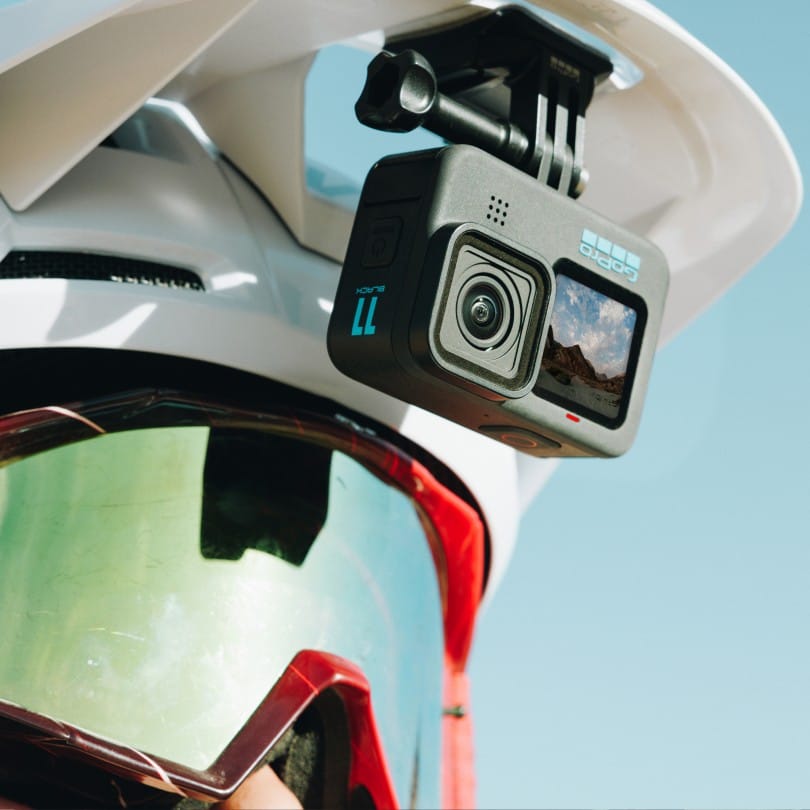
Picking the best action camera in 2026 is harder than it looks, because the market finally stopped being a GoPro-versus-everyone-else story. DJI now leads on sensor size and battery life, Insta360 owns the creative and 360-degree end, and GoPro still wins the stabilization and accessories game. This guide merges the verdicts of five current buying guides to hand you the right pick for your actual use — not just the most expensive box on the shelf.
What Is an Action Camera?
An action camera is built to capture photos and video of things your phone or mirrorless camera can’t survive: swimming, diving, mountain biking, skiing, skateboarding. They’re waterproof and shockproof by design, made for the situations where you’d never risk your normal camera.
They’re video cameras first. The small sensors take decent daylight stills for social media but struggle in low light, so if stills are your priority you’d be better served by one of the top camera phones or a compact camera. On an action camera, judge the video resolution and frame rates, not the megapixel headline.
The Best Action Cameras of 2026 at a Glance
- DJI Osmo Action 6 (~$436) — Best overall — 8K30 / 4K120 — 1/1.1″ sensor — waterproof 20m — ~4 hours battery
- GoPro Hero 13 Black (~$409 bundle) — Best stabilization, accessories — 5.3K60 — 1/1.9″ sensor — waterproof 10m — ~90 min @4K30
- Insta360 Ace Pro 2 (~$390) — Best vlogging, low light — 8K30 — 1/1.3″ Leica sensor — waterproof 12m — ~100 min @4K
- DJI Osmo Action 5 Pro (~$319) — Best value — 4K120 — 1/1.3″ sensor — waterproof 20m — ~4 hours battery
- GoPro Mission 1 Pro (~$699) — Best premium image quality — 8K60 — 1″ 50MP sensor — waterproof 20m — ~5 hours battery
- Insta360 X6 — Best 360 camera — 8K50 (360) — Dual 1/1.1″ sensors — waterproof 20m — ~208 min battery
- DJI Osmo Nano (~$389) — Best mini / wearable — 4K120 — 1/1.3″ sensor — waterproof 10m — ~200 min docked
- AKASO Brave 7 LE (~$119) — Best ultra-budget — 4K30 — 1/3″ sensor — 1m waterproof (40m with housing) — ~90 min battery
Prices are October 2026 snapshots and move weekly, so confirm before buying.
Best Overall: DJI Osmo Action 6
The Action 6 dethroned GoPro as the consensus best action camera this year, and the reason is hardware no rival matches yet: the industry’s first variable aperture (f/2.0–f/4.0) on an action camera. It lets in more light after dark and stops down for sharper footage in bright sun, automatically or on your terms — no ND filter accessories required.
The square 1/1.1-inch sensor is the largest in any standard action camera, capturing 38MP photos and up to 8K30 video. Being square, it grabs a wider frame you can crop to 16:9, 9:16 for social, or 4:3 in post. RockSteady 3.0 and HorizonSteady stabilization are very good, though GoPro’s HyperSmooth still edges it in the most chaotic scenes. There’s 50GB of built-in storage as a safety net, dual 800-nit OLED screens, and wireless DJI Mic support that lets DJI transmitters pair directly with no receiver.
One charge stretches to about four hours of mixed shooting, roughly double a GoPro. The catches: default noise reduction and sharpening are slightly aggressive, voice control is polarizing, and there are no built-in GoPro-style mounting fingers, so finger-mount accessories need an adapter. Note also that DJI sits on the FCC Covered List in the US — certified models remain legal to buy and use, but buyers who need guaranteed long-term supply may prefer GoPro or Insta360.
Best for Stabilization and Accessories: GoPro Hero 13 Black
GoPro invented this category, and the Hero 13 Black is still the default choice for most people — mainly because of stabilization and the ecosystem. HyperSmooth 6.0 with AutoBoost remains the benchmark for high-frequency vibration like motorcycles and mountain bikes, and the 360 Horizon Lock keeps footage level even if the camera rotates completely.
The HB-series interchangeable lenses are new to this generation: ultra-wide, macro, anamorphic, and ND filters that the camera auto-detects and adjusts for. The 1/1.9-inch sensor shoots 5.3K60 video and 27MP photos, with slow motion up to 400fps at 720p (Burst Slo-Mo), 360fps at 900p, or 120fps at 5.3K. You also get GPS, 10-bit HLG HDR, voice control, and Wi-Fi 6 for faster transfers, plus a waterproof rating of 10 metres without a housing.
The trade-offs: battery runs about 90 minutes at 4K30 with the 1900mAh Enduro battery, low light lags behind DJI and Insta360, and reviewers recorded a 51-minute thermal cutoff in 4K60 sun. Still, if you want the safest, most well-rounded pick with the widest accessory range on the planet, this is it.
Best for Vlogging and Low Light: Insta360 Ace Pro 2
If your primary use is creating content for YouTube, TikTok, or social media, the Ace Pro 2 is built for that workflow. Its 1/1.3-inch sensor is co-engineered with Leica, paired with dual AI imaging chips and a PureVideo mode that uses AI to reduce noise in real time — standout low-light performance.
The signature 2.5-inch flip-up touchscreen is the best screen design on any action camera: flip it up for a front-facing vlogging display, leave it down for a standard rear one. It shoots 8K30 video and 50MP photos, and FlowState stabilization with a 360-degree horizon lock keeps everything level. A world-first removable wind filter delivers the clearest onboard audio of the big three, and the app’s AI editing tools — including an AI Highlights Assistant that finds the best moments on-camera — can save real editing time.
Know the limits: battery runs about 100 minutes at 4K (76 minutes in cold testing), the 8K30 mode overheated after 43 minutes in lab testing, there’s no built-in storage so budget for a microSD card, and I-Log footage records in 8-bit rather than 10-bit, which matters if you grade heavily.
Best Value: DJI Osmo Action 5 Pro
The Action 5 Pro was the camera to beat through 2024 and 2025, and with the Action 6 launched, its price has dropped considerably — around $319, which is $90 below the cheapest in-stock Hero 13 Black configuration. That makes it the clearest value in the category.
You still get a large 1/1.3-inch sensor (40MP), f/2.8 aperture, 4K120 video, RockSteady 3.0 stabilization, dual OLED touchscreens, 20 metres of waterproofing without a case, and up to four hours of battery life — matching the Action 6. There’s 47GB of built-in storage, 360-degree HorizonSteady, and it works directly with DJI’s Mic 2 and Mic Mini wireless microphones for high-quality sound.
What you miss versus the Action 6 is the variable aperture and the slightly larger sensor. In practice, unless you shoot a lot in mixed lighting or specifically want aperture control, the Action 5 Pro does about 90% of what the Action 6 does for significantly less money.
Best Premium Image Quality: GoPro Mission 1 Pro
GoPro shipped the Mission 1 and Mission 1 Pro at the end of May 2026, and they’re the most capable cameras the company has ever put in an action body. The headline is the physically larger 1-inch, 50MP sensor — bigger than anything in the DJI Osmo Action 6 — which gathers more light for cleaner images and better detail as light drops.
The Pro shoots 8K at up to 60fps, 8K open gate in 4:3 for reframing, and 4K at up to 240fps for slow motion. It’s a proper action camera despite the “compact cinema” marketing: waterproof to 20 metres without a housing, standard GoPro mount compatibility, and the best battery here at around five hours. The catch is storage — microSD only, no internal — and the price: about $699. This is more camera than most people need. Buy it only if image quality is the thing you care about most and you’ll actually use the resolution.
Best 360 Camera: Insta360 X6
Most action cameras capture what’s in front of them. The Insta360 X6 captures everything, in every direction, at once — then you use the app to reframe the footage into a flat video, picking your angle after the fact.
Dual 1/1.1-inch sensors record 8K 360-degree video at 50fps, a third larger than the previous X5’s sensors, which is where the low-light gain comes from. Drop to single-lens mode for 5K at 60fps or 4K at 120fps slow motion. It’s waterproof to 20 metres without a housing, the lenses are now replaceable (a big deal, since the exposed glass is what gets scratched), and the invisible selfie stick effect produces smooth third-person footage no traditional camera can replicate.
It’s the priciest camera in its category, and early reviewers noted the phone app crashed repeatedly during editing on older phones — budget an iPhone 15 or newer for a stable experience. If you’d rather not pay flagship money, the Insta360 X5 still shoots 8K and is a fair step down. On a tight budget, the GoPro MAX2 is now the cheapest route into 8K 360 at around $299, with 29MP 360 photos and HyperSmooth, though waterproofing is only 5 metres and battery runs about 66 minutes at 8K.
Best Mini and Wearable Camera: DJI Osmo Nano
Mini action cameras emerged in the last couple of years: cameras small enough to clip onto a hat, attach to a pet, or squeeze into tight spaces where a full-size action camera won’t fit. The DJI Osmo Nano weighs about 52 grams on its own and packs a 1/1.3-inch sensor — the same size as the much larger Action 5 Pro.
It shoots 4K120 video, supports 10-bit D-Log M colour, and is waterproof to 10 metres. Use it alone with magnetic mounts that stick it almost anywhere, or pop it into the screen dock for a touchscreen, extra battery life (200 minutes docked), and a more traditional form factor. Internal storage goes up to 128GB, so you don’t necessarily need a memory card.
Video quality is surprisingly good for something so small, though stabilization can struggle in dim conditions. Alternatives: the Insta360 GO 3S is the lightest wearable pick at 39g with a 2.2-inch flip Action Pod screen, and the Insta360 GO Ultra brings a larger 1/1.28-inch sensor, 50MP photos, and Apple Find My support — at a higher price.
Best Budget Picks Under $200
AKASO Brave 7 LE (~$119) is the ultra-budget king: 4K30 video, 6-axis EIS, dual colour screens, and a box that includes two batteries, a charger, a remote, and a waterproof housing rated to 40 metres. Image quality can’t match DJI or GoPro in challenging conditions, but for well-lit outdoor activities and travel vlogs it’s a lot of camera for the money.
SJCAM C300 (~$476 in some markets) offers real 4K and dual touchscreens under a budget ceiling, though its 6-axis gyro stabilization is a visible step below the flagships. The SJCAM C100PRO is a thumb-sized magnetic wearable shooting real 4K at an even lower price, but with no screen to frame yourself and the shortest battery here.
If you want a GoPro specifically, the GoPro Hero (2024) is the cheapest entry into the ecosystem — 4K30, 5m waterproofing, tiny at 86 grams — but it lacks in-camera stabilization (you stabilize afterwards in the free Quik app) and has poor internal microphones. The GoPro Lit HERO (~$190) now undercuts it while shooting 4K60 with a built-in LED light, making the plain Hero hard to justify at current prices.
How to Choose the Best Action Camera for You
Stabilization is what you’re really paying for. The single biggest difference between a cheap action camera and an expensive one is image stabilization. GoPro’s HyperSmooth, DJI’s RockSteady, and Insta360’s FlowState turn shaky handheld footage into something that looks shot on a gimbal. If you care about one spec, make it this one — and note that stabilization crops the image roughly 10–15%, reducing the effective field of view.
Battery life and overheating are the real limits. Spec sheets gloss over this: small batteries drain fast at 4K and high frame rates, often in well under an hour, and cameras can overheat and shut down in the sun. Cold weather can cut battery life 30–50%. Plan for it — buy two or three spare batteries, carry a way to charge on the go. For anything important, a spare battery in your pocket matters more than any feature on the box.
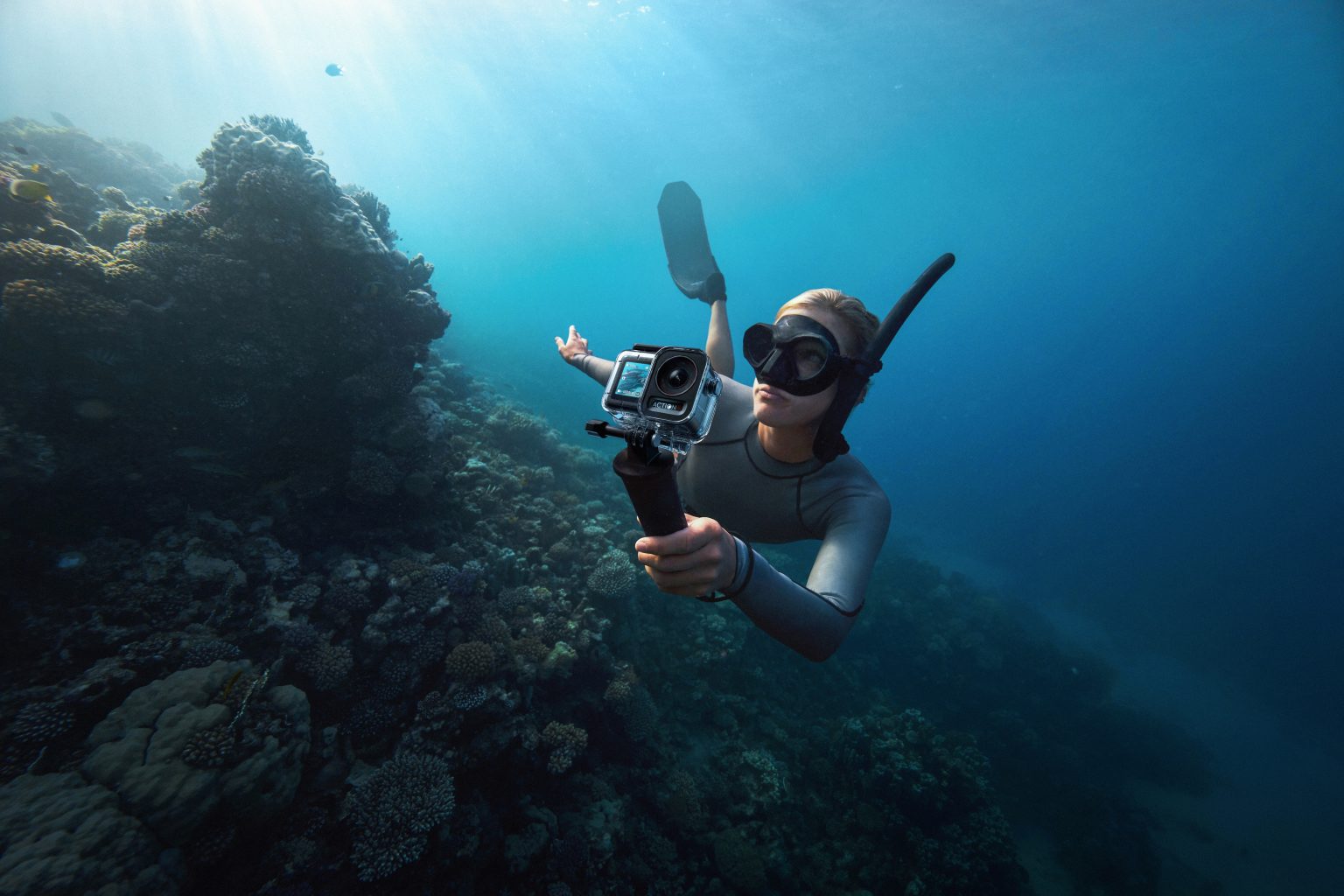
Check the waterproof rating for your water. Most modern action cameras handle around 10 metres without a case, covering snorkelling, swimming, and watersports. The DJI pair and Mission 1 reach 20 metres. Scuba diving needs a dedicated dive housing, and every rating assumes the doors are closed and the seals are clean — sand, salt, and wear void water resistance.
Match the camera to the job. Adventure sports and durability point to the DJI Osmo Action 5 Pro or 6. Low-light and vlogging point to the Action 6 or Ace Pro 2. Stabilization above all — motorcycles, MTB, FPV — points to the Hero 13 Black. 360 content points to the X5, X6, MAX2, or Osmo 360, remembering that 360 footage must be reframed in software before you can publish it.
Watch the price configuration, not just the brand. The bare Hero 13 Black Amazon listing has gone unavailable, so the buyable configuration is a $409 bundle; AKASO’s $119 includes batteries and housing. Comparing a bundle price against a body price is the easiest way to get an action-camera comparison wrong.
Frequently Asked Questions
Which action camera should I buy in 2026?
For most people, the GoPro Hero 13 Black is the safest pick — best stabilization, widest accessory ecosystem, excellent overall video quality. If low-light performance or battery life matter more, the DJI Osmo Action 6 is better. On a tight budget, the AKASO Brave 7 LE covers casual use.
Is GoPro still the best action camera brand?
GoPro still makes the best all-round action camera, mostly thanks to HyperSmooth and the mount ecosystem. But DJI has caught up on video quality and beaten GoPro on battery life and sensor size, while Insta360 leads on creative features and 360-degree video. The default is no longer automatic.
Is GoPro better than Insta360?
Not for low light and vlogging — the Ace Pro 2’s Leica-tuned sensor and flip screen beat the Hero 13 Black there. GoPro still wins on stabilization and its accessory ecosystem, and it’s the safer bet if you already own GoPro mounts.
Do I need 4K in an action camera?
In 2026, yes — 4K is the baseline, and every camera in this guide supports it. The extra resolution is especially useful because you can crop into the interesting parts of the frame without the video looking soft. If you’re only sharing to social media, you may play back at 1080p, but shooting in 4K gives you that flexibility.
Are action cameras waterproof without a case?
Most modern ones are, but the rated depth varies: the Hero 13 Black handles 10 metres, the Ace Pro 2 goes to 12 metres, and the DJI Osmo Action cameras, the GoPro Mission 1, and the Insta360 X6 all reach 20 metres. For deeper diving, every camera needs a dedicated housing.
How long do action camera batteries last?
Typically 60 to 100 minutes of continuous recording, depending on the camera and resolution. The DJI Osmo Action 5 Pro and Action 6 are the exceptions at up to 4 hours, and the GoPro Mission 1 Pro lasts around 5 hours. Always carry at least one spare battery.
What’s the best action camera for snorkelling?
Any waterproof action camera works. The DJI Osmo Action 6 and Insta360 X6 both reach 20 metres without a housing — more than enough for snorkelling — and the AKASO Brave 7 LE’s included 40-metre housing handles it at a fraction of the price.
What accessories do I need?
At minimum: a fast microSD card (64GB or larger), a spare battery, and a hand grip or mounting system. Around water, a floating hand grip is close to essential. Beyond that, your use case decides — helmet mounts for cycling, chest straps for hiking, head straps for POV footage.
What is the best action camera for travel?
The Hero 13 Black is the best all-rounder for travellers — small, rugged, and its stabilization handles everything from walking-around shots to bike or boat mounts. If you want better battery life for long days, the Osmo Action 6 is the alternative.
Is the GoPro Mission 1 Pro worth it?
It’s worth it if you specifically want the best image quality in an action camera and you’ll use the resolution — the 1-inch sensor and 8K60 put it ahead of everything here, with about five hours of battery. For most people, though, it’s more camera than needed; the Osmo Action 6 gets you most of the quality for a good deal less.
Final Word
There’s no single best action camera — there’s the best action camera for the footage you actually shoot. Stabilization and battery life decide more real-world results than megapixels, so weigh those first, check the price configuration you’re really buying, and match the pick to your use case. And if you ever wonder whether a flagship phone could replace a dedicated action cam, our iPhone 17 Pro Max review puts a top-tier phone camera through its paces.
