

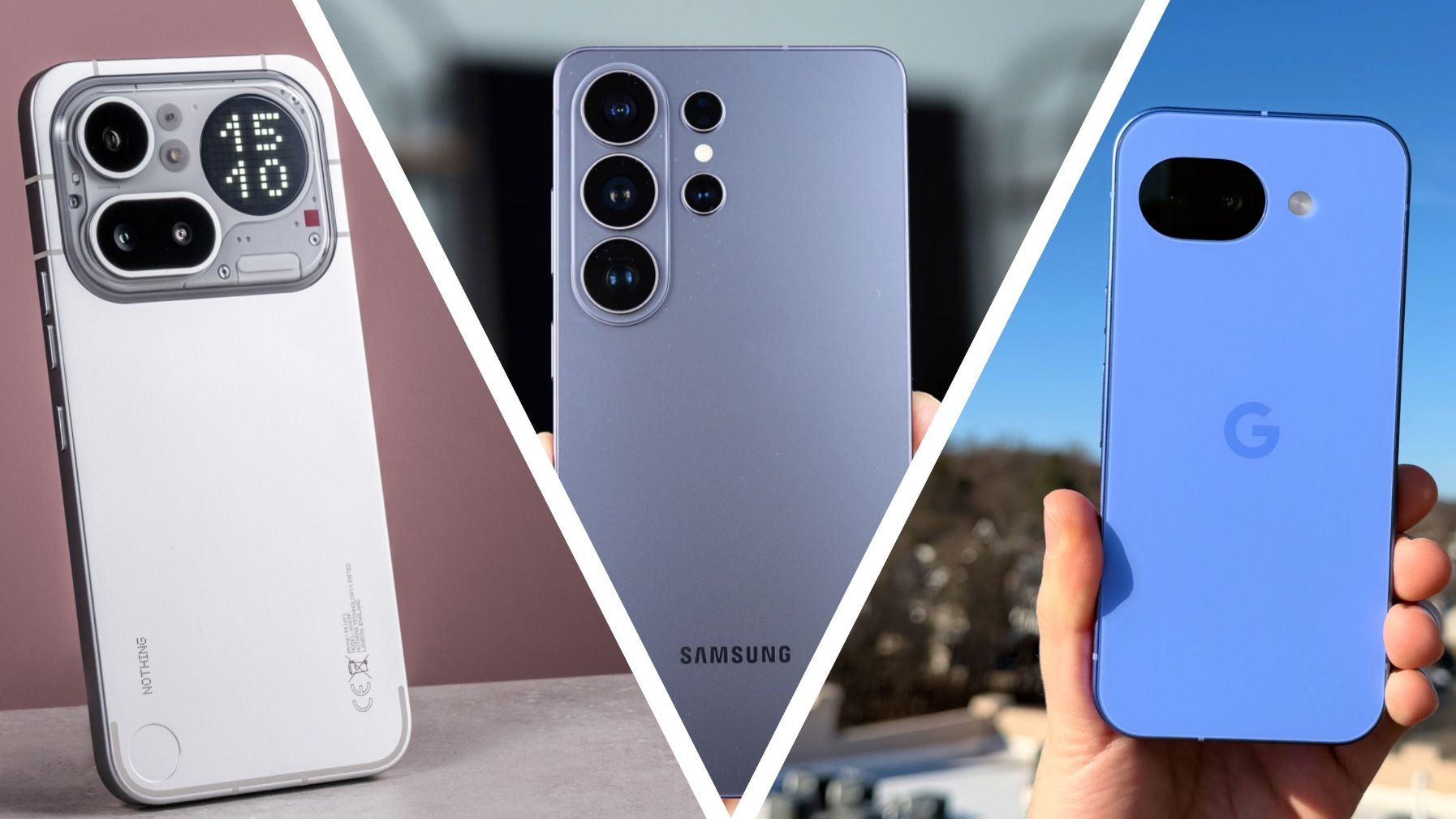
Best Phones Right Now 2026
Looking for the best phones right now? The honest answer is that there is no single phone that wins for everyone. Apple leads on polished performance and video, Samsung builds the most versatile Android flagship, Google makes great cameras easier to carry, and OnePlus prioritises speed, battery life and charging.
This guide ranks the best phones right now using RightWei’s August 2026 critics’ consensus, cross-checked against other 2026 buying guides and spec comparisons. Where those guides disagree — and they do, because newer models such as the iPhone 18 Pro and Galaxy S26 Ultra arrived after RightWei’s guide — we say so, so you can judge the picks with your eyes open.
Prices below are the point-in-time figures reported by the sources, not live quotes. Always verify the current price before you buy, because flagship prices move with sales, trade-in deals and new launches.
Quick Picks: The Best Phones Right Now at a Glance
- Best overall: iPhone 17 Pro — excellent cameras, fast hardware, brighter display, much better battery life.
- Best Android phone: Samsung Galaxy S25 Ultra — superb anti-reflective display, versatile cameras, built-in stylus.
- Best compact Android flagship: Google Pixel 10 Pro — excellent cameras and software in a manageable 6.3-inch body.
- Best for speed and fast charging: OnePlus 13 — flagship performance, bright QHD OLED display, unusually fast charging.
- Best foldable: Samsung Galaxy Z Fold 7 — the most convincing book-style foldable yet, at a very high price.
- Best previous-generation iPhone: Apple iPhone 16 Pro — nearly the full Pro experience in a smaller phone.
- Best previous-generation Pixel: Google Pixel 9 Pro — the full Pro camera system in a 6.3-inch body.
Best Overall: iPhone 17 Pro
Critics report that the iPhone 17 Pro combines excellent cameras, fast hardware, a brighter display and meaningfully better battery life than its predecessor. WIRED considers the Pro models the current US smartphone camera leaders, and reviewers describe the phone as ready for just about any task.
The hardware is built around Apple’s A19 Pro chip, with 12GB of RAM and storage starting at 256GB and rising to 512GB and 1TB. The starting price reported by the sources is $1,099 for the 256GB model. It is an expensive phone, and it is heavier than the previous Pro, which is worth knowing if you hold your phone one-handed all day.
On cameras, the iPhone 17 Pro follows Apple’s consistency-first philosophy: triple 48MP cameras, natural colours, accurate skin tones and video quality that reviewers consistently place at or near the top. If video matters more to you than stills, this is the strongest reason to pick the iPhone over its Android rivals.
The honest trade-off is that this is refinement rather than reinvention. Reviewers do not point to one transformative new feature. You are buying the most polished all-round phone, not the most adventurous one, and you are paying a flagship price for that polish.
Best Android Phone: Samsung Galaxy S25 Ultra
Reviewers agree that the Galaxy S25 Ultra is one of the strongest Android phones of its generation. Its large anti-reflective display is the standout in bright light, where it cuts reflections in a way that makes rivals look like mirrors by comparison, and its camera system is the most versatile here.
The display is a 6.9-inch Dynamic AMOLED panel at 1440 x 3120 with a 1–120Hz adaptive refresh rate. The camera system pairs a 200MP main sensor with a 50MP ultrawide, a 50MP periscope telephoto and a 10MP telephoto, giving you real reach at both 3x and 5x optical zoom. The Snapdragon 8 Elite for Galaxy chip drives it all, with 12GB of RAM and 256GB, 512GB or 1TB of storage.
The built-in S Pen remains the feature no rival matches. If you annotate documents, sketch, or sign things on your phone, that alone can settle the decision. The phone also carries a 5,000mAh battery with 45W wired charging, reaching about 65% in 30 minutes, plus 25W wireless charging.
The trade-offs are familiar: it is large at 218g, it is expensive at $1,299.99 reported, and it is only a modest hardware upgrade if you already own a recent Ultra. Some long-term users also note the S Pen lost its Bluetooth remote-shutter function. If you own an S23 Ultra or older, reviewers call the jump large; from an S24 Ultra, it is mostly better ergonomics and a better ultrawide camera.
Best Compact Android Flagship: Google Pixel 10 Pro
Critics praise the Pixel 10 Pro for getting the fundamentals right: an excellent camera system, a bright 120Hz display, refined hardware and useful software features, all in a manageable 6.3-inch body. For many buyers, that size is the point — flagship cameras without a phone that dominates your pocket.
The display measures 6.3 inches at 2,856 x 1,280, and the camera system pairs a 50MP main sensor with 48MP ultrawide and 48MP telephoto sensors. The Tensor G5 chip powers it, with 16GB of RAM and storage from 128GB up to 1TB. The reported starting price is $999. WIRED scored the Pixel 10 range 8/10, PCMag gave the Pro 4.5/5 and an Editors’ Choice award, and CNET called the Pro models strong all-rounders.
Where the Pixel wins is point-and-shoot reliability. Its computational photography does the work for you, and its on-device AI features — photo fixing, voice tools and smart summaries — are the most mature in this group. If you want the phone that takes the best photo with the least effort, this is the strongest Android answer.
The catches are real, though. Tensor G5 trails faster rivals on raw performance, battery life could be longer at 4,870mAh, some photos look overprocessed, and the heavy emphasis on generative AI will not suit everyone. If you want to compare how Android flagships differ across brands before deciding, our guide to the best Android phones of 2026 breaks down how Samsung, Google and OnePlus compare on cameras, AI and value. Pixel 9 Pro owners, reviewers agree, have little reason to upgrade.
Best for Speed and Fast Charging: OnePlus 13
Critics agree that the OnePlus 13 delivers flagship-level speed, a bright QHD OLED display and unusually fast charging for a starting price around $900. WIRED, Engadget and TechRadar also praise its battery life, although CNET recorded weaker results in its rundown test — a reminder that battery tests vary by method.
The numbers explain the appeal: a 6.82-inch QHD OLED display at 3168 x 1440, a Snapdragon 8 Elite chip, 12GB of RAM with 256GB of storage or 16GB with 512GB, and a matched trio of 50MP cameras — main, ultrawide and 3x telephoto. That is a lot of phone for the money, and it undercuts the iPhone, Samsung and Google flagships on price.
The cameras can produce strong images, but reviewers do not place them consistently alongside the very best camera phones. If photography is your top priority, the Pixel and iPhone still lead. The other compromise is support: six years, rather than the seven years Samsung and Google now promise on their flagships, and there are no built-in Qi2 magnets.
Buy the OnePlus 13 if you value speed, screen quality and charging above camera prestige. It is a hardware-first flagship, and at its price it is the value pick of this group.
Best Foldable: Samsung Galaxy Z Fold 7
Reviewers call the Galaxy Z Fold 7 Samsung’s most convincing book-style foldable yet. Its much thinner, lighter body feels closer to a regular flagship phone, while the larger outer and inner displays, fast performance, strong multitasking software and upgraded 200MP camera preserve the reasons to buy a foldable at all.
The screens are a 6.5-inch outer display and an 8.0-inch inner display, both 120Hz Dynamic AMOLED. The rear cameras are 200MP, 12MP and 10MP, with two 10MP front cameras, and the Snapdragon 8 Elite for Galaxy chip runs the show. Storage runs from 256GB and 512GB with 12GB of RAM up to 1TB with 16GB.
The honest trade-off is severe. US reviewers cite a $2,000 price, while battery capacity is unchanged, charging is only 25W, and S Pen support is gone. That combination is hard to justify unless the larger inner screen genuinely changes how you work — reading documents, splitting apps side by side, or watching video on a tablet-sized canvas.
Buy the Fold 7 only if you will use that inner screen every day. If you just want a great phone, the S25 Ultra gives you nearly everything else for much less money.
Best Previous-Generation iPhone: Apple iPhone 16 Pro
Critics agree that the iPhone 16 Pro delivers nearly the full Pro Max experience in a smaller, easier-to-hold phone. Its 6.3-inch OLED display, A18 Pro performance, 5x telephoto camera, stronger battery life and advanced video tools are the main reasons to buy.
The display runs at 2622 x 1206 with an adaptive 1–120Hz refresh rate, and the cameras pair a 48MP main sensor and 48MP ultrawide with a 12MP telephoto offering 5x optical zoom. Storage starts at 128GB and rises to 1TB, and the reported price is $999. As a previous-generation model, it is also the iPhone most likely to appear in sales.
The trade-offs are a familiar design, a cramped 128GB starting capacity that we would avoid, and a Camera Control button that several reviewers found awkward. Apple Intelligence also failed to make a strong first impression on this generation. Buy the 256GB model or larger, and the 16 Pro remains a very good phone at a discount.
Best Previous-Generation Pixel: Google Pixel 9 Pro
Reviewers praise the Pixel 9 Pro for putting Google’s full Pro camera system and premium OLED display into a manageable 6.3-inch phone. It is the Pixel to buy if you want Pro hardware without an XL-sized body, but the cheaper Pixel 9 is enough for most people.
The 6.3-inch OLED display runs at 1280 x 2856 with a 1–120Hz refresh rate, and the cameras are a 50MP wide, 48MP ultrawide and 48MP 5x telephoto combination. The Tensor G4 chip and 16GB of RAM power it, and the reported price is $999. WIRED praised its camera accuracy and smooth OLED panel, while PCMag highlighted its long battery life and excellent build.
The honest catch is value. It starts at $999, the Tensor G4 trails the best-performing flagship chips according to Tom’s Guide, and several Gemini features still feel unfinished. If you can find it discounted — and previous-generation Pixels discount heavily — it becomes a much stronger buy. At full price, the Pixel 10 Pro is the better choice.
Side-by-Side Comparison: The Best Phones Right Now
| Phone | Display | Chip | Rear cameras | Battery / charging | Reported price |
|---|---|---|---|---|---|
| iPhone 17 Pro | Brighter Pro display | Apple A19 Pro | Triple 48MP | Meaningfully improved battery life | $1,099 (256GB) |
| Samsung Galaxy S25 Ultra | 6.9-inch Dynamic AMOLED, 1440 x 3120, 1–120Hz | Snapdragon 8 Elite for Galaxy | 200MP + 50MP ultrawide + 50MP and 10MP telephoto | 5,000mAh, 45W wired | $1,299.99 |
| Google Pixel 10 Pro | 6.3-inch, 2856 x 1280, 120Hz | Google Tensor G5 | 50MP + 48MP + 48MP | 4,870mAh, 30W wired | $999 |
| OnePlus 13 | 6.82-inch QHD OLED, 3168 x 1440 | Snapdragon 8 Elite | Triple 50MP | Fast charging, strong battery in most tests | $899.99 |
| Samsung Galaxy Z Fold 7 | 6.5-inch outer, 8.0-inch inner, both 120Hz | Snapdragon 8 Elite for Galaxy | 200MP + 12MP + 10MP | 25W charging, unchanged capacity | About $2,000 |
| Apple iPhone 16 Pro | 6.3-inch OLED, 2622 x 1206, 1–120Hz | Apple A18 Pro | 48MP + 48MP + 12MP (5x telephoto) | Stronger battery than its predecessor | $999 |
| Google Pixel 9 Pro | 6.3-inch OLED, 1280 x 2856, 1–120Hz | Google Tensor G4 | 50MP + 48MP + 48MP (5x telephoto) | Long battery life in PCMag testing | $999 |
One caution on this table: sources disagree on some figures, and RightWei’s own comparison table mixes RAM and storage in places. The figures above use the cleaner spec-comparison sources, and prices are point-in-time reports. Check the manufacturer’s current listing before you buy.
How to Choose Among the Best Phones Right Now
Start with your budget, not the spec sheet
Flagships run from about $900 to about $2,000 in this guide, and the differences between them are smaller than the price gaps suggest. A previous-generation flagship at a discount — the iPhone 16 Pro or Pixel 9 Pro — often gives you 90% of the experience for much less money. Other 2026 guides make the same point: last year’s flagships and discounted models are frequently the smartest buys, because prices rose through 2026.
Pick your platform first
iOS versus Android is still the biggest decision, and it is mostly about what you already own. If your family uses iMessage and FaceTime, if you own a Mac or an Apple Watch, the iPhone is the easy pick. If you want the most hardware choice, the most customisation, or a stylus, Android — Samsung or Google — is the answer. Switching platforms is possible, but it costs time and sometimes money in repurchased apps.
Match the camera to how you actually shoot
Ignore large megapixel numbers on their own. Reviewers consistently say sensor quality, processing and consistency matter more than the headline figure. The iPhone leads on video and natural colour, the Pixel leads on effortless stills and AI fixes, and the Samsung leads on zoom versatility. If you shoot concerts or your kids’ matches from the back row, Samsung’s zoom wins. If you shoot video for social media, the iPhone wins.
Check battery life and charging together
A big battery with slow charging and a smaller battery with fast charging can feel similar in daily use. The S25 Ultra pairs 5,000mAh with 45W charging, the Pixel 10 Pro pairs 4,870mAh with 30W, and the OnePlus 13 pairs fast charging with the strongest battery reputation in this group outside Samsung. The Fold 7 is the outlier: premium price, only 25W charging. Also note that battery test results differ between labs — CNET and other testers disagreed on the OnePlus 13 — so treat any single battery claim with caution.
Size, weight and ease of use matter more than you think
The 6.3-inch Pixel and iPhone Pro models are the easy one-handed choices here. The S25 Ultra at 218g and the Fold 7 unfolded are two-handed devices. If a phone is hard to hold, you will enjoy it less no matter how good its camera is. For buyers choosing for a parent or for someone who wants the simplest possible experience, our guide to the best phones for seniors in 2026 covers larger text, simpler setup and easy-to-hold designs in more detail.
Count the years of software support
Support length is now a buying feature, not a footnote. Samsung and Google promise seven years of updates on their current flagships, Apple typically supports iPhones for five to seven years, and OnePlus promises six years on the OnePlus 13. Buy based on years of security-update support remaining, not just the phone’s age or price — a three-year-old flagship with three years of support left beats a brand-new budget phone with one year left.
Do not skimp on storage
None of these phones has expandable storage, so the capacity you buy is the capacity you keep. 128GB is cramped in 2026, especially on the iPhone 16 Pro where it is the base model. 256GB is the sensible minimum for most buyers, and photographers or anyone shooting 4K video should go to 512GB. Storage upgrades are expensive at purchase and impossible later.
When Should You Upgrade?
For most people, a three-to-five-year replacement cycle is now realistic. Upgrade immediately if your current phone no longer receives security updates, has a swollen or unsafe battery, repeatedly fails at essential tasks, or costs nearly as much to repair as it is worth. Otherwise, waiting can save hundreds — either the new model arrives, or the current one gets discounted.
A battery replacement can be better value than a new phone when performance and software support remain adequate. Apple buyers often get the widest choice just after the September launch, but older stock may be discounted during autumn sales. Android flagships commonly receive aggressive trade-in deals at launch and cash discounts several months later. If your current phone is secure and dependable, the best upgrade may be no upgrade at all — wait for a real price drop, not a countdown clock.
One more disagreement to note: later October 2026 guides name the iPhone 18 Pro, iPhone 18 Pro Max and Galaxy S26 Ultra as the new top picks, with the iPhone 18 Pro at $1,199 and the Galaxy S26 Ultra at $1,299.99. Those models postdate RightWei’s August 2026 guide, so they are not ranked here. If you are buying today, check whether those newer models change the value equation before you commit.
FAQs: Best Phones Right Now
What is the best phone to buy right now?
For most people, the iPhone 17 Pro is the best overall phone in RightWei’s critics’ consensus: excellent cameras, fast hardware, a brighter display and much better battery life. Android buyers should get the Galaxy S25 Ultra for versatility and the stylus, or the Pixel 10 Pro for the best point-and-shoot cameras in a smaller body. Later guides name newer models, so check the latest launches before you buy.
Which phone has the best camera?
It depends on what you shoot. The iPhone 17 Pro leads on video and natural colour, the Pixel 10 Pro leads on effortless stills and AI-assisted photos, and the Galaxy S25 Ultra leads on zoom versatility with its 200MP main sensor and dual telephoto lenses. Ignore megapixel counts alone — sensor quality and processing decide the result.
How much should I spend on a phone in 2026?
Flagships in this guide run from about $900 for the OnePlus 13 to about $2,000 for the Galaxy Z Fold 7. Most buyers will be happiest between $900 and $1,300. Previous-generation flagships at a discount often deliver nearly the same experience for less, and mid-range phones now offer much of the flagship experience at half the price.
How long should a phone last?
With proper care, a flagship should last four to five years or more. Samsung and Google now offer seven years of updates on current flagships, Apple typically supports iPhones for five to seven years, and OnePlus offers six years on the OnePlus 13. Keep a phone as long as it gets security updates, the battery lasts your day or can be replaced, and it does what you need.
Is it better to replace the battery or buy a new phone?
If your phone still has years of software support left, replacing the battery is usually the better value — a fresh battery can make a three-year-old phone feel new. If it is near the end of its support window or has other problems, put the money toward a newer phone instead, ideally a used phone one or two generations old.
Should I buy a foldable phone?
Only if the larger inner screen changes how you work. The Galaxy Z Fold 7 is Samsung’s most convincing foldable yet, with a thinner body and strong multitasking, but it costs about $2,000, charges at only 25W and has no S Pen support. For most buyers, a regular flagship is the better buy.
Is the iPhone or Samsung better?
Neither is objectively better — they win different things. Apple wins on polished performance, video quality and ecosystem, while Samsung wins on display versatility, zoom cameras, multitasking and the S Pen. Choose by ecosystem, camera priorities and whether you want a stylus, not by brand loyalty alone.
Verdict: The Best Phones Right Now
The best phones right now, on the critics’ consensus, are the iPhone 17 Pro overall, the Galaxy S25 Ultra for Android power users, the Pixel 10 Pro for effortless photography in a compact body, and the OnePlus 13 for speed and value. The Galaxy Z Fold 7 is the foldable pick for a narrow audience, and the iPhone 16 Pro and Pixel 9 Pro are the smart discounted alternatives.
Our advice: pick your platform, pick your camera priority, buy 256GB or more, and check the years of support left before you pay. And if your current phone is still secure and dependable, wait for a genuine price drop — the best phone deal is often the one you did not rush.
