

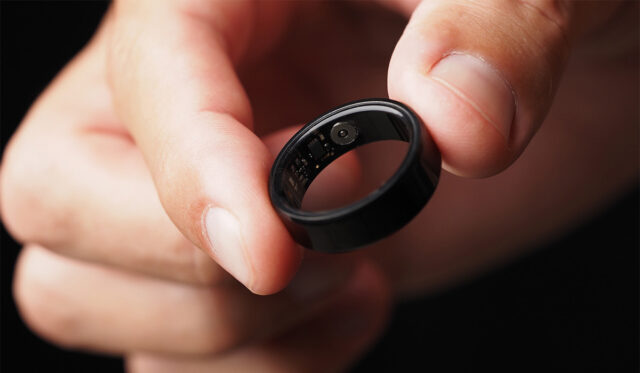
Smart rings have become the default choice for people who want sleep and recovery data without wearing a watch to bed. They’re screenless, light, and last several days per charge — and the market has matured fast from a niche with clunky apps into a category with clear leaders and real science behind the tracking. The best smart ring for you in 2026 comes down to three things: whether you’ll pay a subscription, which phone you use, and how carefully you handle sizing.
Why Track Health From Your Finger?
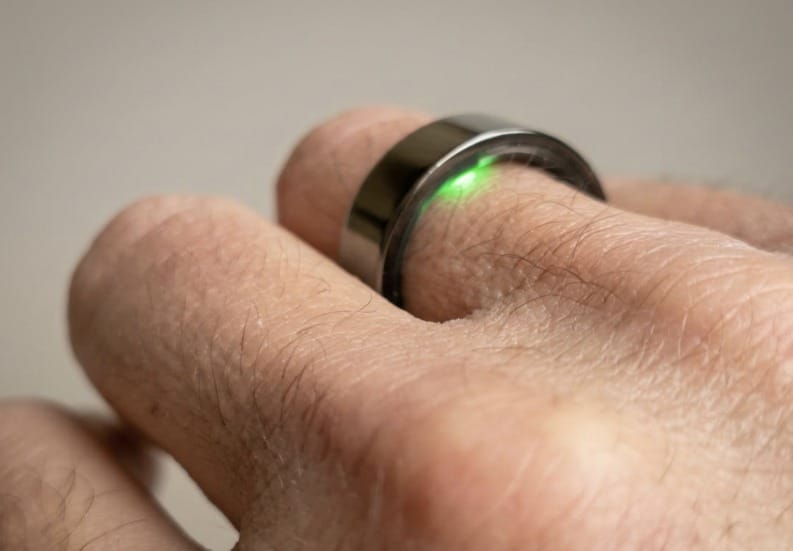
The arteries in your fingers sit close to the skin — which is why medical pulse oximeters clip onto a fingertip. A ring also moves less than a watch while you sleep, helping optical sensors get a steady signal overnight. That makes rings especially good at the metrics that matter for recovery: heart rate variability (the variation between heartbeats, a common marker of recovery and stress), resting heart rate (a rising trend can be an early sign of fatigue or illness), skin temperature trends (useful for cycle tracking and spotting incoming illness), and blood oxygen during sleep.
The flip side: rings are less suited to tracking heart rate during intense intervals or heavy lifting, where grip pressure and hand movement disrupt the signal. If live workout data matters to you, pair the ring with a chest strap or watch for training sessions.
The Best Smart Rings of 2026 at a Glance
- Oura Ring 5 ($399–499) — Best app & insights — $5.99/mo required for full features — 6–9 days battery — iPhone & Android
- Samsung Galaxy Ring (~$400) — Best for Android — No subscription — Up to 7 days battery — Android only
- RingConn Gen 3 (~$349) — Best value, no subscription — None — 11–14 days battery — iPhone & Android
- Ultrahuman Ring Pro ($479) — Longest battery — None (optional paid add-ons) — Up to 15 days battery — iPhone & Android
- RingConn Gen 2 Air ($199) — Best budget — None — ~10 days battery — iPhone & Android
- RENPHO Lynx (~$180) — Cheapest fundamentals — None — ~7 days battery — iPhone & Android
Best Overall: Oura Ring 5
Oura is still the reference point for the category, and the Ring 5 is the most refined hardware in it: about 40% smaller than the previous generation at just 2.28mm thick and from 2 grams, waterproof to 100 metres, with a 6–9 day battery. It tracks over 50 metrics across sleep, activity, stress, heart, metabolic, and women’s health, integrates with more than 40 apps including Strava and Natural Cycles, and turns data into daily Readiness, Sleep, and Activity scores plus an Oura Advisor AI assistant you can ask about your own trends.
The reason most reviewers still rank it first is software, not sensors. Independent research found the Oura ring matched research-grade sleep/wake detection at about 0.88–0.89 accuracy against polysomnography — a meaningful bar for a consumer device. It’s also HSA and FSA eligible. The honest flaw is the cost over time: the $5.99 monthly membership is mandatory for full insights and historical data, so the sticker price is not the price. Add three years of membership to the hardware and Oura becomes the most expensive ring here to own.
Best for Android: Samsung Galaxy Ring
If your phone is already a Galaxy, the integration with Samsung Health is seamless in a way no third-party ring manages — and there’s no subscription. The ring weighs as little as 2.3 grams depending on size, runs up to 7 days per charge, ships with a sizing kit rather than selling it separately, and includes a charging case that tops it up on the go.
You get a daily Energy Score, sleep stages, heart rate and skin temperature trends, plus a handy double-pinch gesture to dismiss alarms or take a photo with your phone. The limitations are real, though: it does not support iPhone at all, key features need a Samsung Galaxy phone specifically, and several features require wearing it seven nights in a 30-night period to activate. A Galaxy Ring 2 isn’t expected before 2027.
Best Value Without a Subscription: RingConn Gen 3
For sleep tracking at the lowest standard price, the RingConn Gen 3 is the most practical pick: no subscription, a universal wireless charging case in the box, and haptic health alerts from a built-in vibration motor — something no rival here has. The official battery rating runs 11–14 days (10–12 with vibration on), it’s rated IP68 with 100m water resistance, offers the widest size range here at 6 to 15, and measures just 2.3mm.
The app now syncs two ways with both Apple Health and Health Connect, so workouts, heart rate, and sleep live alongside the rest of your data. The cautions are fit and scope: the inner resin layer grips more than the plastic sizing kit, so size carefully and test overnight, and as a newer flagship from a smaller brand it lacks Oura’s years of algorithm refinement. The standard Gen 2 remains available with automatic sleep apnea monitoring for those who want that screening flag at a lower price.
Best Budget: RingConn Gen 2 Air
The Gen 2 Air is the strongest argument against paying monthly: at $199, standard features carry no app fee at all, battery runs around 10 days, and at 2mm thick and 2.5 grams it’s the least noticeable ring here — which matters for something you sleep in every night. Titanium steel build, AI-generated daily reports, and tracking across sleep, heart rate, stress, blood oxygen, activity, and menstrual cycles.
The honest flaw: the Air drops the automatic sleep apnea monitoring found on the standard Gen 2, and the data presentation is graph-heavy rather than interpretive. The RENPHO Lynx is the other budget path at around $180: sleep, blood oxygen, stress, heart rate, steps and calories with no subscription, syncing to Apple Health and Google Health Connect, though it covers the basics well and stops there.
Longest Battery: Ultrahuman Ring Pro
Announced in February 2026 and shipping since October, the Ring Pro carries the longest official battery rating of the four flagships: up to 15 days per charge (roughly 12 in the higher-tracking Turbo Mode, over 15 in the lower-power Chill Mode), with the PRO charging case stretching that to up to 45 days between plug-ins. Core features come with no recurring fee — though Ultrahuman’s PowerPlugs marketplace carries both free and paid add-ons, so the “no subscription” claim has its own footnote.
It gives you the full smart-ring feature set — HRV, sleep, body temperature, SpO2 — with accuracy more than good enough for trend tracking, and you own your data outright. US buyers should know the backstory: after Oura won a patent case at the ITC in 2025, the older Ring Air was blocked from US import; the redesigned Ring Pro has been cleared by US Customs and sells in the US again. At $479 including the charging case, it’s still cheaper than three years of Oura ownership.
Smart Ring vs Smartwatch: Which Do You Need?
They’re not direct competitors. A smartwatch is a communication and productivity device that also tracks health. A smart ring is a health and recovery device that does nothing else — and that focus is the point. Rings are significantly more comfortable to sleep in, which matters because sleep is where most of the valuable data comes from. They have no screen pulling your attention, so no notification creep from your wrist. Battery life runs 4–12 days versus 1–2 for most watches, and they’re genuinely discreet — in a meeting or at a formal event, nobody knows you’re wearing a health tracker. You can even wear your regular watch alongside a ring without friction.
The trade-off is no GPS, no real-time workout display, and no apps. If you need those, a smartwatch — or one of the best fitness trackers built for training — is still the right call. And if you train with music, our AirPods Pro 3 review covers Apple’s latest audio upgrade for workouts.
How to Choose the Best Smart Ring for You
Do the subscription math first. Almost every roundup ranks Oura at the top and treats its membership as a footnote. It’s not a footnote — it’s the whole decision. Oura charges roughly $6 per month on top of $349–499 of hardware, pushing real five-year ownership past $550–850. Every other major ring here is a one-time purchase with no monthly fee — a $300-plus swing in total cost of ownership. If you cancel the membership, you keep only basic daily scores; the advanced insights and history lock until you resubscribe.
Get a sizing kit and wear it for 24 hours. Finger size changes with temperature, hydration, and exercise, and the plastic sizing kits every brand ships don’t match the friction of the final titanium ring. Sizes aren’t portable between brands or generations, and user reports describe real quirks: the Oura Ring 5 fits snugger than the 4 at the same nominal size, the RingConn Gen 3’s inner resin grips more than its test ring, and some Galaxy Ring owners find a daytime-comfortable fit turns painfully tight during sleep.
Match the ring to your phone. Three of the four flagships are platform-agnostic — Oura, RingConn, and Ultrahuman offer the same core features on iPhone and Android. The Samsung Galaxy Ring is the exception: Android only, no iPhone support, and its best features need a Samsung Galaxy phone.
Set honest accuracy expectations. Smart rings are validated wellness trackers, not medical devices. They do the simple things well — resting heart rate and time-domain HRV trends are solid — but precise sleep-stage classification and consumer SpO2 are estimates. The honest rule: trust them for direction and relative change over time, not clinical-grade single-night numbers, and never to rule out a condition like sleep apnea. None of them is a medical device or a diagnostic tool.
Check availability in your country. The four makers don’t offer the same line-ups everywhere: Oura’s US store sells the Ring 5, RingConn the Gen 3, and the Ultrahuman Ring AIR isn’t sold in the US at all after the patent case — only the redesigned Ring PRO. Confirm the exact configuration you want before ordering.
Wearing One at the Gym
Gripping barbells, dumbbells, or pull-up bars can scratch a ring and press it uncomfortably into your finger. Cheap silicone bands slide over the ring during lifting sessions and stop metal-on-metal scratches. Moving the ring to your non-dominant hand — or removing it for deadlifts and rows — is often the easiest fix; log the session from your phone so the workout still counts. Gloves or lifting straps reduce friction too.
Frequently Asked Questions
What is the best smart ring in 2026?
For most people the Oura Ring 5 is the best all-round smart ring thanks to its app, insights, and small size — but it needs a $5.99/month membership for full features. If you want no subscription, the Samsung Galaxy Ring is the pick for Android users and the RingConn Gen 2 or Gen 3 is the pick for iPhone users or anyone who wants the longest battery life.
Do smart rings require a subscription?
Some do. Oura requires a $5.99 monthly membership for full insights and historical data, which adds around $215 over three years. RingConn, Samsung Galaxy Ring, Ultrahuman Ring Pro, and RENPHO Lynx provide their data with no recurring fee.
Is the Oura subscription worth it?
For the right buyer, yes. The membership unlocks Oura’s readiness explanations, deeper sleep analysis, trends, and behavior coaching, and Oura has more peer-reviewed validation than any rival. At roughly $72 a year, though, five years adds about $350 on top of the hardware — so plan on $550-plus all-in. If you mostly want raw metrics, a no-subscription ring gives you most of the value for one payment.
Oura Ring 5 vs Oura Ring 4: what is the difference?
The Ring 5 is about 40% smaller, rated for 6–9 days of battery versus 5–8 days for the Ring 4, and costs $399–499. Both use the same app and membership. The Ring 4 is now often discounted, which makes it good value if size isn’t a priority — though buying superseded hardware means a shorter runway of software support.
Does the Samsung Galaxy Ring work with iPhone?
No. It’s set up and used through the Samsung Health app on Android (Android 11 or later) and cannot sync to Apple Health. On Android, Samsung Health can share your ring data with Health Connect.
Which smart ring has the best battery life?
The Ultrahuman Ring Pro leads the flagships at up to 15 days per charge (45 with its charging case). RingConn’s Gen 3 runs 11–14 days, the Gen 2 around 10–12 days, the Galaxy Ring up to 7 days, and the Oura Ring 5 six to nine days.
Do smart rings track workouts well?
Not particularly. Workout tracking is the weakest feature across the whole category, and very few rings offer advanced features like ECG or blood pressure. Rings are best understood as passive overnight and all-day health trackers rather than fitness watches — for training data, pair with a watch or chest strap.
Can you wear a smart ring while lifting weights?
You can, but gripping barbells and dumbbells can scratch the ring and pinch your finger. Many lifters move the ring to the non-dominant hand, slide a cheap silicone cover over it, or take it off for heavy pulling sessions and log the workout from their phone instead.
Can a sleep tracker make your sleep worse?
For some people, yes. Sleep researchers coined the term orthosomnia in 2017 for patients whose fixation on tracker data was itself causing the sleep problem — estimated at roughly 3–14% of users in one study. The habit that separates people who benefit: watch the weekly trend, not the nightly score. If anxious checking or dread about the morning score appears, take the ring off and speak to a doctor.
Are smart rings accurate?
They estimate rather than measure. They’re not medical devices, and single-night numbers shouldn’t be treated as diagnoses. They’re reliable for resting heart rate and HRV trends, and for sleep/wake detection the Oura ring matched research-grade equipment at about 0.88–0.89 accuracy. Treat the data as a trend indicator.
Where should I buy a smart ring?
Buy direct from the brand where you can — that’s where the warranty is cleanest and sales show up first. Oura and RingConn are the exceptions, where Amazon is the most reliable buy path. Avoid third-party marketplace resellers, which routinely lag on price and muddy the warranty.
Final Word
For most people a smart ring is benign and mildly useful — nudging earlier bedtimes and occasionally surfacing something real like chronic sleep restriction. Decide the subscription question first, size carefully, and buy one you can look at weekly rather than obsess over nightly. The ring that fits your phone, finger, and budget after month three is the right one.
