

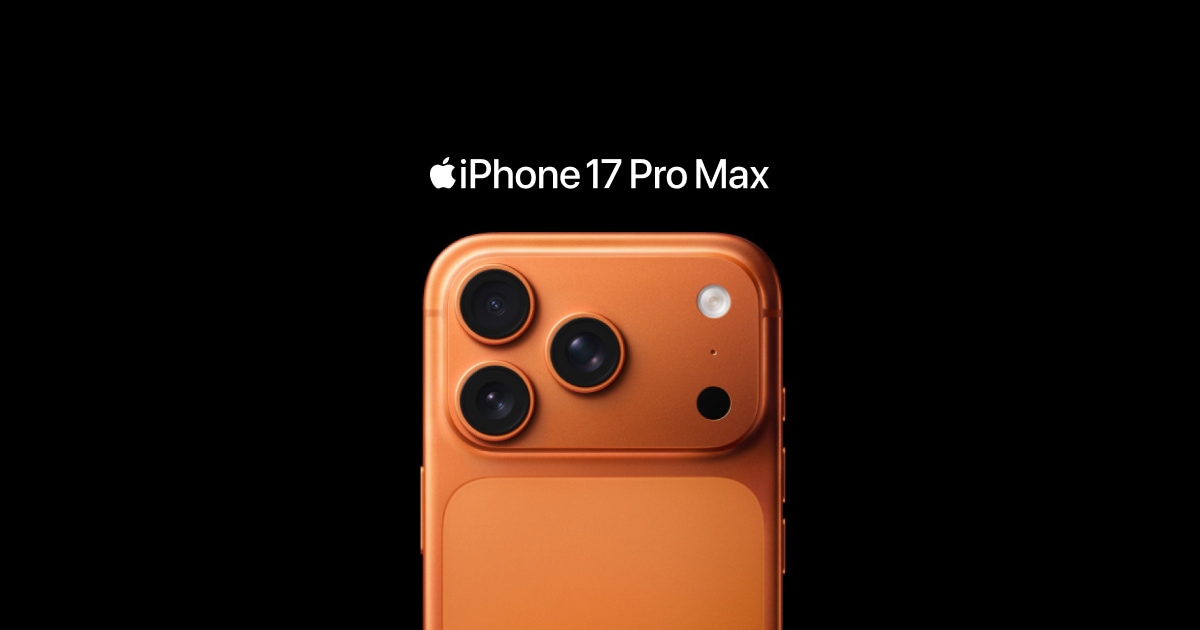
This iPhone 17 Pro Max review reassesses Apple’s 2025 flagship in 2026: a forged aluminum unibody with a laser-welded vapor chamber, three 48MP Fusion cameras reaching 8x optical-quality zoom, and battery ratings of up to 39 hours of video playback. It is no longer Apple’s newest phone, but at a meaningful discount it remains one of the most capable devices you can buy.
Below, we work through the design, display, cameras, A19 Pro performance, battery life and software across every major source, then deliver our final verdict on who should buy it now.
iPhone 17 Pro Max Review: Quick Verdict
The iPhone 17 Pro Max is Apple’s most complete 2025 flagship: a bigger battery, a larger 6.9-inch display and extra thermal headroom make it the most capable model in the 17 lineup, especially for heavy users, media consumers and creators. It is not revolutionary, but it delivers across design, battery, camera and performance without gimmicks.
The catch is timing. Apple retired it from its main online store after launching the iPhone 18 generation, and its value now depends entirely on the discount versus the newer Pro Max. Owners of an iPhone 14 or older get a transformative upgrade; iPhone 16 Pro Max owners can reasonably skip this cycle.
Key Specifications
| Feature | Detail |
|---|---|
| Display | 6.9-inch Super Retina XDR OLED, 2868×1320 at 460 ppi, ProMotion 120Hz, Always-On, up to 3,000 nits peak outdoor brightness |
| Chip | A19 Pro (6-core CPU, 6-core GPU with Neural Accelerators, 16-core Neural Engine), 12GB RAM |
| Storage | 256GB / 512GB / 1TB / 2TB |
| Rear cameras | 48MP Fusion Main + 48MP Fusion Ultra Wide + 48MP Fusion Telephoto; 4x optical and 8x optical-quality zoom; up to 40x digital |
| Front camera | 18MP Center Stage with autofocus and Dual Capture |
| Battery | Up to 39 hours video playback (eSIM-only models); 50% charge in ~20 minutes with a 40W+ USB-C adapter |
| Build | Forged aluminum unibody, Ceramic Shield 2 front, Ceramic Shield back, IP68 |
| Connectivity | Apple N1 chip, Wi-Fi 7, Bluetooth 6, Thread, 5G, USB-C with USB 3 |
| Colors | Cosmic Orange, Deep Blue, Silver |
| Launch price | $1,199 (256GB) to $1,999 (2TB) |
Design and Build Quality
Forged Aluminum Unibody and Camera Plateau
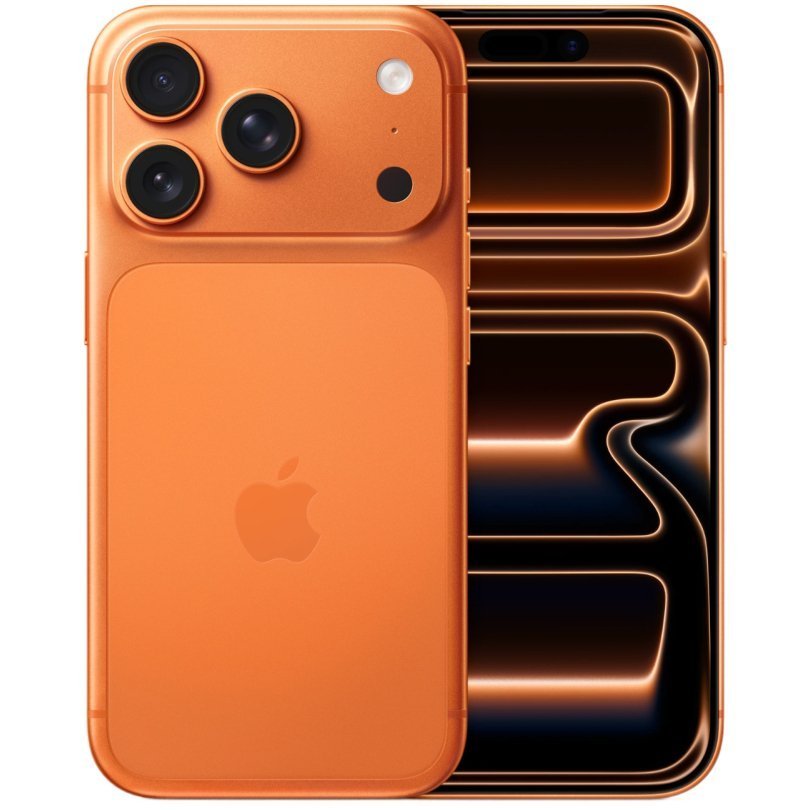
Apple dropped the titanium frame of the 16 Pro line for a forged aluminum unibody built around thermal performance. The aluminum chassis works with a laser-welded vapor chamber to spread A19 Pro heat through the body instead of concentrating it around the processor, which is why the phone stays comfortable during gaming and video exports.
The wide rear camera plateau is not just styling: it creates extra internal room for components and battery capacity while giving Apple space to reorganize the antennas around the upper chassis. A redesigned antenna system delivers stronger, more reliable signal in weak-reception areas. Regional models weigh roughly 231–233 grams.
Materials, Colors and Durability
Ceramic Shield 2 protects the front with three times better scratch resistance than the previous generation, and for the first time Ceramic Shield also protects the back — rated four times more resistant to cracks than the glass back it replaced. In real-world use, the finish survived daily pocket wear without a mark.
The three finishes are Cosmic Orange, Deep Blue and Silver. The bold Cosmic Orange makes a statement and divides opinion, while the aluminum build keeps the large device feeling solid rather than fragile.
Water and Dust Resistance
The phone carries an IP68 rating under IEC 60529, with Apple specifying a maximum depth of six metres for up to 30 minutes in controlled conditions. As always, water resistance is not permanent and can decrease with normal wear.
Display
The 6.9-inch Super Retina XDR OLED runs at 2868×1320 (460 ppi) with ProMotion up to 120Hz, Always-On display, HDR and True Tone. Peak brightness reaches 1,600 nits in HDR and up to 3,000 nits outdoors, aided by an anti-reflective coating that makes the screen genuinely usable in direct sunlight.
In practice, outdoor readability outclasses previous iPhones, and the sheer size makes video, reading and the camera viewfinder more immersive. ProMotion keeps navigation consistently smooth, though the Dynamic Island still eats screen space that some users consider wasted.
Camera System
Triple 48MP Fusion Cameras
The rear system pairs a 48MP Fusion Main, 48MP Fusion Ultra Wide and 48MP Fusion Telephoto — the equivalent of eight lenses. The Main captures 24MP or 48MP images, the Ultra Wide outputs 48MP and handles macro, and the Telephoto is a 100mm-equivalent 4x optical camera that also enables a 200mm-equivalent 8x optical-quality mode using its high-resolution sensor.
That distinction matters: 8x is optical-quality, not a separate native 8x optical lens — the longest optical-quality zoom ever on an iPhone. Digital zoom reaches 40x, but the best quality sits at the native and optical-quality focal lengths. Low-light shots stay detailed and color-accurate thanks to Photonic Engine, Deep Fusion and sensor-shift stabilization.
For video, this remains a serious production tool in 2026: Dolby Vision, ProRes, ProRes RAW, Apple Log 2, external recording and genlock are still uncommon phone features, and the USB-C port’s USB 3 speeds make offloading large ProRes files practical.
18MP Center Stage Front Camera and Dual Capture
The 18MP Center Stage front camera adds autofocus, wider framing, smarter group composition and ultra-stabilized video. Dual Capture records from the front and rear cameras at the same time — ideal for travel narration, interviews, reactions and behind-the-scenes footage — while Center Stage automatically reframes people as they move.
Performance: A19 Pro Chip
The A19 Pro combines a 6-core CPU, 6-core GPU with Neural Accelerators and a 16-core Neural Engine with hardware-accelerated ray tracing, backed by 12GB of RAM. Geekbench scores of around 3,777 single-core and 9,780 multi-core keep it comfortably high-end even after the A20 Pro arrived in the iPhone 18 line.
The larger chassis gives the Max an edge over the smaller 17 Pro: better thermal management sustains high performance longer, with noticeably less heat buildup during extended gaming, editing and multitasking. App launches, high-refresh gaming and photo or video editing all feel fast, with headroom to spare for Apple Intelligence features.
One caveat for 2026 buyers: with a used or refurbished unit, battery health, storage capacity and warranty status matter more than small benchmark differences against newer chips.
Battery Life and Charging
Official Battery Ratings
Battery life is the strongest reason to pick the Pro Max over the smaller Pro. Apple rates eSIM-only regional models at up to 39 hours of video playback and 35 hours of streamed video; models with physical-SIM hardware are rated around 37 and 33 hours respectively. Independent loop testing measured 9 hours 37 minutes of continuous video playback.
For moderate users this is effectively two-day battery life, and even after heavy use most people finish the day with plenty left. Battery anxiety is nearly erased here — the Pro Max has the longest endurance in the iPhone 17 lineup.
Charging Speeds
With a 40W-or-higher USB-C adapter, the phone reaches about 50% in 20 minutes; MagSafe reaches roughly 50% in 30 minutes with a 30W-or-higher adapter. Wired charging runs at up to 40W and wireless at up to 25W, with MagSafe support for convenient top-ups through the day.
Measured results of 64% in about 30 minutes wired and a full charge in around 1 hour 16 minutes are respectable but not class-leading — charging speed remains the area where rivals pull ahead. On used units, always check Battery Health before buying, since a worn battery erodes the phone’s main advantage.
Software: iOS and Apple Intelligence
The phone launched on iOS 26 with smoother animations and improved spam call filtering, and it now supports iOS 27 with the current generation of Apple Intelligence. Siri AI (Beta) brings more conversational interaction, personal-context understanding, onscreen awareness and systemwide actions, while Visual Intelligence can identify objects and trigger actions from the camera or on-screen content.
Early iOS 26 builds had minor setup bugs — CarPlay and Apple Watch pairing issues, plus occasional Face ID glitches — but these were the routine launch-window kind expected to be fixed in updates. Availability of some Apple Intelligence and server-backed features varies by language and region.
Connectivity and Additional Features
Apple’s N1 wireless chip enables Wi-Fi 7, Bluetooth 6 and Thread, improving Personal Hotspot and AirDrop, alongside 5G, second-generation Ultra Wideband and NFC. MagSafe charging and accessories are fully supported.
Action Button and Camera Control
The Action button stays customizable for Silent Mode, Focus, Camera, Flashlight, Voice Memos, Translate, Shortcuts, Magnifier and accessibility functions. Camera Control offers quick camera launch and capture plus adjustable parameters like zoom and exposure.
Safety Features
Emergency SOS, Crash Detection and Apple’s satellite-based services — including Messages via satellite and Find My features — are on board where country and carrier coverage allow. Face ID handles secure authentication.
iPhone 17 Pro Max vs the Alternatives
Against the iPhone 18 Pro Max, the 17 Pro Max is the previous generation: the newer phone brings the A20 Pro, a newer Main camera with variable aperture and newer pro controls, while both run iOS 27. The 18 Pro Max starts at $1,299, so the 17 Pro Max only wins when its street price sits substantially below that.
Against the iPhone 16 Pro Max, the 17 Pro Max adds the vapor-chamber aluminum design, the 48MP Telephoto system, the 18MP Center Stage front camera, 3,000-nit outdoor brightness and a meaningful endurance jump. Against the iPhone 17 Pro, you trade a 6.3-inch screen and smaller battery for easier one-handed carry — the internals are nearly identical.
Buying advice for 2026: compare the 17 Pro Max against the 18 Pro Max at the price you can actually get today, and inspect battery health, service history and warranty on any refurbished unit. And if you are weighing a switch away from Apple entirely, our iPhone vs Samsung Galaxy in 2026 breakdown covers the cross-platform trade-offs.
Pros and Cons
Pros
- Large 6.9-inch 120Hz OLED with superb 3,000-nit outdoor brightness
- Dramatic camera improvements: 8x optical-quality zoom and strong low-light performance
- Best battery life in the iPhone 17 lineup — up to 39 hours video playback
- A19 Pro stays fast and cool thanks to vapor-chamber cooling
- Pro-level video: ProRes RAW, Apple Log 2 and genlock
- Premium forged aluminum unibody with Ceramic Shield 2 front and back
- Supports iOS 27 and current Apple Intelligence features
Cons
- Expensive: $1,199 (256GB) up to $1,999 (2TB) at launch
- Large and heavy — less comfortable for one-handed use
- 8x is optical-quality, not a separate native 8x optical lens
- Charging speeds lag behind rival flagships
- No expandable storage; accessories cost more than before
- Subtle upgrade for iPhone 16 Pro Max owners (camera aside)
- Early software bugs at launch, including Face ID glitches
Frequently Asked Questions
Is the iPhone 17 Pro Max waterproof?
It is water- and dust-resistant with an IP68 rating (up to 6 metres for 30 minutes under IEC 60529), but resistance is not permanent and can decrease with normal wear — so it is not fully waterproof.
How fast does the iPhone 17 Pro Max charge?
About 50% in 20 minutes with a 40W-or-higher USB-C adapter, and roughly 50% in 30 minutes via MagSafe with a 30W-or-higher adapter. Wired speeds top out at 40W and wireless at 25W.
Is the 8x zoom a true optical lens?
No. The Telephoto is a native 4x optical (100mm-equivalent) camera; the 8x mode is optical-quality (200mm-equivalent) produced from the high-resolution 48MP Telephoto sensor.
Does the iPhone 17 Pro Max support iOS 27?
Yes. It launched on iOS 26 and supports iOS 27, including current Apple Intelligence features and Siri AI where available in your language and region.
Should I buy the 17 Pro Max or the 18 Pro Max in 2026?
Buy the 17 Pro Max only when discounted meaningfully below the 18 Pro Max’s $1,299 starting price. The newer model has the A20 Pro and a newer camera system, so a small price gap favors the 18. On used units, verify battery health and warranty first.
What colors does the iPhone 17 Pro Max come in?
Cosmic Orange, Deep Blue and Silver — with the bold Cosmic Orange being the signature finish of this generation.
Final Verdict
The iPhone 17 Pro Max is, as one reviewer put it, the best iPhone — period — provided you can afford it and live with the size. It is the flagship for a reason: a striking aluminum redesign, the A19 Pro’s sustained performance, class-leading battery life and the most versatile camera system Apple had shipped, wrapped in Ceramic Shield durability on both sides.
Who should buy it: iPhone 14 or older owners get a transformative leap in camera, battery, speed and design. iPhone 15 Pro Max owners gain worthwhile zoom and battery improvements if photography matters. iPhone 16 Pro Max owners should skip unless they want the latest zoom or design, and creators who need pro video tools or sustained editing performance benefit most.
In 2026, judge it as a discounted previous-generation Pro rather than the latest iPhone — and at the right price, it remains a mighty workhorse. To see how it stacks up against the wider field, check our top 10 smartphones of 2026.
