

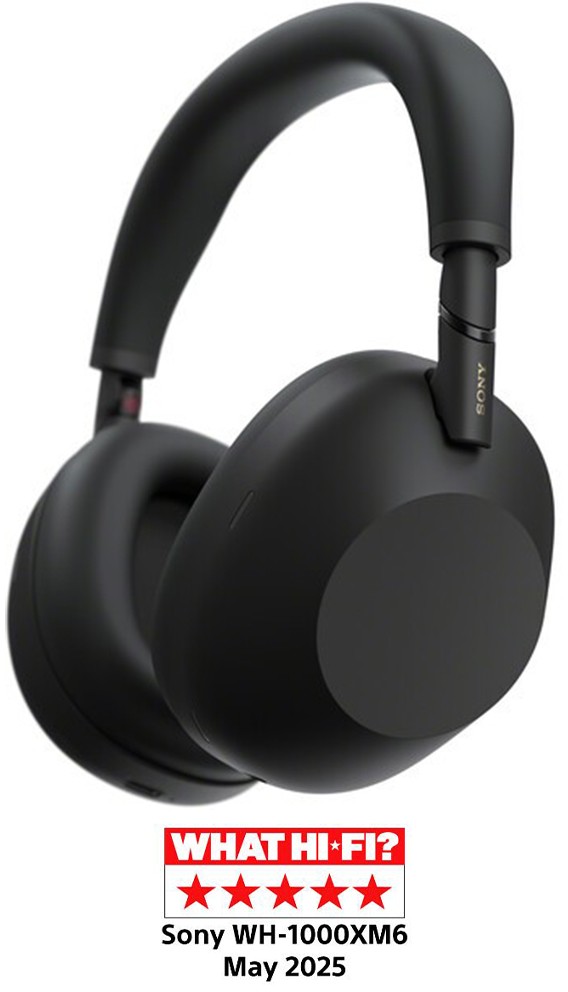
This Sony WH-1000XM6 review covers Sony’s flagship noise-cancelling headphones, released in May 2025 as the successor to the WH-1000XM5. Across the outlets we studied, scores land between 8.8 and 9.3 out of 10, with praise for class-leading active noise cancellation, a returning folding hinge, and call quality that finally matches the music performance. Among the best tech gadgets to buy in 2026, it keeps Sony’s crown — with a few caveats worth knowing before you pay.
Sony WH-1000XM6 Review: Design and Build Quality
The headline design change is the return of the folding hinge the XM5 dropped — frequent flyers complained, and Sony listened. The headphones fold flat into a noticeably smaller, backpack-friendly case, and the redesigned hinge feels more confidence-inspiring than what shipped on older Sony models. At roughly 250 g, they stay light enough for all-day wear.
Touch controls sit on the right earcup — swipe for volume, tap for play/pause, cover the cup for Quick Attention ambient passthrough — while a physical button on the left cycles ANC, Ambient Sound, and off. One point of disagreement among reviewers: one outlet says the matte finish resists fingerprints, while another reports it attracts smudges easily. There’s no official IP rating for dust or water, so don’t treat these as workout headphones.
Comfort and Ergonomics
Comfort is where opinions split most. Multiple outlets call the XM6 comfortable for long listening sessions, with moderate clamping force and soft memory-foam earcups that distribute pressure evenly. Others flag the shallower earcups: larger ears can start touching the inner mesh after a couple of hours, and glasses wearers notice pressure where the arms meet the headband.
The headband padding feels thinner than ideal, and there are no adjustment markers or audio cues for positioning, so you align by sight. The synthetic leather pads trap some heat on warm commutes, though it’s rarely noticeable in a cool airplane cabin. The earpads themselves hold up well over long use without causing ear fatigue, and individual side adjustment helps dial in the fit.
Noise Cancellation
Sony’s new QN3 processor drives the system roughly seven times faster than the QN1 chip in the XM5 — that’s a processing-speed figure, not seven times stronger cancellation, but it delivers faster, smoother adjustment as your environment changes. Twelve microphones feed the adaptive system: plane and train rumble is nearly eliminated, while voices and keyboard clatter are heavily reduced.
Adaptive NC shifts automatically between full cancellation during stationary periods and ambient pass-through while moving. Transparency mode sounds natural rather than tinny, and the app lets you optimize for pressure, wind, or activity. Against the Bose QuietComfort Ultra, the XM6 edges ahead in overall noise reduction in testing, though some users feel the Bose applies slightly less “pressure.”
Sound Quality
Out of the box the tuning leans warm with a noticeable bass boost — a consumer-friendly signature rather than an audiophile-flat one. Vocals sit forward and clear, and treble stays smooth without turning harsh at high volume. Pop, electronic, and hip-hop sound their best here, and DSEE Extreme upscaling cleans up compressed streaming audio.
Compared with the Bose QC Ultra, the Sony has more low-end impact and a more “fun” tuning; the Bose sounds a bit more neutral and spacious. A few reviewers find the XM6 slightly boomy or congested in the midrange, but the 10-band EQ in the Sony Sound Connect app — including a Find Your Equalizer wizard that tunes to your hearing — lets you flatten things out.
Soundstage is good rather than class-leading; dedicated audiophile headphones from brands like Sennheiser edge ahead for open, spacious imaging. Honestly, this is a do-everything travel and work headphone that happens to sound good — not primarily an audiophile product.
Microphone and Call Quality
Call quality is a genuine step forward and a major reason travelers should pay attention. The redesigned 12-microphone array — six of them AI beamforming mics dedicated to voice — isolates your voice from background noise noticeably better than the XM5, holding up on Zoom and Teams calls from a coffee shop and a moving car.
Wind reduction helps outdoors: moderate wind is handled better than most ANC rivals, though strong gusts still introduce some rustle. Combined with multipoint Bluetooth 5.3 that switches between a phone and laptop mid-call, this is a strong work-calls headphone, not just a music one.
Battery Life and Charging
Sony rates the XM6 at 30 hours with ANC on and 40 with it off — and testing backs it up, with independent lab results measuring over 37 hours in a standardized test. Daily use consistently lands at or past the official numbers, so this isn’t an inflated marketing claim.
A 3-minute quick charge buys roughly 3 hours of playback, and you can listen while charging over USB-C. One caveat: USB-C is charging-only — there’s no USB-C digital audio, so lossless wired listening goes through the 3.5mm analog cable instead.
Software and App Features
The Sony Sound Connect app unlocks most of what makes these headphones special. You get a deep 10-band EQ, Clear Bass adjustment, and DSEE Extreme for compressed audio, plus Adaptive Sound Control that adjusts ANC and ambient levels based on your location and activity.
Speak-to-Chat pauses playback automatically when you start talking — handy but sensitive enough that you’ll want to tune or disable it. You can customize touch control sensitivity, remap button double- and triple-presses, and enable auto-pause when the headphones are removed. For most people, the winning setup is DSEE on, Adaptive Sound Control enabled for commuting, and manual EQ only if the default tuning feels too bass-heavy.
Connectivity and Codecs
Bluetooth 5.3 with multipoint keeps you paired to a phone and laptop at once, and switching between them mid-call worked reliably — without the dropouts that plagued some earlier Sony firmware. Codec support covers SBC, AAC, LDAC, and LC3, and a 3.5mm jack handles wired analog listening.
iPhone vs Android: The LDAC Question
Here’s the detail most reviews gloss over: LDAC is supported by the headphones, but Apple’s Bluetooth stack doesn’t let iPhone users take advantage of it the way Android users can. On iPhone you get very good AAC-based sound — plus multipoint, all ANC features, and the full iOS app — just not the extra bandwidth LDAC provides. On a compatible Android phone, the sound quality gap over rivals like the AirPods Max gets noticeably bigger.
Spatial Audio and Cinema Mode
Cinema Mode and 360 Reality Audio add a sense of width for movies and some supported streaming content — a genuine bonus on long flights. For music, though, most listeners will prefer standard stereo playback, which sounds more accurate and less processed. Treat these as movie features, not daily listening modes.
Specs at a Glance
| Spec | WH-1000XM6 |
|---|---|
| Driver | Redesigned 30mm dynamic drivers |
| ANC | HD Noise Cancelling Processor QN3 + Integrated Processor V2; 12 microphones |
| Codecs | SBC, AAC, LDAC, LC3 |
| Bluetooth | 5.3 with multipoint |
| Battery | 30h (ANC on) / 40h (ANC off); 3-min charge ≈ 3h playback |
| Weight | ~250 g |
| Wired | 3.5mm analog cable; USB-C for charging only |
| Design | Folding hinge returns; no official IP rating |
| Price | $449–$459.99 (one outlet lists $399) |
Sony WH-1000XM6 vs the Competition
The Bose QuietComfort Ultra is the closest rival: comfort for larger ears and an immersive audio mode, but shorter battery life and no LDAC support. The Apple AirPods Max wins on Apple ecosystem integration but brings the weakest battery of the group (around 20 hours), more weight (384 g), and a $549 price. For pure ANC and sound, reviewers call the XM6 the best value of the three.
Sony WH-1000XM6 vs WH-1000XM5
The XM6 adds a folding hinge, a 12-mic array (up from 8), and the faster QN3 processor. Battery ratings are identical at 30/40 hours, and the core listening experience is similar enough that XM5 owners should only upgrade if call quality or the folding design specifically matters to them. First-time buyers who can afford the gap should pick the XM6.
Price and Value
Pricing varies by outlet: most reviewers cite $449 to $459.99 — about $50 more than the XM5 — though at least one lists it at $399. In the Philippines, it’s PHP 27,999. That puts it in line with the Bose QC Ultra ($429) and well under the AirPods Max ($549). The model has dipped below MSRP during major 2026 sales events, so watch for seasonal discounts.
Value depends on your starting point: best-in-class ANC, top-tier call quality, and 30-hour battery make it a fair flagship price for new buyers; for XM5 owners, it’s an incremental refinement rather than a leap. If you’re kitting out for travel, our roundup of the best tech accessories of 2026 has companion picks worth a look.
Pros and Cons
Pros
- Best-in-class active noise cancellation
- Folding hinge returns for better travel portability
- 30-hour battery with ANC on that beats the rating in testing
- Genuinely improved call quality from the 12-microphone array
- LDAC support up to 990kbps for high-res wireless audio
- Multipoint Bluetooth 5.3 and a deep 10-band EQ in the app
Cons
- Roughly $50 more than the XM5 for an incremental upgrade
- Shallower earcups bother larger ears on long sessions
- No USB-C digital audio — USB-C is charging-only
- No official IP rating for water or sweat resistance
- No aptX; LDAC is Android-focused and unavailable on iPhone
- Bulky carry case; touch controls can be oversensitive
Who Should Buy and Who Should Skip
Buy them if you travel frequently and want the strongest all-around ANC, take lots of calls, use an Android phone with LDAC, or want one headphone that handles travel, office, and movies equally well. Skip them if you need USB-C digital audio for a wired lossless laptop setup, want sweat resistance for workouts, have larger ears that dislike shallow pads, are on a tight budget (the discounted XM5 or JBL Tour One M3 cost less), or prioritize soundstage above everything else.
Final Verdict
The WH-1000XM6 keeps Sony’s noise-cancelling crown: the strongest overall ANC and call quality in its class, a genuinely useful folding hinge, and battery life that exceeds its own rating. The price hike and shallow earcups are real trade-offs, and XM5 owners can sit this one out. For everyone else buying fresh in 2026, this remains the default recommendation.

Frequently Asked Questions
Are the WH-1000XM6 worth it over the XM5?
The XM6 improves ANC adaptation with the faster QN3 processor, upgrades calls with a 12-mic array (up from 8), and brings back the folding hinge — while battery ratings and core sound stay similar. For existing XM5 owners, reviewers call the upgrade optional and incremental. If you’re buying new, get the XM6.
Do they work well with iPhone?
Yes. You’ll use the AAC codec since iOS doesn’t support LDAC, but they still sound great, and multipoint, all ANC features, and the Sony Sound Connect app work fully on iPhone. Android users simply get extra bandwidth from LDAC on top.
Can you use them wired?
Yes. A 3.5mm cable is included: wired listening works with ANC on while the headphones are charged, and passively when they’re off. Note that USB-C is charging-only — there’s no USB-C digital audio input.
