

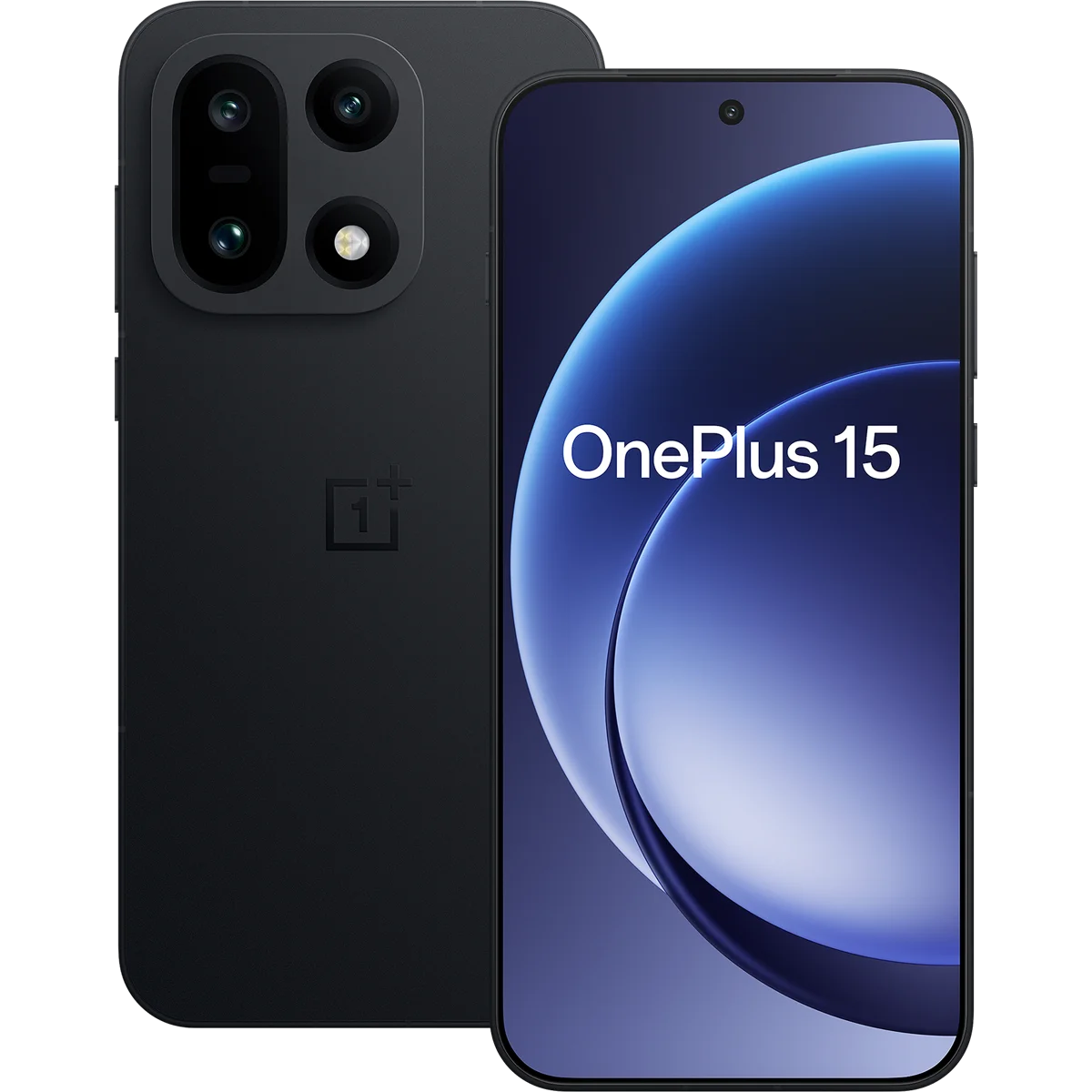
The OnePlus 15 review 2026 cycle produced one clear headline: battery life. This phone skips the OnePlus 14 entirely (the number four is considered unlucky in Chinese culture), arriving just ten months after the OnePlus 13 with a huge 7,300mAh battery, a 165Hz display, and the Snapdragon 8 Elite Gen 5. But the Hasselblad branding is gone, replaced by OnePlus’s own DetailMax engine, and the alert slider — a OnePlus signature — has been replaced by a configurable Plus Key.
We went through five in-depth reviews (GSMArena, Engadget, WiFi HiFi, Gizmodotech, and a RealDigitalTech roundup of Tom’s Guide, PhoneArena and Droid Life) to see where they agree and disagree. The result: a two-day endurance monster with flagship speed and a camera system that’s decent rather than great.
Price and Availability
The OnePlus 15 costs $899 for the 12GB RAM / 256GB model and $999 for 16GB / 512GB in the United States. In India it launched at ₹72,999 for the base variant, and in Europe the base model asks €950 (€999 for the higher trim in early-bird pricing).
It debuted in China on 27 October 2025 and reached US stores on 18 December 2025, after a federal government shutdown delayed FCC certification — at the time of Engadget’s review, there wasn’t even a confirmed US release date yet. Pricing in some regions was flagged as subject to change due to market conditions.
The box itself is a pleasant throwback: the classic red OnePlus box with the phone, a fast charger in the box, a Type-C cable, and a back cover. An 80W SUPERVOOC adapter comes included, which matters — you don’t pay extra for the full charging speed.
Design and Build Quality
GSMArena calls the design “slick and easy-to-like,” while Engadget calls it “boring” and derivative — both can be true. The OnePlus 15 borrows its look from the smaller OnePlus 13s and 13T, which makes it look a little like last year’s iPhone 16 Pro in Gizmodotech’s eyes. It comes in three colours: Infinite Black with advanced AG glass, Ultra Violet with a light-responsive dual-texture coating, and Sand Storm, which has a ceramic-like feel and an MAO-treated frame that OnePlus says is 3.4 times harder than conventional aluminium and 1.3 times more resilient than titanium.
The standout achievement is the thinness. Despite packing a 7,300mAh battery, the Sand Storm variant measures just 0.31 inches thick — barely fatter than the Galaxy S25 FE (0.29 inches) with its far smaller 4,900mAh battery. WiFi HiFi measured 8.1mm, remarkable for this capacity.
Durability is flagship-grade: IP68 for submersion, plus IP69 and IP69K certification against high-pressure water jets at close range and extreme temperatures. WiFi HiFi ran faucet water over the phone and it passed “with flying colours,” and Gizmodotech used it in drizzle without hesitation. The fingerprint scanner is fast and reliable, and the phone works in temperatures as cold as −20°C.
The Alert Slider Is Gone — Meet the Plus Key
Longtime OnePlus fans should know: the signature alert slider has been removed. In its place is the Plus Key, a button that can be bound to one of eight functions. The default is OnePlus’s new Mind Space AI hub, but you can bind the old alert-slider functionality back to it — so technically you lose nothing. Gizmodotech found its absence frustrating; Engadget liked the flexibility. Either way, the magnetic accessory support GSMArena notes (magnetic cases, $45–60) rounds out the hardware extras.
Display: 165Hz, but at 1.5K
The 6.78-inch LTPO AMOLED panel hits 165Hz — but only in select games. Resolution is 1,272 × 2,772 (roughly 1.5K), a step down in density from the OnePlus 13’s 6.82-inch 1,440 × 3,168 screen. OnePlus says no OLED manufacturer currently makes QHD panels that fast, so 1.5K was the compromise.
In practice, reviewers love it. GSMArena rates it “excellent,” RealDigitalTech’s roundup notes Droid Life praising its quality and smoothness, and Gizmodotech calls it their second-favourite aspect of the phone after the battery — bright, clean-looking outdoors with neutral, realistic colour tuning. Peak brightness is 1,800 nits, and the bezels are thinner than last year’s.
The honest caveat comes from Engadget: only about seven games can render at 165fps right now (PUBG only via frame interpolation), and unless you play Call of Duty Mobile or Clash of Clans, you won’t see the benefit yet. For gaming it also pairs with a dedicated touch-response chip sampling at 3,200Hz for faster inputs.
Cameras: Good, Not Flagship-Worthy
Here’s where reviewers most disagree on tone but agree on substance. OnePlus ended its Hasselblad partnership in September, and the 15 debuts the company’s own DetailMax engine, which focuses on micro-contrast control, stable colour shifts, and texture consistency. The hardware is a triple 50MP array: a main camera with an f/1.8 lens, an ultrawide, and a 50MP periscope telephoto with 3.5x optical zoom and 7x high-quality lossless zoom. Both the main and telephoto have optical image stabilisation.
The step down from the OnePlus 13 is real: the main lens is slower (f/1.8 vs f/1.6) and the telephoto is slower too (f/2.8 vs f/2.6). GSMArena found main and telephoto shots good but ultrawide and selfie cameras wanting; Engadget noted most photos look good but not as nice as Apple, Google or Samsung’s best, with low-light shadow detail a weak point. Gizmodotech found DetailMax better than expected — sharp, detailed, predictable daylight colours — though skin tones can look washed in portrait mode.
There are genuine highlights: a burst mode of 10fps (up from 6fps on the OnePlus 13), accurate colour temperature, an Ultra Clear 26MP daylight mode, Clear Night Engine for low light, Clear Burst for action, 120x ultra-res digital zoom, AI editing (reflection eraser, unblur, recompose), and an underwater camera mode that turns the physical buttons into camera controls. But as Engadget’s review title puts it: a great phone, if photography isn’t a priority.
Battery Life: Chart-Topping Endurance
This is the OnePlus 15’s superpower. The 7,300mAh Silicon NanoStack battery is the densest in its class, and every review praises it. Tom’s Guide measured a record 25 hours 13 minutes — the longest it had ever tested, with Droid Life saying no phone in the US lasts as long. Engadget’s video rundown hit 38 hours 30 minutes, eight hours longer than the previous record-holder, the OnePlus 13. Real-world use easily stretches to two days, with one reviewer at 83% after two days of moderate use and only 3% overnight standby drain.
OnePlus claims the battery retains over 80% health after four years of use. Combined with 80W SUPERVOOC wired charging in the box (0–100% in about 40 minutes; 120W in international markets), 50W AIRVOOC wireless charging (via OnePlus’s own magnetic puck), and bypass charging that keeps the phone cool while gaming, this is the most complete battery package on any flagship right now. The only missing piece: no Qi2 built-in magnets.
Performance and Gaming
The OnePlus 15 is the first phone in North America with the Snapdragon 8 Elite Gen 5, and it’s a powerhouse: Engadget measured Geekbench scores of 3,696 single-core and 11,187 multi-core, trading blows with the iPhone Air’s A19 Pro. A triple-chip system, 360° Cryo-Velocity cooling, Parallel Processing 2.0, and up to 16GB RAM keep everything smooth — “every swipe and scroll feels nearly instantaneous,” per Engadget.
Gamers get the headline extras: BGMI holds a consistent 120fps, Call of Duty Mobile reaches 165fps in supported modes, and the dedicated touch-response chip makes flicks and close-range fights feel snappier. The 360° Cryo-Velocity cooling keeps thermals stable under load — PhoneArena noted excellent thermal stability, and Gizmodotech found normal use, scrolling and maps stayed cool. The camera app and long 4K60 shoots are where heat creeps in. Modem performance and deeper, richer haptics are also improved over the OnePlus 13.
Software: OxygenOS 16, Plus Mind and Mind Space
OxygenOS 16 feels lighter than last year — quick, custom animations, one of the best-organised quick settings menus, and no random stutters. AI is the push this year: Plus Mind (via the Plus Key or a three-finger swipe) saves on-screen content — pages, images, emails, bookings — into a Mind Space hub, where the phone’s LLM summarises it and answers questions about it. Google Gemini can pull from Mind Space with an @mindspace prompt to plan things like trips. Other tools include AI Writer, AI Recorder (real-time meeting transcription with speaker ID that one reviewer called “flawless”), AI Portrait Glow, and AI Perfect Shot.
The downside: software support. OnePlus promises 4 years of OS upgrades and 6 years of security patches — solid, but short of the 7 years Google and Samsung offer. And a three-month Google AI Pro trial is included, which becomes $20/month after August 2026 if you keep it.
OnePlus 15 vs OnePlus 13: Should You Upgrade?
Compared to the OnePlus 13 review 2026, the differences are clear. The 15 brings a faster chip, the 165Hz display, vastly better battery life, the new Plus Key, tougher build, and improved thermals and modem. The 13 counters with arguably better camera hardware (faster lenses, Hasselblad tuning), the beloved alert slider, and a lower price.
If battery life and performance matter most, the 15 is the obvious pick. If photography is your priority and your 13 still runs well, there’s no urgency. Among this year’s best Android phones of 2026, the OnePlus 15 earns its place on endurance and speed.
Alternatives Worth Considering
GSMArena’s comparison of market alternatives is worth echoing: the Galaxy S25 Ultra (now similar in price) is the better pick for cameras; the Google Pixel 10 Pro offers vanilla Android and stronger selfie/ultrawide cameras with longer update support; the pricier Oppo Find X9 Pro is the same phone with better camera hardware for photo-first buyers; the Realme GT 7 Pro saves cash with the same software experience. Get the OnePlus 15 for the whole package — battery, chip, display, and value.
Pros and Cons
| Pros | Cons |
|---|---|
| Chart-topping battery life — two-day endurance | Cameras are decent, not best-in-class |
| Snapdragon 8 Elite Gen 5 flagship performance | Alert slider removed (Plus Key instead) |
| Excellent 165Hz LTPO display | Only 4 years of OS updates vs 7 from rivals |
| 80W charger included in the box | No built-in Qi2 magnets |
| IP68/IP69K durability, works at −20°C | Telephoto can’t focus close |
| Magnetic accessories support | Max 512GB storage in most markets |
| Polished OxygenOS 16 with useful AI tools | Derivative design, per some reviewers |
Final Verdict
The OnePlus 15 is an excellent all-rounder with one towering strength: nobody else sells a phone that lasts this long and charges this fast. The 165Hz display, Snapdragon 8 Elite Gen 5, durable build, and polished software make it a tremendous phone for gamers, heavy users, and anyone tired of nightly charging — Tom’s Guide gave it an Editor’s Choice, Engadget scored it 87/100, and PhoneArena 8.2/10.
But the camera step back is real, the design divides opinion, and four years of updates lags the competition. If photography is your priority, a Pixel or Galaxy serves you better. For everyone else, at $899, this is the flagship value champion of 2026.

Frequently Asked Questions
What is the OnePlus 15 release date?
The OnePlus 15 launched in China on 27 October 2025 and went on sale in the US on 18 December 2025, after a government shutdown delayed its FCC certification.
How much does the OnePlus 15 cost?
It starts at $899 for the 12GB RAM / 256GB model and $999 for 16GB / 512GB in the US. In India the base model is ₹72,999, and in Europe it starts around €950.
Why is there no OnePlus 14?
OnePlus skipped the number 14 because the number four is considered unlucky in Chinese culture — the same reason it previously jumped from the OnePlus 3 to the OnePlus 5.
How good is the OnePlus 15 battery life?
It has a 7,300mAh Silicon NanoStack battery — the best in its class. Tom’s Guide measured a record 25 hours 13 minutes, and real-world use stretches comfortably to two days, with only about 3% overnight standby drain.
Does the OnePlus 15 support wireless charging?
Yes, it supports 50W AIRVOOC wireless charging, but only with OnePlus’s own magnetic charging puck. There are no built-in Qi2 magnets.
Is the OnePlus 15 waterproof?
It carries IP68, IP69, and IP69K ratings — it survives submersion, high-pressure water jets from close range, and extreme temperatures, and even works at −20°C.
Where did the alert slider go?
OnePlus replaced the signature alert slider with the configurable Plus Key. You can bind the old alert-slider functionality to it, so nothing is truly lost.
How many years of updates does the OnePlus 15 get?
OnePlus promises 4 major Android OS upgrades and 6 years of security patches — less than the 7 years Google and Samsung offer on their flagships.
Is the OnePlus 15 camera good?
It’s good but not class-leading. The triple 50MP DetailMax camera system takes sharp, colourful daylight shots, but it steps back from the OnePlus 13’s camera hardware and can’t match Pixel or Galaxy phones in low light.
Should I upgrade from the OnePlus 13 to the OnePlus 15?
If battery life, performance, and the 165Hz display matter to you, yes — they’re big upgrades. If your OnePlus 13 runs fine and you prioritise photography, wait; the 13’s camera hardware is arguably better.
