

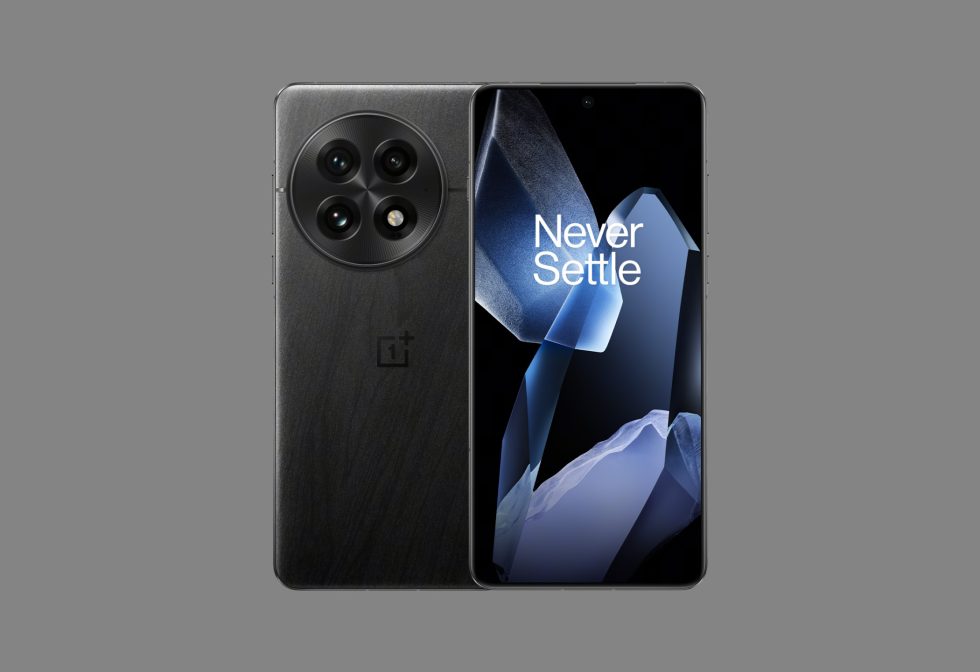
This OnePlus 13 review looks at the phone the way a 2026 buyer should: not as launch-day hype, but as a year-old flagship you can now buy at a discount. The hardware was genuinely strong at release — Snapdragon 8 Elite silicon, a 6,000mAh silicon-carbon battery, and a triple 50MP Hasselblad camera system — and the only question that matters now is whether the current street price and remaining software support still make it a smart buy.
OnePlus 13 Review: Design That Serves the Hardware
The most honest way to judge this phone’s design is by what it makes room for. Inside the chassis sits a 6,000mAh dual-cell silicon-carbon battery — the new anode chemistry that packs flagship endurance into a body just 8.5mm thin. Cooling gets similar priority, with a 9,925mm² Dual Cryo-Velocity vapor chamber that keeps the Snapdragon 8 Elite from cooking itself during long gaming sessions.
The circular camera housing earns its footprint too. It carries a triprism 3x telephoto lens — a folded-optics design that bounces light three times to fit real zoom reach into a slim module — alongside Sony sensors with optical stabilization on both the main and telephoto cameras. The 50W AIRVOOC wireless charging coil and the USB-C 3.2 port (fast enough to move files to an external SSD at over 200MB/s) complete a layout where every millimeter appears to be doing a job.
Display: What the Screen Lets You Do
On paper the panel is excellent, but the more useful question is how it behaves in daily use. OxygenOS 15 runs on top of Android 15 here, and the combination of Smart Sidebar, Floating Window, and the File Dock turns the big screen into a genuine multitasking surface — you can pin a floating app over whatever you’re doing, swipe it aside, and pull it back later. Google’s Circle to Search and Gemini integration are baked in as well.
For media work, the phone records 8K video at 30fps and 4K Dolby Vision across all three rear cameras plus the front, so the panel doubles as a proper editing preview surface. The AI editing suite — Detail Boost, Eraser, Unblur, and Reflection Eraser — runs in the cloud through the Photos app, and the Reflection Eraser in particular does a convincing job on glass glare.
One software wrinkle is worth knowing: the auto-brightness algorithm frustrated a number of early users, who found it dimmed the screen too aggressively in dark rooms and failed to learn from manual corrections. It’s the kind of issue a software update can fix, but it’s a reminder that a great panel still depends on good tuning.
Performance and Gaming With Real-World Caveats
Benchmarks tell a flattering story: a 9,143 multi-core score in Geekbench 6 and around 90fps in the GFXBench Aztec Ruins test put it comfortably ahead of most 2025 rivals. Apps open instantly, dozens of tabs stay alive in memory, and even long video renders finish in seconds.
Sustained gaming is where the nuance appears. Under heavy load the chip throttles noticeably, cycling between peak bursts and reduced clocks rather than settling into a steady middle ground. Some titles also lean on dynamic resolution scaling to hold high frame rates, trading a little visual fidelity for smoothness. Competitive gaming phones manage heat more gracefully — but for everyone else, the OnePlus 13 stays fast where it counts, in everyday use.
The alert slider remains a small but beloved OnePlus signature, and the ultrasonic fingerprint reader under the display is a genuine upgrade over the optical sensors of the past.
Cameras: Hardware Ahead of Its Tuning
Every lens here is 50 megapixels: a Sony LYT-808 main sensor with f/1.6 aperture and stabilization, a Sony LYT-600 3x telephoto with stabilization, and an autofocus ultra-wide with a 120° field of view. On paper that is a complete flagship camera system, and in bright daylight it delivers — crisp, vibrant, contrasty shots with strong detail.
The Hasselblad partnership shows most clearly in Portrait mode, which offers 1x, 2x, and 3x focal lengths tuned to mimic classic Hasselblad lenses, and in XPan mode, a panoramic tribute to Hasselblad’s famous film camera. Action mode inside the camera app freezes motion across all three lenses, and burst shooting is there for fast sequences.
Consistency is the weak point. Reviewers found the processing hit-or-miss: some frames look excellent, others come out over-processed, with blown-out whites that look worse than the viewfinder preview. The ultra-wide in particular can look over-cooked. Engadget considered the system nearly top-tier, TechRadar said it sits just behind the best, and CNET called photography the phone’s biggest weakness — a spread that tells you the hardware is ready but the software tuning isn’t fully there yet.
Battery and Charging: The Standout Feature
This is the OnePlus 13’s clearest win. The 6,000mAh battery is among the largest ever fitted to a mainstream flagship this thin, and real-world endurance impressed WIRED, Engadget, and TechRadar alike — comfortably a full day, often more. (CNET’s aggressive rundown test was the lone dissenter.)
Charging is equally strong. An 80W SUPERVOOC brick ships in the box in the US, filling the phone in about 40 minutes, with 0–80% taking under 25 minutes. With OnePlus’s specific dual-port adapter the phone can draw up to 100W wired, and 50W AIRVOOC wireless charging covers cable-free top-ups. The Qi2 story needs a footnote: there are no built-in magnets, so magnetic charging requires one of OnePlus’s own cases — but with that case on, the phone works happily on MagSafe-style chargers, including Apple’s, thanks to the open Magnetic Power Profile standard.
OnePlus 13 vs OnePlus 13R
The 13R is the obvious internal alternative, preserving much of the performance-and-battery formula at a lower price. The full 13 justifies its premium with a newer processor generation, a sharper QHD+ display, more generous memory configurations, a more evenly specified camera system, and wireless AIRVOOC charging. If you use the whole phone — screen, cameras, charging — the step up is coherent; if you only care about speed and endurance, the 13R covers most of it.
Alternatives Worth Considering
At $899.99 the OnePlus 13 undercuts the base Galaxy S25+ by about $100, which frames the value argument nicely. Samsung’s phone counters with longer software support, the iPhone 16 Pro still leads in single-core speed and video transcoding, and the Pixel 9 Pro XL offers more consistent computational photography. For a broader look at where this phone sits in the current market, see our best Android phones of 2026 roundup. And if the price gap between the 13 and a true mid-range flagship feels too wide, our Nothing Phone 3 review covers a stylish alternative with flagship looks at a friendlier price.
Strengths and Weaknesses
Strengths
- Flagship Snapdragon 8 Elite performance that still feels fast in 2026
- Large 6,000mAh silicon-carbon battery with 80W wired and 50W wireless charging
- Complete triple-50MP camera system with genuine 3x optical zoom
- IP68/IP69 durability and a refined, slimmer build than the OnePlus 12
- Strong value at $899.99 against pricier rivals
Weaknesses
- Camera processing is inconsistent; rivals take more reliable photos
- No built-in Qi2 magnets — magnetic accessories need a special case
- Four OS upgrades and six years of security updates trail Samsung and Google
- Sustained gaming performance throttles under heavy load

OnePlus 13 Review: Frequently Asked Questions
Is the OnePlus 13 still worth buying in 2026?
Yes, at the right price. The Snapdragon 8 Elite, 6,000mAh battery, and triple 50MP cameras remain genuinely capable. Buy it only at a meaningful discount over newer flagships, and confirm how much software support remains in your region before committing.
How fast does the OnePlus 13 charge?
The included 80W SUPERVOOC charger fills the 6,000mAh battery in about 40 minutes, reaching 80% in under 25 minutes. A specific OnePlus dual-port adapter enables up to 100W wired charging, and 50W AIRVOOC handles wireless charging.
Does the OnePlus 13 support MagSafe?
Not natively — there are no built-in charging magnets. OnePlus sells cases with MagSafe and Qi2 support built in; with one of those cases attached, the phone works with magnetic chargers and accessories, including Apple’s MagSafe chargers.
Is the OnePlus 13 camera better than the OnePlus 12’s?
The hardware is a clear step up: all three rear cameras are now 50MP with stabilization on the main and 3x telephoto, plus an autofocus ultra-wide. Real-world results are strong in daylight but inconsistent overall, so the upgrade is bigger on the spec sheet than in every photo.
Should I buy the OnePlus 13 or the OnePlus 13R?
Choose the 13R if raw speed and battery life are your priorities and you want to save money. Choose the 13 for the sharper display, better secondary cameras, wireless charging, and the more complete premium package.
Verdict: Still Worth It at the Right Price
The OnePlus 13 is a convincing flagship whose strengths are spread sensibly across the whole experience rather than concentrated in one headline feature. The battery and charging remain distinctive, the performance still holds up, and the camera hardware is complete even if the tuning isn’t. In 2026 it makes sense as a discounted older flagship — buy it for its balance at a good price, not for camera leadership or the longest update commitment.
