

Our Verdict
Google’s fourth-generation book-style foldable is the most divisive flagship we have tested this year. Reviewers awarded it everything from a lukewarm 70/100 to a confident 4 out of 5, and the split is easy to understand once you look at the whole package rather than any single score.
The Google Pixel 11 Pro Fold review scores tell a consistent story: Tom’s Guide gave it 4/5, TechEdt rated it 4.0/5.0 (“Excellent”), Trusted Reviews settled on 70/100, and aggregator data shows Engadget at 85, Mashable, TechAdvisor and The Verge at 80, Pickr at 76, and Wired, PCMag and ZDNet at 70. Almost nobody calls it a bad phone. Almost nobody calls it the best foldable either.
Buy it if you want Google’s software experience in a foldable: the cleanest Android build on a big screen, computational photography that punches above its sensor size, IP68 durability, and seven years of updates. Skip it if your priorities are raw power, the longest battery life, the thinnest chassis, or the strongest zoom — rivals beat it on every one of those.
Price and Availability
The Pixel 11 Pro Fold starts at $1,899 in the US for 256GB, £1,799 in the UK, and Rs 1,86,999 in India (16GB RAM with 512GB storage). That US figure is $100 more than last year’s Pixel 10 Pro Fold with no storage bump, and several reviewers flagged the hike as the phone’s first problem before even turning it on.
Storage runs 256GB, 512GB and 1TB, all paired with 16GB of LPDDR5X memory. There is no microSD expansion. In India the phone ships in a single configuration — 16GB with 512GB, in Olive only — while other markets get Obsidian as well.
Launch offers in India included up to Rs 10,000 in instant bank discounts, a Rs 9,000 exchange bonus, 24-month no-cost EMI and six months of Google AI Pro. Street prices have already dipped; the phone fell to Rs 1,70,999 during Flipkart’s Big Billion Days sale. Given how quickly foldables depreciate, waiting for a deal is sensible advice for this one.
Design and Build Quality
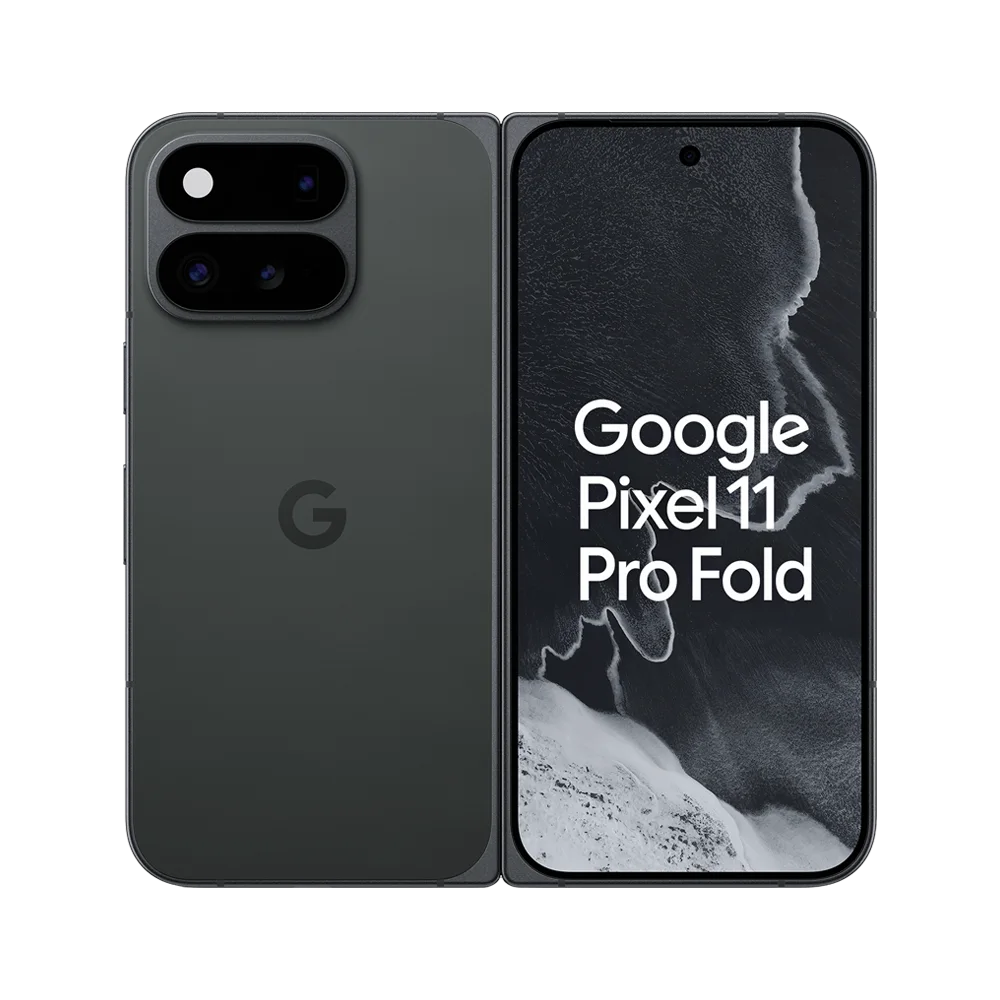
At 239 grams and 10.1mm thick when folded, the Pixel 11 Pro Fold is 19g lighter and 0.7mm thinner than its predecessor — meaningful reductions you feel in a pocket, even if the phone still feels dense. Unfolded, it is just 5mm thin across a 155.2 x 150.4mm footprint.
Google kept the familiar book-style shape but reworked the internals: a gearless hinge, an aluminium frame, a glass-fibre composite rear and Gorilla Glass on the front. The headline durability number is IP68, the best water and dust rating on any foldable, and a genuine edge over Samsung’s IP48-rated competition.
The finishes are Obsidian and Olive, both understated. The full-width camera bar is slimmer than before, and a new HiLight LED embedded in it glows for Gemini interactions and incoming calls — though every reviewer called it extremely limited in practice, little more than a party trick.
Not everything about the construction earned praise. Trusted Reviews described the design as “wonky” and slightly lopsided, the inner-screen crease remains visible enough that multiple outlets listed it as a con, and a well-known bend test cracked the frame near a hinge antenna line. Build quality is solid; it is not class-leading.
Displays: Cover and Inner Screens
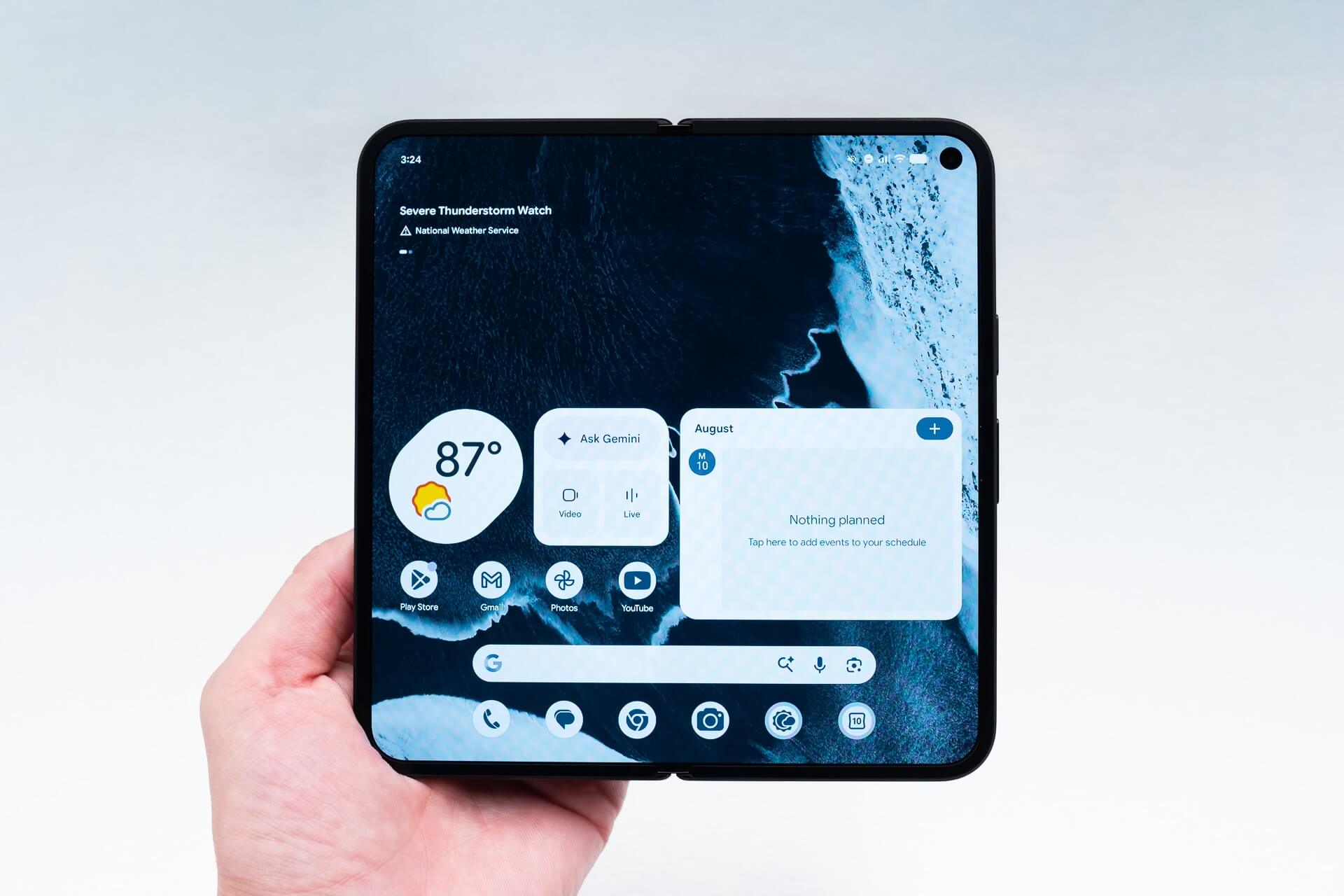
The 6.5-inch cover OLED (1080 x 2342, 1–120Hz adaptive, up to 3,600 nits peak) is the screen you will use most. It is bright, sharp and behaves like a regular phone panel — one of the phone’s underappreciated strengths. The crease only appears when you open the device.
Inside, the 8-inch flexible OLED (2076 x 2152, 1–120Hz, 3,600 nits peak, ultra-thin glass) is a genuine productivity surface: ebooks, spreadsheets, split-screen apps and video all feel natural. Brightness is up substantially from the previous generation’s 2,700–3,000 nits, and outdoor legibility is excellent.
Two caveats surfaced across reviews. The crease is still easy to see and feel, particularly under bright light. And multiple reviewers flagged weak PWM dimming, which can be an issue for users sensitive to screen flicker. For everyone else, these are among the best foldable displays available at any price.
Cameras
The hardware is straightforward: a 48MP main sensor (f/1.7, 1/1.56-inch, OIS) that is 63% larger than last year’s and takes in 56% more light, a 10.5MP ultrawide with Macro Focus, and a 10.8MP 5x telephoto with OIS. Zoom tops out at 30x Super Res Zoom — there is no 120x zoom like the slab-style Pixel 11 Pro and Pro XL offer.
That gap is deliberate positioning, and it is the camera system’s biggest weakness on paper. In practice, Google’s processing does the heavy lifting: reviewers consistently found the main camera dependable, with balanced exposure, controlled HDR and consistent colour. A direct comparison against the iPhone 17 Pro Max showed the Pixel producing punchier local contrast and deeper reds, against Apple’s warmer, softer rendering.
Software is where the fun lives. Camera Looks (Default, Natural, Shadows, Vanilla) bakes a chosen style in at capture, Magic Capture pulls the best stills out of video clips, and Camera Coach, Add Me, Dual Screen Preview, Rear Camera Selfie and Tabletop Mode round out a deep toolkit. The ultrawide and telephoto lag behind the cheaper Pixel 11 Pro’s sensors, so this foldable is not the camera king of the Pixel line — but it is a very good camera that happens to fold.
Performance: Tensor G6 in Daily Use
The Tensor G6, built on TSMC’s 3nm process with 16GB of RAM, is quick in everyday use: apps open fast, the UI stays smooth, and the phone runs cool. Benchmarks tell the other half of the story. Geekbench 6 recorded 2,706 single-core and 7,322 multi-core; Geekbench 7 hit 2,321 and 7,082. AnTuTu landed around 1.8 million — roughly two-thirds of what a Snapdragon 8 Elite Gen 5 scores in Samsung’s foldable.
Sustained loads reveal the gap most clearly. In 3DMark’s Wild Life stress test, stability measured 82.7% on one run and 70.1% on another, with performance dropping 17–30% as temperatures climbed from the high 20s to 42°C. There is no ray-tracing support at all.
Gaming follows the same pattern: light titles like Kingdom Rush, Slay The Spire and Dicey Dungeons run splendidly, while demanding games such as Wuthering Waves show flaky frame rates on higher settings. As one reviewer put it, if gaming is a big reason you are spending close to Rs 2 lakh, this is not the foldable for you.
Software and AI Features
Android 17 ships with seven years of OS, security and Pixel Drop updates — support through 2033, which matters enormously on a phone this expensive. The software experience is the phone’s strongest argument: clean, fast and genuinely useful on the big inner display.
Multitasking gets real upgrades. App Handles lets you park a third app beside two split-screen apps, and Bubbles turns apps into floating bubbles you can flick around the screen. Pixelsnap magnets — built into the chassis — make Qi2.2 wireless accessories snap on like MagSafe, and MagSafe and generic Qi2 accessories work with the phone.
Gemini integration runs deep: expanded task automation, a Creator Mode with a built-in teleprompter, Rambler voice typing in Gboard, Call Screening, Now Playing, Magic Cue and Add Me. Reviewers called this the “real selling point” of the device. The one misfire is HiLight, the rear LED that only responds to Gemini and calls — universally described as limited and pointless.
Battery Life and Charging
The 4,806mAh battery is actually smaller than last year’s 5,015mAh cell, and it shows: this is a one-day phone, not a two-day one. Testing left 26% after 5 hours 16 minutes of screen-on time (2 hours of YouTube, an hour of web), and heavy 5G or navigation days will have you hunting for a charger by evening. Real-world reports suggest it survives a normal working day, but only just.
Charging is a mixed bag. Wired speeds are capped at 30W — 54% in 30 minutes, a full charge in about 81 minutes — which feels slow at this price. Wireless is the brighter story: 25W Qi2.2 with built-in Pixelsnap magnets, up from 15W last year, making it one of the faster wireless-charging foldables. No charger ships in the box.
Pixel 11 Pro Fold vs the Competition
Samsung’s Galaxy Z Fold 8 Ultra is the obvious rival: $2,100, 215g, 8.9mm folded, a 200MP-led camera system, 5,000mAh battery, 45W wired charging — thinner, lighter, faster-charging and more powerful, but rated only IP48 and $200 more expensive. In India, the Z Fold 8 starts at Rs 1,99,999 for 512GB, with the Ultra at Rs 2,19,999.
The Honor Magic V6 ($2,100) counters with IP69 protection and a huge 6,660mAh battery. Motorola’s Razr Fold undercuts the Pixel at Rs 1,59,999 with a better zoom option. And inside Google’s own lineup, the slab Pixel 11 Pro ($1,099) offers the 120x zoom and newer camera sensors this foldable lacks, for $800 less.
Where the Pixel wins: the brightest foldable displays, the only IP68 rating, the cleanest software, the longest update promise, and a lower price than Samsung’s Ultra. Where it loses: thickness, weight, charging speed, battery size, zoom reach and sustained performance. For a broader look at the category, see our best foldable phones of 2026 roundup, and our best camera phones guide if photography is your priority.
Pros and Cons
What we like
- Lighter and slimmer than before at 239g and 10.1mm folded
- Superb 3,600-nit cover and inner displays
- IP68 rating — the best durability of any foldable
- Dependable main camera with excellent computational photography
- Clean Pixel software with genuinely useful Gemini and multitasking features
- Pixelsnap magnets and fast 25W Qi2.2 wireless charging
- Seven years of OS and security updates
What we don’t like
- $1,899 is a $100 price hike with no storage increase
- One-day battery, and the cell is smaller than last year’s
- Tensor G6 trails Snapdragon rivals badly in sustained performance
- No 120x Super Res Zoom like the cheaper Pixel 11 Pro
- Visible display crease and weak PWM dimming
- HiLight notification LED is extremely limited
- Thicker, heavier and slower-charging than Samsung’s foldables
Frequently Asked Questions
Is the Google Pixel 11 Pro Fold waterproof?
Yes. It carries an IP68 rating, which is the strongest water and dust resistance of any foldable phone on the market — a clear advantage over rivals like Samsung’s Galaxy Z Fold 8 Ultra, which is rated IP48.
Can I use MagSafe accessories with the Pixel 11 Pro Fold?
Yes. Google brands it Pixelsnap, but the phone has magnets built into its chassis and supports the Qi2.2 standard, so MagSafe and generic Qi2 accessories attach and charge at up to 25W wirelessly.
Is the Pixel 11 Pro Fold good for gaming?
For casual games, yes — lighter titles run smoothly and the big inner display is lovely for them. For demanding games, no: the Tensor G6 falls well behind Snapdragon-powered rivals in sustained performance, frame rates get flaky in titles like Wuthering Waves, and there is no ray-tracing support.
How much does the Pixel 11 Pro Fold cost?
It starts at $1,899 in the US (256GB), £1,799 in the UK, and Rs 1,86,999 in India for the 16GB/512GB model. That is $100 more than the previous Pixel 10 Pro Fold, with no extra storage to show for it.
How long will the Pixel 11 Pro Fold receive updates?
Google promises seven years of OS, security and Pixel Drop updates, keeping the phone supported through 2033. On a $1,899 device, that long support window meaningfully improves its cost-per-year value.
