

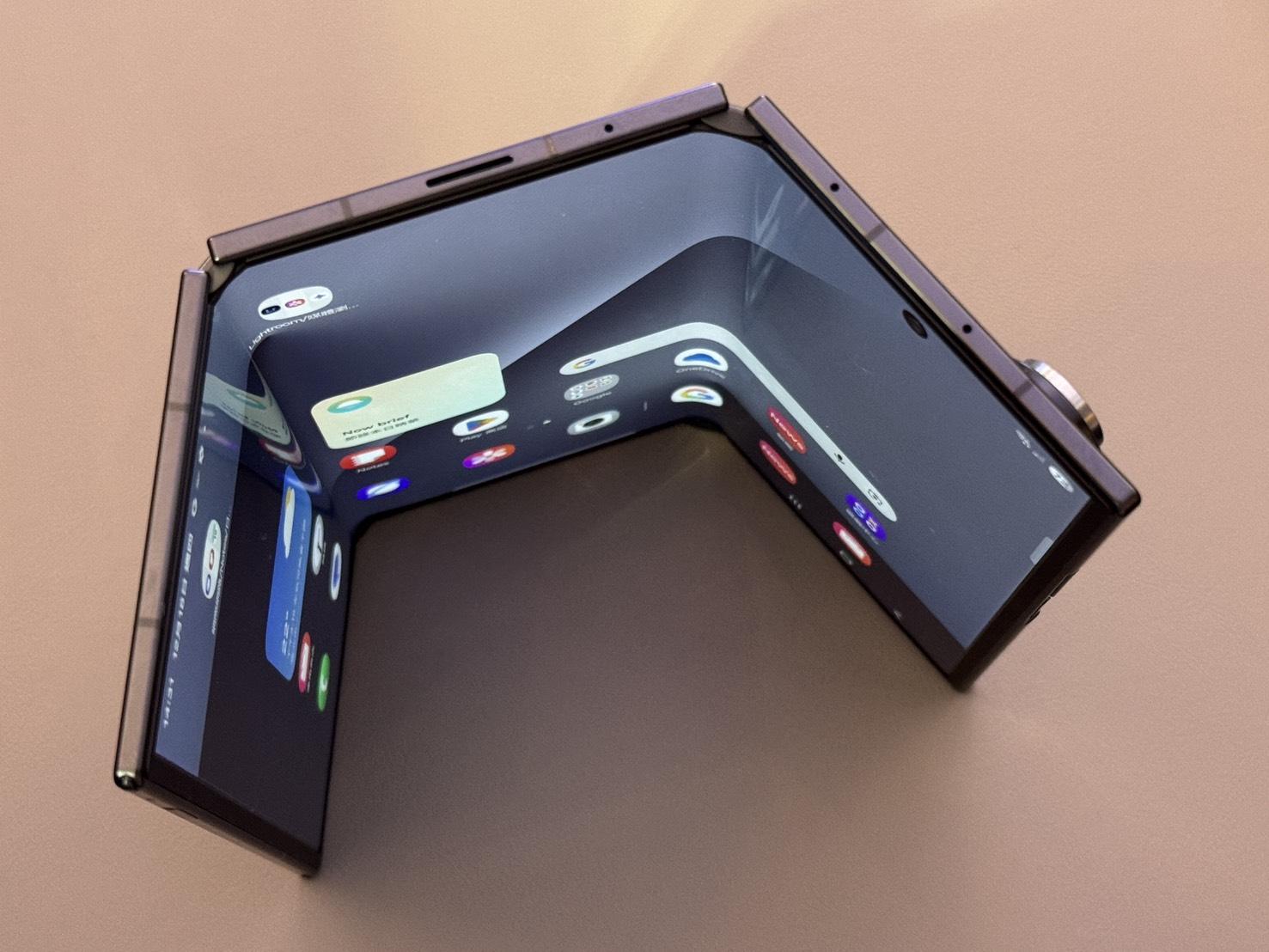
The best foldable phones 2026 has produced no longer feel like prototypes. Hinges are stronger, displays are brighter, batteries finally last a day — and the category has split into real choices: book-style folds that open into small tablets, and flip phones that halve in your pocket.
The expensive mistake in 2026 is paying $800 to $2,100 for the wrong shape. This guide ranks the top foldables on street price, daily usability, battery, crease, software years and owner feedback — so you pick the hinge that matches how you hold a phone today. Foldables sit at the cutting edge of mobile tech — see where they rank in our top gadgets of 2026 buying guide.
Quick Answer: The Best Foldable Phones of 2026
Best overall: Samsung Galaxy Z Fold 8 Ultra ($2,099.99) — the most complete mix of productivity, cameras, software and global support, with an 8-inch inner display and 200MP camera.
Best for most people: Galaxy Z Fold 8 ($1,899.99) — the lightest book fold at 201g with a wide 4:3 inner screen reviewers keep calling the one they would actually carry.
Best battery life: Honor Magic V6 — a massive 6,660mAh silicon-carbon battery in an 8.75mm, 219g body, judged 92/100 and the endurance leader in lab testing.
Best camera foldable: OPPO Find N6 — a 200MP Hasselblad system with a virtually crease-free display, though availability outside its core markets is limited.
Best flip phone: Galaxy Z Flip 8 for balance and software maturity, or the Motorola Razr 70 Ultra for battery life and charging.
Book-Style Fold vs Flip: Which Shape Fits You?
Foldables come in two shapes that do different jobs. A book-style fold opens from phone size into a small tablet — best for mail, documents, maps, reading and running two apps side by side. A flip folds a full-size phone in half so it is half as tall in a pocket, with a cover screen handling quick tasks while closed.
Choose a book-style foldable when you frequently run two or three apps together, read or work from your phone, or want a tablet-sized display without carrying a tablet — accepting a higher price and more complex repair risk. Choose a flip when pocketability matters more than multitasking, you live on the outer display for notifications and quick replies, or you want the most accessible entry point into foldables.
One honest framing: a flip will not replace a tablet, and a fold will not vanish into skinny jeans. Buy the shape whose trade-off you will notice least.
How These Foldables Were Ranked
A foldable cannot be ranked like a conventional smartphone. Raw processor speed and camera megapixels matter, but they do not tell you whether the hinge feels stable, the crease distracts, or the outer screen is practical enough for daily use.
The rankings here weigh seven buyer-focused criteria: foldable design (thickness, weight, hinge behavior, outer-screen usability), inner display quality (brightness, refresh rate, crease visibility), battery and charging, camera quality, software (multi-window tools, AI features, update commitment), durability and support (ratings, warranty, repair access), and overall value.
Just as important are the things owners keep repeating after month six: cover-screen apps, the inner-screen repair quote, and whether the phone still gets opened daily. A foldable is a bad purchase if you only grade chips.
Best Overall: Samsung Galaxy Z Fold 8 Ultra
The Fold 8 Ultra wins because it has the fewest serious weaknesses. Samsung combines an 8.0-inch inner display with a practical 6.5-inch cover screen, a 5,000mAh battery, 45W charging and a 215g body measuring 8.9mm folded — relatively light and thin for an 8-inch foldable.
The rear camera system includes a 200MP main camera, 50MP ultrawide and 3x telephoto: not the most ambitious zoom in this guide, but far more versatile than the compromised cameras on older foldables. The Snapdragon 8 Elite Gen 5 for Galaxy provides flagship processing, while One UI remains the reference point for Android foldable multitasking.
What seals it is everything around the hardware: broad market availability, established repair channels and a mature accessory ecosystem — advantages that matter enormously on a device with a complex hinge and flexible display. Add seven years of OS and security updates and it is the safest premium foldable recommendation.
The compromises: the 5,000mAh battery is smaller than OPPO, HONOR and Motorola’s strongest alternatives, charging is slower than 80W rivals, and the IP48 rating offers only limited particle protection. The camera bump also stops it lying flat.
Best for Most People: Galaxy Z Fold 8
Samsung split its Fold in two this year, and the standard Fold 8 is the more interesting half: a new shorter, wider passport-like shape with a 5.5-inch cover screen and a 7.6-inch inner display in 4:3 format. Reviewers who used both say video and split apps breathe better on this canvas.
At 201g and 9.7mm folded it is the lightest book foldable in this guide, and Tom’s Guide gave it an Editor’s Choice, calling it the best Android foldable for most people. Its 4,800mAh battery lasted 12 hours 19 minutes in their testing, with 45W charging reaching 70% in 30 minutes.
The screens earn real praise: an anti-reflective coating and a crease that is much less noticeable than before. The limits are the camera system — two 50MP lenses with no telephoto — plus IP48 only, no S Pen support, and some heat under sustained loads.
Buy it if you want one foldable you will still be opening in February. Skip it if you need optical zoom or refuse $1,899.99 for a 5.5-inch cover screen.
Best Battery Life: Honor Magic V6
The Honor Magic V6 delivers the most impressive battery packaging in the category: HONOR fits a 6,660mAh silicon-carbon battery inside a body just 8.75mm folded and around 219g. Book-style foldables traditionally force a choice between endurance and portability — the Magic V6 comes unusually close to removing that compromise.
An independent judging panel scored it 92/100 and named it Foldable of the Year, citing cutting-edge BOE Q10 LTPO2 OLED panels with industry-leading brightness, true 10-bit color, Dolby Vision and zero-PWM flicker — genuinely easier on sensitive eyes than rivals’ 8-bit, high-PWM displays.
The Snapdragon 8 Elite Gen 5 with a huge vapor chamber sustains performance with minimal throttling, while Wi-Fi 7, true dual-eSIM and strong rural reception round out the package. A 64MP periscope telephoto, 80W wired and 66W wireless charging, and a hinge tested for 500,000 folds complete a remarkable spec sheet.
The catch for some buyers: MagicOS and weaker US service access send many American reviewers back to Samsung, and long-term update commitments can vary by market. Where HONOR is sold and serviced near you, it is the battery-first answer.
Best Camera Foldable: OPPO Find N6
The OPPO Find N6 is the most technically aggressive all-round rival to Samsung, and its headline feature is a 200MP Hasselblad-branded camera system — designed to make the Fold feel like a genuine camera flagship rather than a productivity device with acceptable cameras, with zoom reaching up to 120x.
OPPO places exceptional emphasis on the crease: the “Zero-Feel Crease” uses a titanium 3D-printed hinge, a liquid-polymer cushion layer and self-healing memory glass over a Samsung E7+ 10-bit AMOLED panel. Reviewers call it the first book fold where the valley almost disappears in normal use.
The rest of the hardware is flagship-grade: an 8.12-inch inner screen, Snapdragon 8 Elite Gen 5, 6,000mAh battery with 80W wired and 50W wireless charging, and IP58/IP59 protection covering dust, immersion and water jets — all in a 225g body that opens to 4.2mm.
Availability is why it does not take the overall crown. OPPO distribution, repair access and software features differ substantially by country — confirm the exact regional model before importing, because a creaseless import with no service counter is not value.
Best Software and Durability: Pixel 11 Pro Fold
Google’s pitch is not thinness — at 239g and 10.1mm folded it is heavier and thicker than both Samsungs. It is that this still behaves like a Pixel when closed, with clean Android, the best triple camera on a foldable per some reviewers (48MP main, 10.5MP ultrawide, 10.8MP 5x telephoto), and seven years of updates.
It was introduced as the first foldable with IP68 water and dust resistance — a genuinely reassuring rating for long-term ownership — and adds Qi2 magnetic wireless charging through Pixelsnap. The 6.5-inch cover and 8-inch inner displays both reach 3,600 nits.
The Tensor G6 prioritizes AI performance over raw speed, which suits Google’s vision of the foldable as an AI device. Battery life draws some owner complaints, with real-world screen-on times sitting under Google’s 24-hour marketing line, and Pixel 10 Pro Fold owners will find too little new to justify upgrading.
Best Value Book Fold: Motorola Razr Fold
Motorola’s first large foldable is a standout: flagship-level capability at a significantly better price than Samsung’s Fold 8 Ultra. The superb 8.1-inch 10-bit Dolby Vision inner display, excellent battery life from a 6,000mAh pack, and 80W charging headline a package that outperforms Samsung and Google in several key areas.
The triple 50MP camera system achieves a strong DXOMARK score of 164 — beating Samsung’s Fold series thanks to newer Sony sensors and better AI processing. Add full USB-C 3.2 with external SSD support, Wi-Fi 7, broad band coverage, stylus compatibility and three apps running simultaneously, all in a 4.6mm-unfolded body.
The main compromise is thermal throttling under heavy sustained load, making it unsuitable for long gaming sessions or extended 4K recording. Buyers should also wait for independent testing of hinge longevity and regional service quality before treating a first-generation book fold as the safest purchase.
Best Flip Phones: Galaxy Z Flip 8 vs Motorola Razr 70 Ultra
If portability matters most, the Galaxy Z Flip 8 is the most balanced compact foldable: 180g, 6.1mm unfolded, a 6.9-inch inner display with a 4.1-inch FlexWindow, and Samsung’s mature cover-screen software integrating notifications, camera controls and Galaxy AI coherently.
Samsung’s biggest advantages are software maturity, support channels and a long update runway, plus useful rear-camera selfies using the cover display. The weaknesses are a conservative 4,300mAh battery and 25W charging — fine for light days, less so for heavy ones.
The Motorola Razr 70 Ultra ($1,499) is the flip for battery and charging: a 5,000mAh silicon-carbon battery with 65W wired and 30W wireless charging, a 7-inch 165Hz inner panel and a 4-inch cover that runs full apps. Tom’s Guide measured 16 hours 20 minutes of endurance against the Flip 7’s 12 hours 24 minutes.
Motorola still leads on cover-screen apps and flip battery, while Samsung leads on four-year ownership and mall service. The penalty on the Razr Ultra is a short software clock for a $1,500 phone — choose it for stamina and outer-screen freedom, the Flip 8 for balance and longevity.
The $800 On-Ramp: Motorola Razr 70
The Motorola Razr 2026, also sold as the Razr 70, is the first foldable that does not feel like a dare: around $800 in the US and €800 in Europe. You lose Ultra brightness and long updates, but you get the flip habit — the pocketable form factor and cover-screen convenience — at half the flagship foldable price.
iPhone Duo: Wait for Full Reviews
Apple unveiled its first foldable on September 9: a 7.6-inch inner screen and 5.4-inch cover, A20 Pro chip, IP68, Touch ID in the side button, and two 48MP rear cameras with 2x “optical-quality” zoom from the main sensor rather than a dedicated telephoto. Pre-orders open October 16, sales start October 23, from $1,999 to $3,199.
Early hands-ons found the crease invisible head-on and a hinge that holds any angle, but noted a matte inner screen with slightly washed-out colors, multitasking limited to two apps, and — at 254g and 11.3mm folded — a heavier, thicker body than Android rivals.
No full independent review exists yet, only short hands-on sessions. Rank the Duo as a reservation until review units finish the work the Fold 8 already did: iPhone users should wait for proper testing before spending $1,999, especially with no telephoto and a $700 premium over an iPhone 18 Pro Max at every storage tier.
What to Check Before Buying a Foldable
Local warranty and repair access. A grey-import foldable can be cheaper, but a flexible-screen replacement may erase the saving entirely. Confirm the manufacturer will service your exact regional model — and budget for insurance, since a $1,900 phone with a $600 uninsured panel is really a $2,500 phone.
Dust and water rating. IP48, IP58, IP59 and IP68 protect against very different conditions, and none makes a foldable indestructible. Keep the factory inner film on, and remember debris in the fold is still the quiet killer of flexible displays.
Outer-screen shape and software commitment. A large inner display is only useful when the closed phone is comfortable — test typing and one-handed use on the cover screen. And since foldables are expensive long-term devices, favor the clear multi-year update promises from Samsung and Google.

A foldable deserves proper protection: our best phone accessories of 2026 covers cases and chargers built for folding screens.
Frequently Asked Questions
What is the best foldable phone in 2026?
For most US buyers, the Galaxy Z Fold 8 — it is the folding phone reviewers keep saying they would still carry after week one. For the best overall experience regardless of price, the Galaxy Z Fold 8 Ultra combines the most complete hardware, mature software and broad support availability.
Is the iPhone Duo the best foldable?
Too early to say. Hands-ons praise the inner display, but it is heavier and thicker than Android rivals, has no telephoto camera, costs $1,999, and has no full independent reviews yet. Wait until after the October 23 launch before judging.
Should I buy a Fold or a Flip?
Buy a flip if you want a smaller, pocketable phone with a handy cover screen. Buy a fold if you want a bigger screen for work, reading and video. A flip will not replace a tablet, and a fold will not disappear into tight pockets.
Are foldable phones reliable enough in 2026?
Significantly more than early generations — hinges, creases and water resistance have all improved. But flexible displays remain more vulnerable than conventional glass: failures still cluster on inner glass and grit in the hinge, so insurance, case selection and local repair access still matter.
Which foldable has the best battery life?
The Honor Magic V6, with its 6,660mAh silicon-carbon battery — the largest in the category and the endurance leader in lab testing. Among flip phones, the Motorola Razr 70 Ultra’s 5,000mAh battery is the standout.
Which foldable has the best camera?
The OPPO Find N6, with its 200MP Hasselblad-branded camera system — the strongest camera-first specification of any foldable. Samsung’s Fold 8 Ultra and the Motorola Razr Fold are strong alternatives where OPPO is not officially sold.
Is a foldable worth buying instead of a normal flagship?
Yes, when you will genuinely use the larger display, multitasking or compact folding design every day. A conventional flagship remains better value if you prioritize cameras, durability and lower repair costs.
