

Best Bluetooth Headsets 2026: Why Calls Break and Headphones Don’t
The best Bluetooth headsets 2026 offers aren’t the ones with the biggest drivers or the deepest bass. They’re the ones that keep your voice clear when a bus rolls past, a keyboard clatters, or a fan kicks on. A great listening headphone can still be a terrible calling headset — the microphone path is a completely separate engineering problem, and most buyers only discover that on the first bad meeting.
This roundup pulls together lab rankings and hands-on testing from five leading headset and earbud guides to find the Bluetooth headsets that genuinely make phone calls better in 2026. From boom-mic office workhorses to six-microphone earbuds, every pick here is judged on what the person on the other end hears — not on how music sounds.
The Shortlist: Our Favourite Bluetooth Headsets for Phone Calls
| Pick | Best for | Why it wins |
|---|---|---|
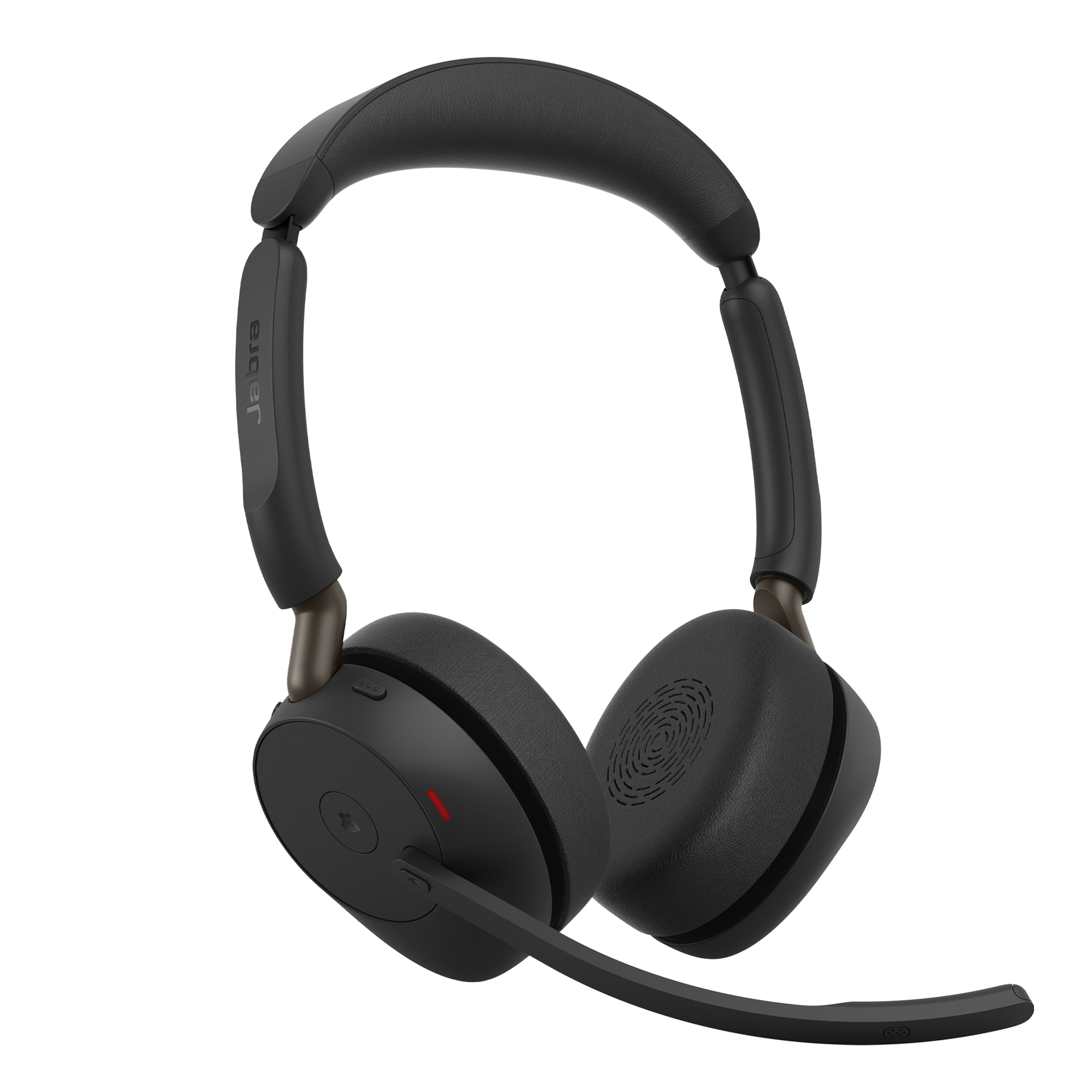
| Jabra Evolve3 85 | Call-focused premium over-ear | Bluetooth 5.3, multipoint, ANC, 25h talk time; tops RTINGS’ tested call-headset list |
| Sony WH-1000XM6 | Premium all-rounder | Multi-mic call system with AI beamforming, 24h continuous communication |
| JBL Tour One M2 | Pure call quality | Independent testing rated its call quality above the Sony flagships |
| HP Poly Voyager Legend 50 | Mono mobile calls | Aerodynamic boom, four noise-cancelling mics, 10h talk time |
| Poly Voyager Focus 2 | Bluetooth office all-rounder | Digital Hybrid ANC, Acoustic Fence boom, mute-by-boom, corded backup |
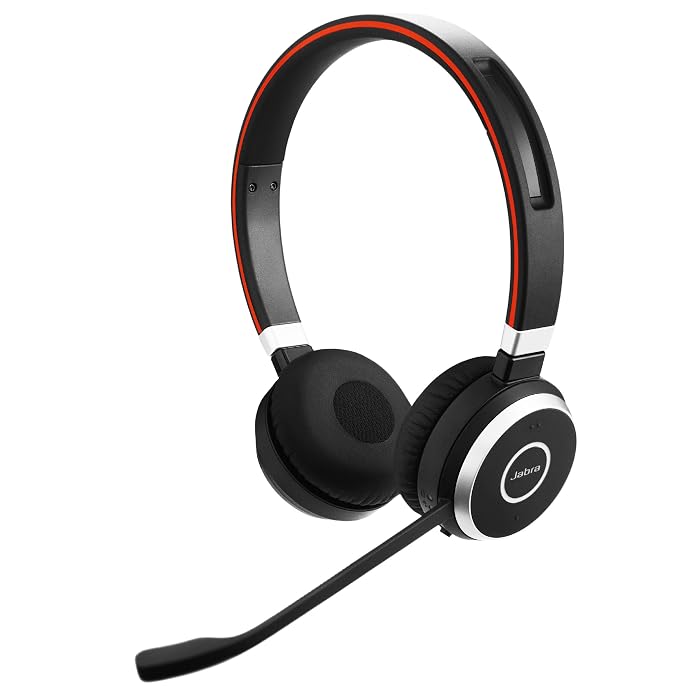
| Jabra Evolve2 75 | On-camera workdays | Performance/Discreet boom modes, eight mics, adjustable ANC |
| Poly Savi 8420 / 8445 | Desk phone + computer + mobile | DECT triple connectivity, 590 ft range, ~13h talk time |
| EPOS Adapt 660 | Boomless video calls | EPOS AI voice pickup, BTD-800 dongle, looks like ordinary headphones |
| Soundcore P20i | Budget earbuds for calls | Two AI mics, stable Bluetooth 5.3, 10h per charge |
| TOZO NC9 | Noisy commutes | Six-mic ENC, 45 dB hybrid ANC, 60h total battery |
| Soundcore Liberty 4 NC | Premium earbuds for calls | Six-mic beamforming array, class-leading adaptive ANC, 50h case battery |
| JBL Tune Buds | Long work meetings | VoiceAware sidetone control, 48h total, Smart Ambient |
| Sony WF-1000XM6 | Best overall work earbuds | Natural mics, strong noise separation, multipoint ($329.99) |
| Soundcore Liberty 5 Pro | Value work earbuds | Three-device switching, strong mic system ($169.99) |
| Dell Pro Plus EB525 | Teams and Zoom days | Teams/Zoom certification, eight paired devices, two simultaneous |
| AirPods Pro 3 | Apple-heavy setups | Voice Isolation, automatic Apple switching |
| Bose QuietComfort Ultra Earbuds (2nd Gen) | Blocking office chatter | Outstanding noise isolation, clean natural speech |
How We Chose
Every product below was judged on what a caller hears, not what the wearer hears. The scoring order was consistent across our sources: microphone hardware first (mic count, beamforming, ENC), then noise handling in realistic environments — a quiet room, a street beside traffic, and walking outdoors in wind — then connection stability, battery talk time, fit, and controls. Owner reviews spanning months of use were used to catch failure modes that short reviews miss.
Decoding Headset Microphone Technology
Boom Microphones vs Integrated Arrays
A boom mic’s real advantage is physical: it parks the pickup point close to your mouth and holds it there. Integrated microphones can perform well — modern multi-mic designs with signal processing close the gap — but results vary wildly between models. If your workday is eight hours of calls rather than a few calls a week, a boom remains the safer bet.
The flip side is consistency, not just quality. An earbud mic that sits perfectly during testing can drift when you walk, chew, or turn your head. Boom designs like the HP Poly Voyager Legend 50’s aerodynamic arm are engineered around exactly that problem.
Beamforming: Several Mics Listening as One
Think of beamforming as directional listening. Instead of one microphone passively hearing everything, several mics cooperate to focus on where your voice is coming from. Six-microphone arrays — like those in the TOZO NC9 and Soundcore Liberty 4 NC — have enough capture points to roughly triangulate your mouth, treating sound arriving from elsewhere as noise to subtract.
More mics isn’t automatically better. Placement, tuning, and software shape the result as much as the count. But as a rough guide from real testing: two mics are adequate for a quiet room, four is where room noise gets consistently rejected, and six is where a headset earns real margin in traffic.
ENC and ANC Are Different Systems
Active noise cancelling changes what the wearer hears. Environmental noise cancellation (ENC) processes the outgoing microphone signal, subtracting background sound before it leaves the headset. A model can have superb ANC for flights and still be mediocre at separating your voice from a noisy office — evaluate the two independently.
Sony’s WH-1000XM6 illustrates the split well: it pairs listener-side ANC with a separate call system that captures speech using multiple microphones and AI beamforming. Two functions, two evaluations.
AI Noise Reduction Has Limits
AI processing genuinely helps — it suppresses steady background sounds and keeps speech forward. Push it too far, though, and voices come out thin, watery, or clipped. A headset can score brilliantly on noise suppression while making you sound less like yourself, and on a long meeting that trade-off gets tiring. The goal isn’t silence; it’s a voice that still sounds like you once the noise is gone.
The Details Worth Checking on a Spec Sheet
- Microphone count and type: four-mic ENC is the practical floor for daily commuters; six buys real headroom.
- Beamforming or array mention: matters most in chattery environments.
- Wind reduction: rarely disclosed; wind is the most common cause of failed outdoor calls, so test outside if it matters.
- Bluetooth version and multipoint: Bluetooth 5.3/5.4/6.0 radios pair faster and hold calls more reliably; explicit multipoint means two devices stay connected.
- UC / Teams / Zoom certification: a signal the headset was validated for business workflows, with better stability and controls.
- USB dongle: for laptop-heavy setups, a dongle connection is often more dependable than standard Bluetooth alone.
Premium Over-Ear Bluetooth Headsets for Calls
Jabra Evolve3 85 — The Call-Focused Benchmark
When a headset is built for calls first and everything else second, this is what it looks like. The Evolve3 85 runs Bluetooth 5.3 with documented multipoint, active noise cancelling, and up to 25 hours of published talk time with ANC and the busylight switched off. It sits at the top of RTINGS’ tested Bluetooth call-headset list, which weighs recording quality and noise handling rather than brochure claims.
Sony WH-1000XM6 — The Best All-Rounder
If you want one headset for calls, commuting, music, and flights, start here. A multi-microphone call system with AI beamforming captures speech while the ANC handles your side of the environment, and Sony rates it for up to 24 hours of continuous communication with noise cancelling on. RTINGS’ 2026 phone-call testing singled it out for how well its integrated mics handle noise in demanding situations.
JBL Tour One M2 — When Call Quality Is the Only Thing That Matters
Premium price doesn’t guarantee the best voice pickup — and this is the proof. In comparative testing, TechGearLab found the Tour One M2 delivered the best call quality of the group, narrowly beating both the Sony WH-1000XM5 and WH-1000XM6. If your buying question is simply which headset makes me sound best, this deserves your shortlist.
HP Poly Voyager Legend 50 — The Mono Workhorse
For mobile calls all day, a single-ear headset with a proper boom is still hard to beat. The Legend 50 combines an aerodynamic boom with four noise-cancelling microphones, WindSmart and NoiseBlockAI processing, and physical call controls, with up to 10 hours of talk time. Single-ear fit keeps you aware of the room — useful for drivers and warehouse-style environments.
Business-Grade Bluetooth Headsets: DECT vs Bluetooth
Poly Savi 8420 and 8445 — The Desk Phone Anchor
When a desk phone is part of the mix, DECT wins on range and reliability. The Savi 8400 series connects a desk phone, computer, and Bluetooth mobile from one base, with up to 590 feet of DECT range and around 13 hours of talk time. The 8420 is the binaural model with ANC and hearing-aid compatibility; the convertible 8445 adds a hot-swappable spare battery for effectively unlimited talk time. If you’re upgrading from an old recommendation, note the Savi 8220 is discontinued — the 8420 is its replacement.
Poly Voyager Focus 2 — The Bluetooth All-Rounder
Digital Hybrid ANC with adjustable levels, an Acoustic Fence boom that walls your voice off from office noise, and mute-by-boom gestures make this the most versatile pick. It pairs with a computer and mobile simultaneously, works corded when Bluetooth isn’t allowed or the battery is flat, and the boom wears on either side. With the Office base it also covers a desk phone.
Jabra Evolve2 75 — Two Modes in One Headset
Fully adjustable Advanced ANC, dual-foam earcups that improve isolation and run cooler over long sessions, and eight microphones meeting Microsoft’s Open Office requirements. The standout trick is two wearing modes: Performance, with the boom down for the clearest call audio, and Discreet, with the boom retracted into the headset for boomless wear — ideal for video calls or listening between meetings.
Jabra Engage 65 SE — DECT for Busy Floors
The current Jabra DECT option, replacing the discontinued original Engage 65 and 75. It offers up to 490 feet of range, high-encryption DECT, and support for more headsets in one location without interference — the feature that matters on a packed call-centre floor. The stereo version handles music better than its positioning suggests; for mobile connectivity too, look at the Savi 8400 series or a Bluetooth headset instead.
EPOS Adapt 660 — The Boomless Option
No boom at all: adaptive ANC plus EPOS AI optimises voice pickup from a microphone array. You get up to 100 feet of range via the BTD-800 dongle, PC and Mac compatibility, and a 2.5mm-to-3.5mm cable for corded use on flights or anywhere Bluetooth isn’t practical. It looks like ordinary headphones, which suits video calls and public spaces.
Poly Blackwire 8225 — Corded, If You Never Roam
If you never leave your desk, corded removes the battery question entirely. The Blackwire 8225 packs Digital Hybrid ANC, an Acoustic Fence boom, a built-in busylight, and inline controls for volume, mute, answer/end, and hold. It connects over USB to a computer rather than a desk phone, so it suits softphone-first setups.
Earbuds That Are Genuinely Good for Phone Calls
Call-focused earbuds have come a long way — beamforming and voice isolation have turned them from a compromise into a credible choice. For the wider landscape of what’s worth buying this year, see our guide to the best wireless earbuds.
Soundcore P20i — The Most Reliable Budget Caller
Top spot for value, earned the boring way: a decent two-mic array, a stable Bluetooth 5.3 radio, and software that never drops a call mid-sentence. The mics sit in a short stem angled toward the mouth rather than tucked flat against the cheek, which keeps pickup consistent when you turn your head. Ten hours per charge and 30 with the case, multipoint between two devices, and a 10-minute top-up that returns two hours of use.
TOZO NC9 — The Noisy-Commute Specialist
Six microphones split between voice pickup and environmental noise cancellation give this pair the strongest noise margin at its price — engine rumble that ruins most earbud calls simply doesn’t reach the microphone. Hybrid ANC rated up to 45 dB targets the low frequencies of trains and buses, and the 60-hour total battery with an LED case readout means charging is a rare event.
Soundcore P30i — Best Value for Meeting-Heavy Days
Four mics with an AI call algorithm, adaptive ANC up to 42 dB, and a charging case that flips into a phone stand for hands-free video meetings. Ten hours per charge (six with ANC on) and 45 hours total cover even the heaviest calendar. Fit varies by ear shape — a poor seal undermines both ANC and mic pickup, so try the full tip kit.
Soundcore Liberty 4 NC — Premium Call Hardware
The closest an earbud comes to a dedicated call-headset array: six microphones with beamforming, plus class-leading adaptive noise cancelling for the listener side. Ten hours per charge and up to 50 with the case, LDAC hi-res on 11mm drivers, and an 18-month warranty. Owners report the multipoint switching can be flaky, so test your device combination before relying on it.
JBL Tune Buds — The Meeting Marathon Pick
Four-microphone stereo hands-free calls and VoiceAware, which lets you control how much of your own voice feeds back into your ears — on an hour-long call that sidetone control is the difference between a natural speaking volume and sounding rushed. Forty-eight hours total battery, Smart Ambient for desk awareness, and Bluetooth 5.3 with multi-device sharing.
Sony WF-1000XM6 — Best Overall for Work Calls
RTINGS found the microphone keeps voices natural and separates speech well from most background noise, while the earbuds deliver excellent noise isolation and easy two-device switching. Sony rates up to five hours of continuous call time with ANC on. The catch is the $329.99 price.
Soundcore Liberty 5 Pro — The Value Workhorse
Many of the Sony’s work-friendly features for much less: connections to as many as three devices, clear speech with very good voice-noise separation, and 6.5 hours of advertised ANC-on playback at $169.99. Very loud environments can still cut into speech, but for home, office, and coffee-shop calls it’s a lot of headset for the money.
Dell Pro Plus EB525 — Built for Teams and Zoom
The pick when your day lives inside Teams or Zoom: Microsoft Teams and Zoom certification, eight paired devices with two simultaneous connections, and up to five hours of ANC-on talk time. Treat the certification as a compatibility and stability advantage rather than proof the mic beats Sony or Soundcore.
AirPods Pro 3 — For Apple-Heavy Setups
Voice Isolation, automatic switching across Apple devices, and up to eight hours of ANC-enabled listening. RTINGS found microphone performance improves noticeably when paired with an iPhone rather than a PC, so these are strongest for iPhone and Mac users and a weaker fit for Windows-first callers.
Bose QuietComfort Ultra Earbuds (2nd Gen) — When Blocking Chatter Matters Most
RTINGS measured outstanding noise isolation with clean, natural speech under normal conditions. Sustained loud noise can still trouble the mic, but if hearing less office chatter matters as much as sounding clear, Bose is the pick. Currently listed around $249 with multipoint support.
How to Choose the Right Bluetooth Headset for Calls
Single-Ear or Dual-Ear?
Single-ear keeps one ear open to the room — good for drivers, reception desks, and anyone who needs to hear nearby people. Dual-ear or over-ear makes it easier to focus on incoming speech in distracting environments. Neither guarantees better mic quality; judge the outgoing voice separately.
Boom or Boomless?
A boom keeps the microphone closer to your mouth and more consistently placed. It doesn’t guarantee better noise handling — the mic system and processing still need evaluation on the exact model. Boomless designs (EPOS Adapt 660, Jabra Evolve2 75 in Discreet mode) look better on camera and feel more comfortable when you’re just listening.
Does Your Workflow Need Multipoint?
If calls move between a smartphone and a laptop, look for explicit multipoint documentation. Bluetooth version alone doesn’t prove a headset keeps two devices connected and switches calls the way you expect — confirm the switching behaviour fits your apps and OS, including any USB adapter requirements.
DECT or Bluetooth?
DECT for range and desk-phone connection — up to 590 feet on a dedicated voice band with no Wi-Fi contention. Bluetooth for portability, since the headset travels with you and pairs to your phone directly. If a desk phone is involved, DECT; if the headset needs to leave the building with you, Bluetooth. Some models offer both.
Talk Time Is Not Music Battery Life
Compare the metric that matches your workday. Products publish music playback, continuous communication, standby, or general battery under different settings — those numbers aren’t interchangeable. The Jabra Evolve3 85 lists 25 hours of talk time; the Sony WH-1000XM6 lists 24 hours of continuous communication; the Voyager Legend 50 lists 10 hours before you add its charge case. And for the long days, a solid power bank keeps everything topped up between charges.
Fit and Seal Are Call Features
A loose seal weakens noise cancelling, lets more room noise into the mic housing, and can work a bud loose mid-call. If your ear canals are unusual, prioritise multi-size tip kits and light per-earbud weight over driver size. Over-ear buyers should check clamp force and heat build-up over a full hour, not five minutes in a shop.
How Much Do You Need to Spend?
You don’t need flagship money for good mic quality. At the premium end you’re paying for a better mix of ANC, comfort, app polish, and call performance. In the mid-range, brands that focused on call quality over flashy extras — like Anker’s Soundcore line — deliver surprisingly capable microphone systems. Ignore broad claims and test the product in your own noise conditions.
Match the Headset to Your Day
The hybrid worker lives in Teams, Zoom, and Meet. Call stability and voice pickup matter more than audiophile tuning, and a USB dongle or business-ready connection is often more stable than standard Bluetooth alone. Fast, trustworthy mute controls matter in real meetings more than they do on a spec sheet.
The commuter or traveller faces traffic, announcements, and wind. Over-ear models still appeal here: stronger passive isolation, stronger ANC, and a more secure platform for long wear. Good travel headsets manage two things at once — reducing what you hear and reducing what your caller hears.
The budget buyer should spend on mic hardware, not branding. Two AI-tuned mics and a stable radio (the Soundcore P20i formula) beats a premium name with average voice performance. Corner-cutting is fine as long as the corners weren’t the microphone.
The all-day wearer should optimise for weight and breathability. Professional headsets are often lighter and easier to wear through repeated calls than plush consumer models, and sidetone control (like JBL’s VoiceAware) keeps your speaking volume natural over hours.
Test Before the Return Window Closes
- Use your real call device. Test the phone, laptop, or tablet you’ll actually use — not the shop’s demo unit.
- Use your real app. Call through the same phone app, Zoom, Teams, softphone, or browser workflow you rely on.
- Record speech in a quiet room. Listen for clipping, thin tone, excessive processing, or unstable volume.
- Add realistic background sound. Keyboard noise, nearby conversation, HVAC, or moderate street noise — without assuming every headset suppresses it equally.
- Walk outside. Wind exposes weak microphones faster than any indoor test. Even a short pavement call tells you more than a polished product page.
- Test mute and switching. Confirm you can mute quickly and move between devices without losing the call path.
- Wear it long enough to judge fit. Pressure, heat, earcup space, glasses, and headband tension become obvious after an hour, not five minutes in a shop.
Frequently Asked Questions
What are the best Bluetooth headsets for phone calls in 2026?
Start with your use case. For call-focused over-ear use, the Jabra Evolve3 85 and Sony WH-1000XM6 lead tested rankings. For the single best voice pickup regardless of price, the JBL Tour One M2 deserves a look. Budget earbud buyers get excellent value from the Soundcore P20i and TOZO NC9, while the JBL Tune Buds suit meeting-heavy days.
Is a boom microphone better for phone calls?
Usually, but not automatically. A boom keeps the microphone closer to your mouth with more consistent placement, which is a real physical advantage. It doesn’t guarantee better noise handling — the microphone system and processing still determine how well background sound is rejected on any given model.
Does ANC make my voice clearer to callers?
Not necessarily. ANC primarily reduces noise for the wearer. Caller-side clarity depends on the microphone system and its ENC noise processing, which is a separate system evaluated separately. A headset with superb ANC can still have average outgoing call quality.
Should I choose a single-ear or dual-ear headset?
Choose single-ear when room awareness matters (driving, reception, warehouses) and dual-ear when listening focus matters more (noisy offices, long calls). Wearing style doesn’t determine outgoing microphone quality, so compare mics separately.
Are over-ear headsets always better than earbuds for calls?
No. Over-ear models usually offer better comfort, stronger ANC, and more space for mic hardware, which helps in noisy places. But earbuds designed for calls — with beamforming and voice isolation — now perform very well, and six-mic arrays like the Liberty 4 NC’s rival dedicated headsets on paper.
What does UC-certified mean, and do I need it?
UC certification means a headset is validated for unified communications platforms and business workflows — a signal it was built with work calls in mind. If you live in Teams, Zoom, or softphone apps all day, it usually means better connection stability, controls, and compatibility. For casual phone calls, it matters less.
Can I use a gaming headset for work calls?
Sometimes very effectively. A gaming headset often has a more direct microphone design than a consumer music headphone, which helps speech clarity. The downsides are style, portability, and desk-bound behaviour — fine for stationary work, less so for commuting.
How much should I spend for good microphone quality?
Less than you’d think. Mid-range models with focused mic hardware — like Anker’s Soundcore range — deliver capable call quality without flagship pricing. Premium money buys a better overall package (ANC, comfort, app polish), not just a better mic.
Is Bluetooth good enough for serious call quality?
For most phone use, yes. For laptop-heavy workflows and office environments, a USB dongle or business-oriented wireless setup is often more dependable — it sidesteps the random switching, pairing confusion, and unstable call routing that standard Bluetooth can produce.
Which earbuds with a microphone are best for noisy environments?
Microphone count is the most predictive spec. The TOZO NC9 and Soundcore Liberty 4 NC use six microphones, giving real margin in traffic; the Soundcore P30i uses four, and budget pairs generally use two. A four-mic ENC array is the practical floor for a daily commuter.
Which earbuds handle wind noise best?
Wind is the hardest problem any earbud mic faces, and none eliminate it fully. Hybrid ANC pairs like the TOZO NC9 handle the low-frequency component best by subtracting it before transmission. On foot, the xinwld A97 Pro is a reasonable budget option — but a moving bicycle is beyond all of them.
Should I choose DECT or Bluetooth?
DECT if a desk phone is involved and you want range — up to 590 feet on a dedicated voice band. Bluetooth if the headset needs to leave with you and pair to your phone. Choose stereo either way if you plan to listen to anything other than calls, since mono headsets aren’t built for music.
Are business headsets good enough for music?
Increasingly, yes. Stereo models in the Savi 8400, Evolve2, and Voyager Focus lines use larger drivers and proper tuning because people listen between calls. Mono headsets still aren’t built for music — if music matters, choose a binaural model and check driver size.
Why has Jabra left the true wireless earbuds market?
Jabra has withdrawn from true wireless earbuds to focus elsewhere, which is why searches about its Evolve and Elite earbud lines keep resurfacing. For the same call-focused reasons, the Soundcore Liberty 4 NC and JBL Tune Buds are the closest current equivalents; Jabra headsets remain the pick if you want a boom mic for full-day call work.
