

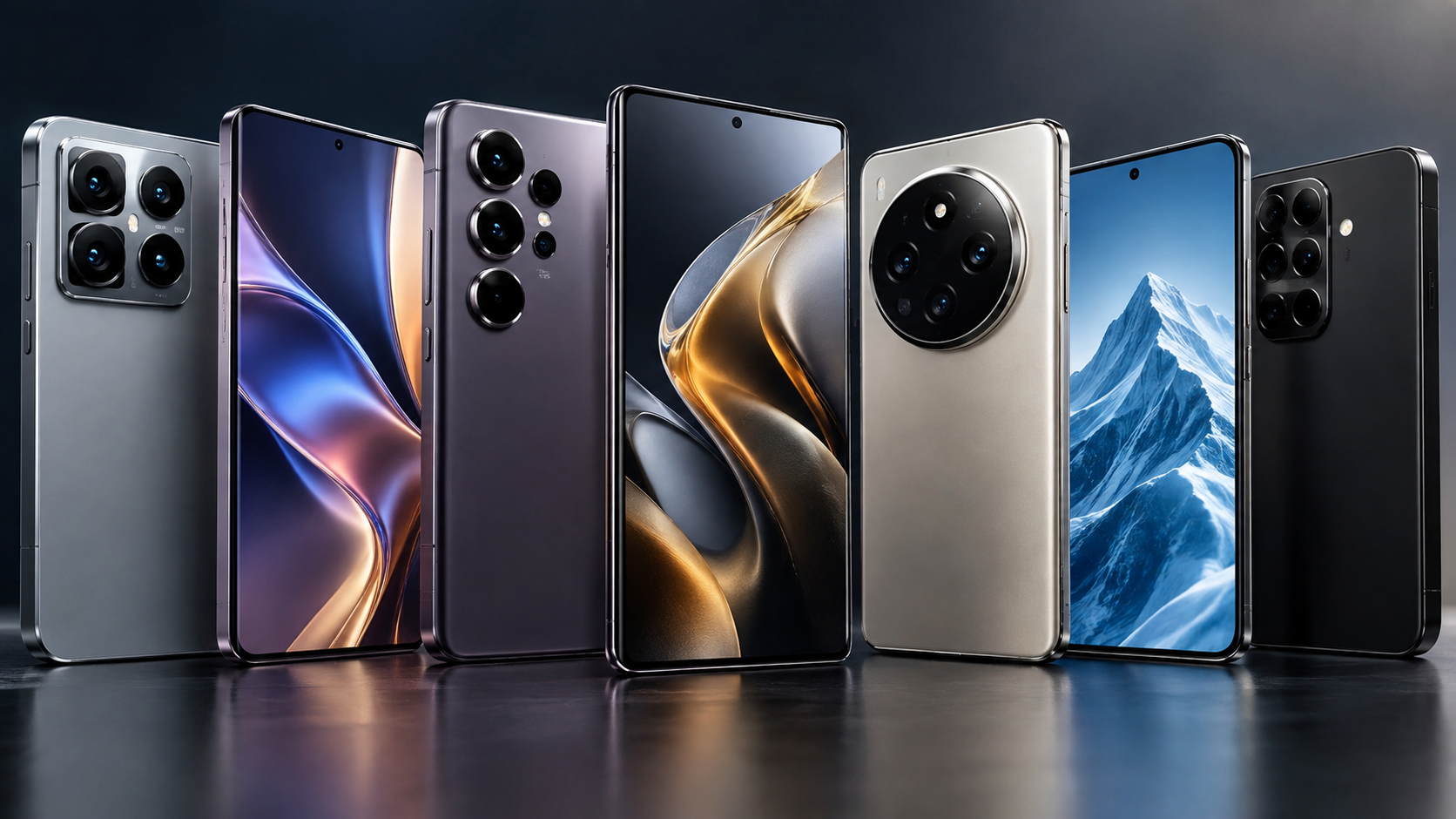
Choosing among the 10 Best Smartphones is harder than simply picking the newest model. Flagship phones now compete on camera systems, AI features, battery endurance, displays, gaming performance, software support and ecosystem integration. A phone that is ideal for photography may not be the best choice for gaming, while an affordable model can offer a better overall experience for someone who does not need every premium feature.
Current expert-tested buying guides place the iPhone 17 Pro Max, Samsung Galaxy S26 Ultra, OnePlus 15, Google Pixel 10 series and several specialized devices among the strongest options available.
The right choice therefore depends on how you use your phone, not simply how much it costs or how impressive its specification sheet looks. Here are 10 standout smartphones to consider in 2026, followed by a practical guide to choosing between them.
The Best Smartphones in 2026 at a Glance
| Phone | Best For | Key Strength |
|---|---|---|
| iPhone 17 Pro Max | Overall premium experience | Performance, cameras and ecosystem |
| Samsung Galaxy S26 Ultra | Photography and productivity | Cameras, S Pen and display |
| OnePlus 15 | Performance and battery | Speed and endurance |
| Google Pixel 10 Pro XL | AI and photography | Computational photography |
| vivo X300 Pro | Mobile photography | ZEISS camera system |
| OPPO Find X9 Pro | Camera versatility | 200MP telephoto and fast charging |
| Galaxy Z Fold 8 Ultra | Foldable productivity | Large-screen multitasking |
| iPhone 17 | Mainstream iPhone users | Flagship experience in a simpler package |
| Google Pixel 10a | Value | Camera and software features |
| POCO F8 Ultra | Gaming value | Performance and large battery |
1. iPhone 17 Pro Max — Best Overall Premium Phone
The iPhone 17 Pro Max is one of the strongest choices for buyers who want a premium phone without making major compromises. Apple’s current specifications list a 6.9-inch OLED display with adaptive refresh rates up to 120Hz, an A19 Pro chip, a triple-camera system and up to 2TB of storage. Apple also rates the model for up to 39 hours of video playback.
Its biggest advantage is balance. Performance is excellent, photography is highly capable, video recording remains a major strength, and Apple’s ecosystem makes it particularly attractive to people already using Macs, Apple Watches, AirPods or other Apple products.
The downside is straightforward: it is expensive, large and more phone than many users actually need.
Best for: Buyers wanting a premium all-round iPhone.
2. Samsung Galaxy S26 Ultra — Best Camera and Android Flagship
The Galaxy S26 Ultra is arguably the most complete Android flagship for users who want maximum hardware flexibility. Samsung lists a 6.9-inch display, a 5,000mAh battery, S Pen support and a camera system built around a 200MP main sensor, 50MP ultrawide and multiple telephoto cameras.
Its built-in Privacy Display is another differentiating feature, while Samsung’s AI tools add practical capabilities for editing, productivity and everyday tasks.
The camera system is especially useful for people who frequently switch between standard photographs, ultrawide shots and distant subjects. The S Pen also makes the phone more useful for note-taking, document work and creative tasks.
Best for: Android users who want cameras, productivity and premium hardware in one device.
3. OnePlus 15 — Best for Performance and Battery
The OnePlus 15 stands out for buyers who prioritize speed and endurance. Current 2026 testing guides highlight its Snapdragon flagship-class performance, 7,300mAh battery and triple 50MP camera setup.
That combination makes it particularly appealing to power users. Large battery capacity can be valuable for navigation, streaming, gaming, photography and heavy mobile multitasking without constantly searching for a charger.
Its main consideration is availability. OnePlus distribution differs by market, so prospective buyers should check local availability, warranty coverage and network compatibility before ordering.
Best for: Power users, gamers and anyone who hates charging frequently.
4. Google Pixel 10 Pro XL — Best for AI and Computational Photography
The Pixel 10 Pro XL takes a different approach to smartphone leadership. Instead of relying purely on raw hardware, Google combines its camera processing, AI features and clean Android experience to create a phone focused heavily on intelligent software.
Google lists a 6.8-inch LTPO OLED display, up to 120Hz refresh rate and a 5,200mAh typical battery for the Pro XL. It also supports fast charging and Qi2-certified wireless charging.
The Pixel family is particularly attractive to people who value automatic photo enhancement, useful AI tools and Google’s software ecosystem.
It is not necessarily the first choice for someone seeking maximum gaming performance, but its software experience is one of its strongest selling points.
Best for: Photography enthusiasts and users who want advanced AI features.
5. vivo X300 Pro — Best for Mobile Photography
The vivo X300 Pro is a particularly interesting choice for photography-focused buyers. Its global specifications include a 200MP ZEISS APO telephoto camera, a 50MP main camera with optical stabilization and a 50MP ultrawide camera. It also uses a Dimensity 9500 processor and offers a large battery with 90W charging.
The telephoto hardware gives the phone a clear photography identity. Instead of treating zoom as an afterthought, vivo puts considerable emphasis on long-range imaging and portrait photography.
Its combination of high-end cameras, a bright AMOLED display and strong charging makes it a serious alternative to the more familiar Samsung and Apple flagships.
Best for: Enthusiasts who put photography and zoom capability first.
6. OPPO Find X9 Pro — Best for Camera Versatility
The OPPO Find X9 Pro is another flagship aimed at users who want serious imaging hardware. Its specification sheet includes a 200MP telephoto camera, 50MP main and ultrawide cameras, a 120Hz AMOLED display and a 7,500mAh battery with up to 80W wired charging.
Its camera system is designed for a broad range of shooting situations, while the large battery is useful for people who spend significant time taking photographs, recording video, navigating or streaming.
Like several high-end Chinese smartphones, regional availability and software features can vary considerably by market. Buyers should therefore verify the exact regional model before purchasing.
Best for: Photography enthusiasts who want strong cameras and battery life.
7. Samsung Galaxy Z Fold 8 Ultra — Best Foldable for Productivity
Foldables have moved beyond being novelty devices. The Galaxy Z Fold 8 Ultra is positioned as a premium productivity phone, with a large internal display that can provide a more tablet-like workspace.
Current 2026 buying guides identify Samsung’s latest Fold as one of the leading foldable options, particularly for multitasking and large-screen use.
The benefit is obvious when you frequently work with documents, email, calendars, spreadsheets or multiple apps. A large foldable screen can reduce the need to switch between applications constantly.
The trade-off is price and physical complexity. A conventional flagship remains simpler and generally offers better value if you do not specifically need a folding display.
Best for: Professionals and multitaskers who want a phone-tablet hybrid.
8. iPhone 17 — Best Mainstream iPhone
Not everyone needs a Pro Max. The standard iPhone 17 is a more sensible choice for buyers who want Apple’s ecosystem, strong performance and a premium everyday experience without moving to the largest Pro model.
It is particularly appealing to students, professionals and general users who want a reliable phone for communication, social media, photography, video and entertainment.
The biggest advantage is knowing what you are giving up. You avoid paying for specialized Pro features that you may never use while retaining the core iPhone experience.
Best for: Everyday iPhone users who want a premium experience without the Pro Max focus.
9. Google Pixel 10a — Best Value Smartphone
The Pixel 10a demonstrates how much smartphone technology has moved into more affordable price categories. Current 2026 buying guides identify it as one of the strongest budget choices, particularly for users who prioritize photography and software.
Its appeal is not based on having every flagship specification. Instead, Google focuses on the parts many users actually notice: camera processing, useful software, a clean interface and practical AI features.
For someone who does not play demanding games or require professional-level cameras, a phone in this category can make more financial sense than spending heavily on a flagship.
Best for: Students, casual users and buyers seeking strong value.
10. POCO F8 Ultra — Best for Affordable Gaming Performance
The POCO F8 Ultra is worth considering when performance per dollar matters more than brand prestige. Testing highlights its Snapdragon flagship-class chipset, 6,500mAh battery, 6.9-inch 120Hz AMOLED display and triple 50MP camera setup.
Its large display and battery make it especially suitable for gaming and media consumption. The phone also benefits from strong charging and a feature-rich software package.
The compromises are typical of performance-focused value phones: regional availability can be limited, and sustained heavy gaming can generate heat.
Best for: Mobile gamers and performance-focused buyers on a tighter budget.
How to Choose the Right Smartphone
The best phone for you depends on several factors. Specifications matter, but they should be considered in the context of your actual habits.
1. Choose Your Operating System
If you already own several Apple devices, an iPhone can provide a smoother ecosystem experience. Android offers considerably more hardware variety, from Samsung’s productivity-focused Ultra models to gaming phones and camera-centric devices.
Switching platforms is possible, but your existing apps, accessories and cloud services should influence the decision.
2. Prioritize the Features You Actually Use
A camera enthusiast should look beyond megapixel counts and consider telephoto capability, image processing, stabilization and video quality.
Gamers should prioritize sustained performance, cooling, display refresh rate and battery capacity. Heavy travelers may value battery endurance and charging speed more than a slightly better camera.
3. Consider Software Support
A smartphone is a long-term purchase. Look at the manufacturer’s update policy, security support and track record rather than focusing only on launch specifications.
Samsung, Apple and Google are particularly attractive to buyers who want a mature software ecosystem and long-term support. Samsung, for example, lists security support for the Galaxy S26 Ultra through February 2033.
4. Think About Size and Weight
Large phones are excellent for video, gaming and productivity, but they can be uncomfortable for one-handed use.
A 6.9-inch flagship may look impressive on paper, yet a smaller model could be more enjoyable if you frequently use your phone while walking, commuting or working.
Read More: Best Accessories Under Every Budget in 2026
5. Check Local Availability Before Buying
International smartphone rankings do not automatically translate into identical buying choices in every country. Some models have limited official distribution, different cellular-band configurations or different warranty arrangements depending on region.
Before purchasing an imported model, verify the exact model number, network compatibility, warranty and software region.
What Should You Look for in a 2026 Smartphone?
A good 2026 smartphone should offer a strong combination of performance, battery life, camera quality, display technology, software support and durability.
Instead of asking which phone has the highest specification, ask which phone handles your most important tasks best. That approach usually produces a better buying decision and can also save money.
FAQ’s About 10 Best Smartphones in 2026
What is the best smartphone in 2026?
The iPhone 17 Pro Max is one of the strongest overall choices, while the Galaxy S26 Ultra is a leading Android option. The better choice depends on operating system and personal priorities.
Which smartphone is best for photography?
The Samsung Galaxy S26 Ultra, vivo X300 Pro, OPPO Find X9 Pro and Google Pixel 10 Pro XL are all compelling choices for photography, although they emphasize different strengths.
Which 2026 phone has the best battery life?
Battery results depend on usage, software and network conditions. Large-capacity models such as the OnePlus 15, OPPO Find X9 Pro and vivo X300 Pro are particularly interesting for endurance-focused buyers.
Is a flagship smartphone worth buying?
A flagship can be worthwhile if you need the best cameras, performance, displays or long-term premium experience. For basic communication, social media and streaming, a quality mid-range phone may offer better value.
What is the best affordable smartphone in 2026?
The Google Pixel 10a is among the strongest value-oriented options highlighted by current buying guides, particularly for users who want good cameras and software without flagship pricing.
Which phone is best for gaming?
The OnePlus 15 is a strong all-round performance choice, while the POCO F8 Ultra offers a more value-oriented approach. Dedicated gaming phones can be better if gaming is your primary use case.
Should I buy a foldable phone in 2026?
A foldable makes sense if you genuinely benefit from a larger screen for multitasking, reading or productivity. If you mainly want a conventional smartphone, a standard flagship usually offers simpler ownership and better value.
Conclusion
The best smartphones in 2026 are no longer separated by one simple specification. The iPhone 17 Pro Max is an outstanding premium all-rounder, the Galaxy S26 Ultra is exceptionally versatile, and the OnePlus 15 is compelling for performance and battery life. Google’s Pixel range emphasizes AI and computational photography, while vivo and OPPO push smartphone imaging further.
For value buyers, the Pixel 10a and POCO F8 Ultra show that you do not necessarily need the most expensive flagship to get a strong experience.
The smartest purchase is ultimately the phone that matches your priorities. Decide whether camera quality, gaming, battery life, software, productivity or price matters most, then choose the model that performs best in that category rather than simply buying the most expensive phone available.
