

Finding the best gaming phones 2026 has to offer is no longer about who posts the highest benchmark screenshot. Put five Snapdragon 8 Elite Gen 5 phones side by side and their opening scores land within a few percent of each other — silicon has stopped being the variable. Heat is.
What decides whether hour three of a Genshin Impact session feels like hour one is how fast a phone sheds thermal energy. A phone that scores 5% higher cold and then throttles to 60% after fifteen minutes is simply a worse gaming phone than one that starts slightly slower and holds. That single insight shapes every pick below. Gaming phones are among the most exciting mobile hardware right now — see our best tech gadgets to buy in 2026 for the wider picture.
Best Gaming Phones 2026 at a Glance
Prices below are launch or reference figures — street prices move constantly, and a good discount can change the value order overnight.
- REDMAGIC 11S Pro — $799: Best overall. Active fan plus liquid cooling, 144Hz AMOLED, 7,500mAh battery, 520Hz shoulder triggers.
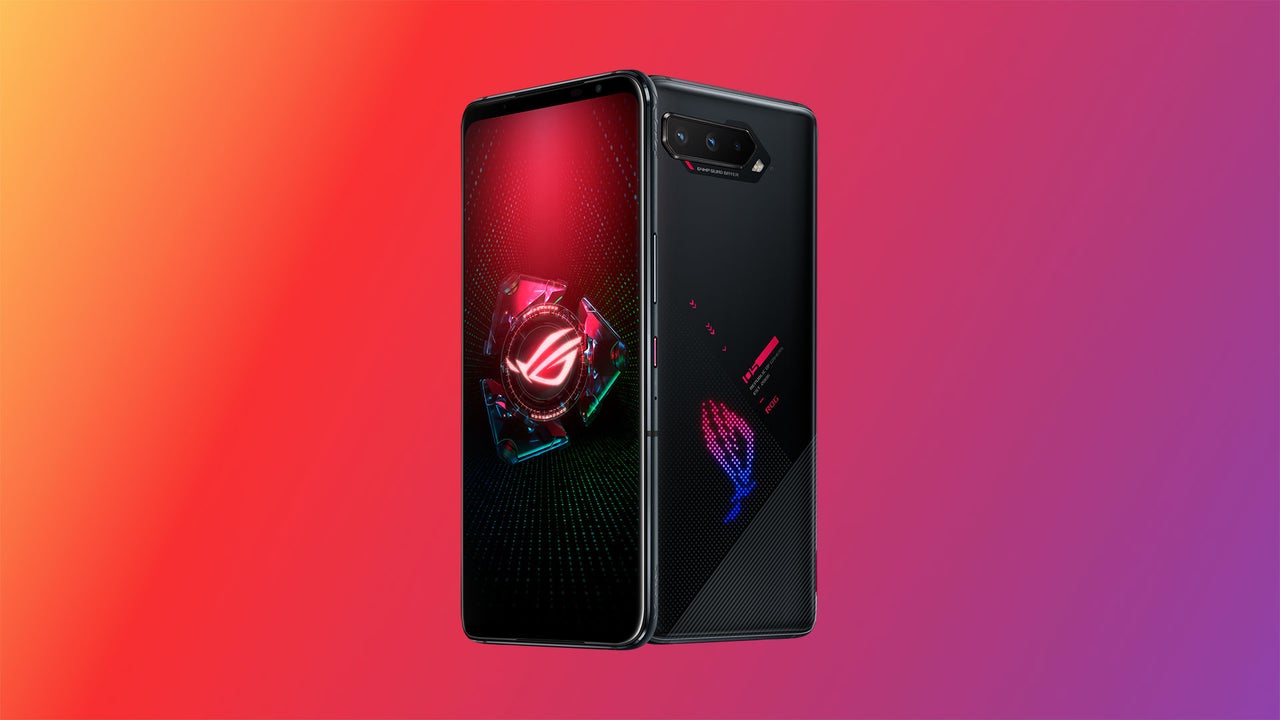
- ASUS ROG Phone 9 Pro — $1,199: Best controls. AirTriggers, 185Hz display, AeroActive cooler, but no 2026 successor planned.
- iPhone 17 Pro Max — $1,199: Best iPhone. A19 Pro, vapor chamber, 120Hz OLED, superb cameras and the longest software support.
- Samsung Galaxy S26 Ultra — $1,299.99: Best all-round Android. Snapdragon 8 Elite Gen 5 for Galaxy, QHD+ 120Hz, 7 years of updates.
- OnePlus 15 — $899.99: Best battery champion. 7,300mAh silicon-carbon cell, 165Hz display, flagship chip.
- POCO F8 Ultra — $729: Best audio. Standout speakers, 120Hz AMOLED, 6,500mAh battery, strong value.
- REDMAGIC 11 Pro — $749: Best value dedicated gaming phone. Same cooling concept as its successor for less money.
- Samsung Galaxy Z Fold8 Ultra — $2,099.99: Best foldable. 8-inch inner display for strategy games and multitasking.
Best Overall Gaming Phone: REDMAGIC 11S Pro
REDMAGIC’s formula is the most honest in the business: instead of relocating heat inside the chassis, eject it. The 11S Pro pairs a 24,000rpm internal fan with liquid circulation and liquid metal over a huge vapor chamber — continuing the cooling lineage that made its sibling the first mass-produced liquid-cooled phone.
The Snapdragon 8 Elite Gen 5 Leading Version gets the headroom to stay near peak, while the 6.85-inch 144Hz AMOLED runs with no camera cutout interrupting the image. Shoulder triggers sampling at 520Hz replace on-screen buttons in shooters, leaving the full display visible.
The 7,500mAh cell is among the largest in any 2026 gaming phone, with 80W wired charging and bypass charging that powers the system directly to keep battery heat down. The trade-offs are real: cameras trail mainstream flagships badly, software support is short, and the fan adds noise and a moving part. But if your phone is a handheld console first, nothing holds clocks longer.
Best Gaming Controls: ASUS ROG Phone 9 Pro
For pure control hardware, nothing has dethroned the ROG formula. Its pressure-sensitive AirTriggers remain the benchmark every other shoulder button is judged against, and the 185Hz ceiling is the highest refresh rate on any phone here — even if most games never render that many frames.
The clip-on AeroActive cooler adds external thermal capacity that built-in-only phones can’t match on long sessions, and a second side-mounted USB-C port keeps the charging cable out of your palms in landscape orientation.
The catch is the calendar, not the hardware: ASUS has no new ROG phone planned for 2026, so this is an aging platform with the shortest software runway of the group. At $1,199 it only makes sense heavily discounted — at the right clearance price, though, its polish, IP68 rating and complete accessory story still embarrass newer rivals.
Best iPhone for Gaming: iPhone 17 Pro Max
Apple’s big 2026 change wasn’t the chip — it was the chassis. Swapping titanium for an aluminum unibody and adding a real vapor chamber fixed the old throttling problem, delivering up to 40% better sustained performance than the previous generation.
The A19 Pro still trades blows with the fastest Snapdragon silicon, and the 6.9-inch 120Hz OLED is the largest, smoothest iPhone display ever. Independent testing measured nearly 18 hours in web battery runs — genuine marathon-session territory.
You get no shoulder triggers, no fan and no bypass charging, and passive cooling still can’t match active hardware in hour three. But with the strongest cameras here, the longest software support runway and the deepest mobile game library, it’s the gaming phone for people whose phone has to be everything else too.
Best All-Round Android Flagship: Samsung Galaxy S26 Ultra
Here’s the honest trade most buyers should make: dedicated gaming phones beat the Galaxy S26 Ultra at sustained frame rates, and lose to it at everything else. The Snapdragon 8 Elite Gen 5 for Galaxy runs anything in the Play Store at max settings, the 6.9-inch QHD+ 120Hz panel stays readable in direct sun, and Game Booster keeps notifications and accidental gestures out of your way.
Seven years of updates, an excellent camera system, IP68 protection and wireless charging mean the hours you’re not gaming are genuinely better. The built-in S Pen even works in select games.
Passive cooling is the ceiling — in emulation and max-settings marathons it can’t hold what a fan-equipped rival holds, and at $1,299.99 with a big, heavy body you’ll want a clip-on controller for long sessions. For two hours of gaming plus a full day of flagship life, though, it’s the safest purchase here.
Best Battery Champion: OnePlus 15
Nothing ends a session faster than a dead battery, and the OnePlus 15 attacks exactly that. Its 7,300mAh silicon-carbon cell is the biggest here outside the REDMAGICs, paired with the Snapdragon 8 Elite Gen 5 and a 165Hz-capable AMOLED display.
That combination buys something no benchmark measures: time before the charger becomes part of your session. When the battery does empty, fast wired charging shortens the turnaround considerably.
The compromises: no shoulder triggers, no active fan, and early stress tests showed temperatures climbing high under sustained load — update the software before judging thermals, since power profiles change after launch. It won’t replace a dedicated gaming phone at the top, but as a flagship-class daily driver that games hard, $899.99 undercuts the Ultra by $400.
Best Audio for Gaming: POCO F8 Ultra
Not every gaming advantage shows up in a frame-rate chart. The POCO F8 Ultra is built around audio — symmetrical speakers tuned for a fuller sound that matters in rhythm games, streaming and late-night sessions without headphones.
Underneath it’s a proper performance flagship: Snapdragon 8 Elite Gen 5, a 6.9-inch 120Hz AMOLED and a 6,500mAh battery, all for $729. You give up shoulder triggers and any active cooling, but you keep stronger cameras and a more conventional design than the REDMAGICs.
When local pricing undercuts Samsung and Apple, it’s the value flagship that happens to sound great — a performance phone first, with audio as the tiebreaker.
Best Value Dedicated Gaming Phone: REDMAGIC 11 Pro
The 11 Pro is the value check on its own successor. You get the same fan-plus-liquid-cooling concept, the same uninterrupted 144Hz display, the same 7,500mAh battery and shoulder triggers — the hardware that made this line famous — for $749 instead of $799.
The newer 11S Pro raises peak clocks and refines cooling, but independent testing found little practical difference in real games despite the higher price. The older phone even kept configurations up to 24GB of RAM and 1TB of storage that some 11S Pro markets lost.
Buy the 11 Pro when it costs meaningfully less than the 11S Pro. At similar prices, the newer chip and longer remaining support window make the 11S the sensible pick.
Best Budget Gaming Phones
You don’t need four figures to play well. The Samsung Galaxy A36 at $399 is the cheapest credible way in: a 120Hz Super AMOLED — rare at this price — a 5,000mAh battery matching the flagships, and six years of updates. Its Snapdragon 6 Gen 3 handles PUBG Mobile and Call of Duty: Mobile at lower settings, but heavy 3D titles force real compromises.
A step up, the Poco F7 Pro ($679.99) is the reality check on this whole list: a generation-old Snapdragon 8 Gen 3 that reviewers report runs demanding sessions with no stuttering, a 2K OLED and 6,000mAh battery with 90W charging. For mainstream mobile titles, it’s two-thirds the money for most of the experience.
On iOS, the iPhone 17e ($599) is the trick play — the same A19 chip as the $799 iPhone 17, so it runs complex games at the same level. The catch is the 60Hz display, which gives up the smoothness high-refresh gaming is built around. Pick your compromise: chip, screen or price — budget phones only let you keep two.
Best Foldable for Gaming: Samsung Galaxy Z Fold8 Ultra
An 8-inch folding display doesn’t make games faster — it makes some of them better. Strategy titles, card games, inventories and emulators use the extra area far more effectively than fast shooters, where the squarish aspect ratio can leave odd dead space.
The Fold8 Ultra pairs that canvas with the Snapdragon 8 Elite Gen 5 for Galaxy in a 215g body, and Samsung’s multitasking lets a guide, chat or stream share the screen with your game. The thin folding body still relies on passive cooling, and the big inner display drinks power.
At $2,099.99 it’s the most expensive option here by a mile. It earns its place when the display also serves work and media — buying it purely for frame rates would be an expensive mistake.
Why Sustained Performance Matters More Than Peak Benchmarks
Every mobile chip ships with a thermal governor: hit the temperature ceiling and it cuts clocks and voltage to stay inside its safe envelope. That’s not a defect — it’s the design working. But it means an advertised peak clock is a number a phone can hold only until the heat it generates exceeds the heat it can move away.
So a single cold benchmark run is close to useless for buying decisions. The number that matters is the one after twenty minutes, when the chassis has heat-soaked and the governor has settled into whatever clock the cooling system can actually sustain. Tests that publish the drop-off curve — not just the opening score — are the only ones worth weighting heavily.
Cooling hardware is what separates the curve shapes. A vapor chamber moves heat off the chip efficiently but only into the rest of the body — once the chassis saturates, it’s done. An active fan is a step change because it ejects heat to the outside world instead of relocating it. A liquid loop transports heat faster and further than a vapor chamber’s small fluid charge. Combine transport with expulsion — loop plus fan — and a phone can hold near-peak clocks into hour two and three.
What to Look for in a Gaming Phone
Processor and Cooling
The chip is the headline and cooling is the story. On Android the Snapdragon 8 Elite Gen 5 leads in 2026; on iPhone it’s the A19 Pro — both handle demanding titles at high settings. But a fast chip in a hot chassis throttles, so weigh sustained-performance evidence over peak scores, and treat vapor chambers, fans and liquid loops as meaningfully different mechanisms with different failure points.
Display, Refresh Rate and Touch Response
Treat 120Hz as the minimum for serious gaming — motion looks smoother and controls feel more responsive than 60Hz. Beyond that, check what games actually render: many cap below 144Hz, so a 165Hz or 185Hz ceiling is future-proofing more than daily benefit. Just as important is touch sampling rate — a 120Hz panel with high touch sampling feels more responsive than a higher-refresh panel with poor sampling, and manufacturers’ peak sampling figures often apply only in specific game modes.
Battery and Bypass Charging
Heavy play can empty a 5,000mAh cell in 3–4 hours, so capacity matters more than marketing suggests — a 6,000mAh battery buys roughly 90 more minutes of heavy gameplay than a 4,500mAh one on identical hardware. Bypass charging, which powers the system directly while plugged in, reduces battery heat and wear during long sessions. And when a cable’s position makes landscape play uncomfortable, that’s exactly why side-mounted ports exist.
RAM and Storage
Most Android games run comfortably on 12GB of RAM; 16GB helps heavy multitasking and emulation, while 24GB rarely changes real game performance — mobile gaming is GPU-bound, not RAM-bound. Storage is the sleeper spec: modern titles run 15–30GB each and Genshin Impact alone has crossed 50GB, so treat 256GB as the practical minimum and favor UFS 4.0 or 4.1 storage, which cuts load times by 30–40%.
Software, Ecosystem and Daily Use
Gaming modes, per-game performance profiles and controller mapping vary by title — confirm your games support a promised refresh rate or enhancement before paying for it. And remember the daily-use tax: dedicated gaming phones often sacrifice cameras, update length, carrier availability or water resistance. A mainstream flagship may deliver fewer sustained frames while being much better for the other twenty hours of the day.
How to Choose the Right Gaming Phone for You
Start with your actual play time, not your aspirations. Over 60 minutes a day or competitive esports? A dedicated gaming phone with active cooling earns its keep. Fifteen to thirty minute casual sessions? A flagship like the iPhone 17 Pro Max or Galaxy S26 Ultra plays everything well enough and gives up nothing on cameras, ecosystem or resale value.
Next, pick your platform honestly. iOS offers Apple Arcade, major console ports and day-one optimization on a handful of chips; Android offers deeper emulation, customization and a wider hardware range. If your watch, tablet and laptop already live in one ecosystem, switching platforms for a phone is rarely worth it.
Then set the budget against longevity. Flagship silicon from 2026 will still game well in 2028; older budget chips will struggle sooner. If you keep phones for three-plus years, the extra few hundred dollars for current silicon is cheaper than replacing early. And if you’re torn between a controller and a new phone — the controller is the better upgrade for compatible games at a tenth of the cost.
Accessories That Actually Improve Mobile Gaming
The highest-value upgrade in mobile gaming isn’t a phone — it’s a controller. For compatible titles, a proper gamepad with analog sticks and real shoulder buttons improves control more than any silicon jump, at a fraction of the cost. If your sessions run past fifteen minutes, reach for one before reaching for a new device.
Second is cooling you can add later. Clip-on coolers exist for mainstream flagships and can drop gaming temperatures dramatically — turning a phone that throttles at minute forty into one that holds through the hour. For phones without bypass charging, a long flexible cable routed away from your grip keeps the port from dictating how you hold the device.
And buy storage like games depend on it, because they do: with 15–30GB per title, 256GB fills fast. A 512GB configuration — or a microSD slot where offered — is the cheapest future-proofing in this category.
Final Verdict
The best gaming phones of 2026 come down to what you’re optimizing for. The REDMAGIC 11S Pro is the purest answer to the question — active cooling, the biggest battery and real gaming controls, purpose-built for sustained performance. The ASUS ROG Phone 9 Pro remains the most complete package, but only makes sense at a steep discount given its stalled product line.
Most people should buy a flagship instead: the iPhone 17 Pro Max if your life is on iOS, the Galaxy S26 Ultra if it’s on Android. You’ll trade a few sustained frames for vastly better cameras, longer support and a phone that excels after the game closes. And if the budget is tight, the Poco F7 Pro and Galaxy A36 prove you don’t need flagship money to play the games everyone is actually playing.
Whatever you choose, judge it by the twenty-minute number, not the cold benchmark — that’s the difference between a phone that games and a gaming phone.

Pair your pick with the right gear: our 10 best accessories of 2026 includes controllers, coolers and headsets.
Frequently Asked Questions
What is the best gaming phone in 2026?
For pure sustained gaming performance, the REDMAGIC 11S Pro — its active fan and liquid cooling hold frame rates long after passively cooled phones throttle. For most buyers, though, the iPhone 17 Pro Max or Galaxy S26 Ultra is the smarter pick: nearly the same real-world gaming with far better cameras, software support and everyday usability.
Is a gaming phone faster than a normal flagship?
At peak, often not — the same Snapdragon or Apple silicon posts similar opening scores in both. The difference appears after fifteen to thirty minutes: the gaming phone’s larger cooling system delays thermal throttling, so it stays faster exactly when a flagship starts slowing down.
How much RAM does a gaming phone need?
12GB handles any current mobile game comfortably, since gaming is limited by the GPU rather than memory. Step up to 16GB if you emulate older consoles or multitask heavily while playing. Configurations with 24GB exist, but they rarely change actual in-game performance.
Is 120Hz enough, or do I need 144Hz or 165Hz?
120Hz is the baseline worth paying for — the jump from 60Hz is immediately visible in scrolling, aiming and camera panning. Higher ceilings like 144Hz or 165Hz only pay off in games that actually render that many frames, which many don’t. Touch sampling rate matters just as much for how responsive a phone feels in your hands.
Are gaming phone cameras bad?
Usually, yes — relative to flagships at the same price. The budget for cooling hardware, big batteries and shoulder triggers has to come from somewhere, and cameras are where it comes from. If photography shares priority with gaming, a Galaxy S26 Ultra or iPhone 17 Pro Max takes substantially better photos than any dedicated gaming phone.
Should I buy a gaming phone or just use a controller with my current phone?
Try the controller first. For compatible games it delivers a bigger control upgrade than any phone swap, at a much lower cost. Buy the dedicated gaming phone when sustained performance across long daily sessions, bypass charging and built-in triggers matter to you — not for a single game.
What is the best gaming phone under $500?
The Samsung Galaxy A36 at $399 — a 120Hz AMOLED display, 5,000mAh battery and six years of updates make it the most complete budget pick. Stretch the budget slightly and the Poco F7 Pro adds a big performance jump for the money.
