

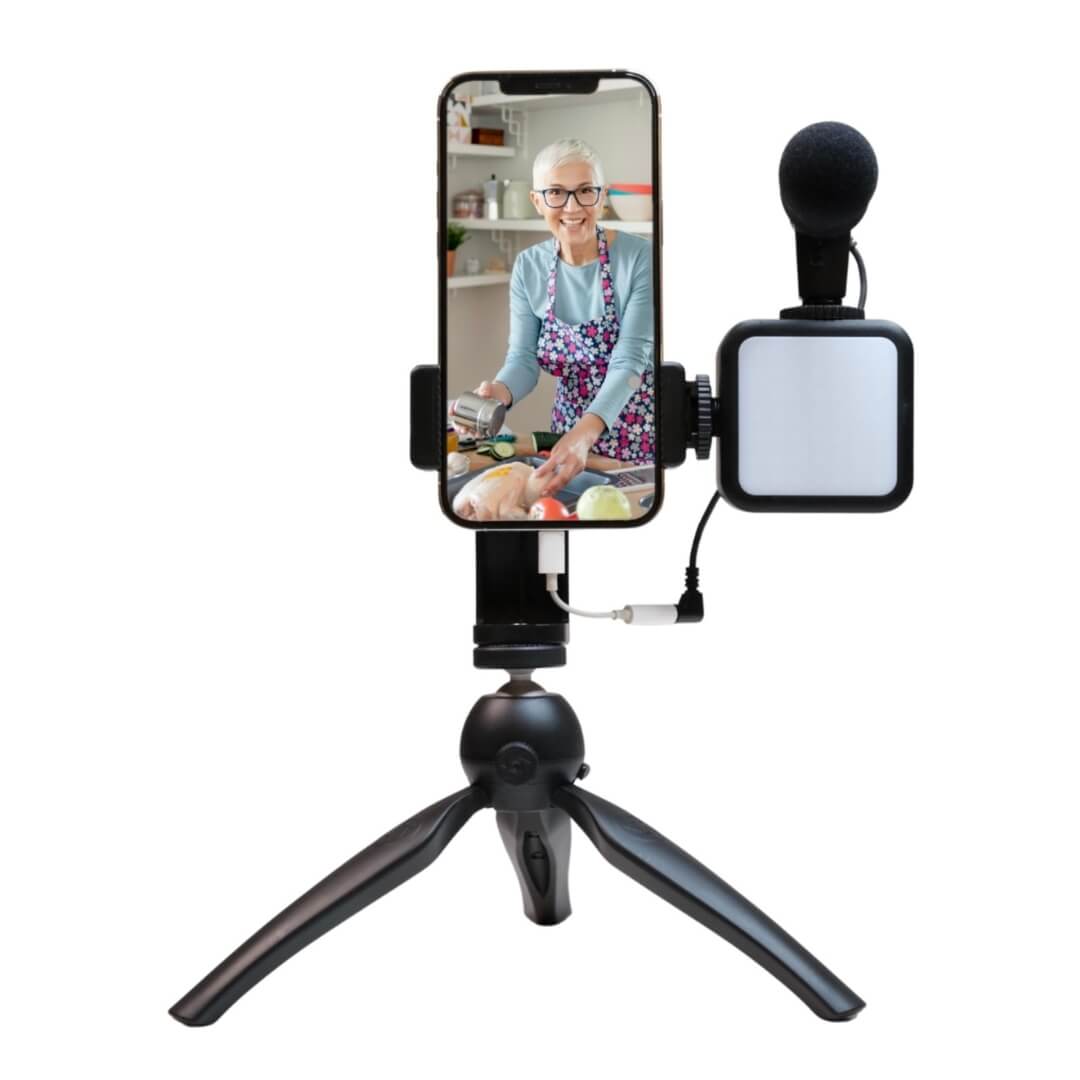
The best phones for content creators in 2026 aren’t just cameras — they’re the entire production studio. The phone in your pocket now shoots the footage, records the audio, edits the video, designs the thumbnail, and publishes to every platform. But different creators need different strengths: a YouTuber needs pro video formats and storage, a TikToker needs a great front camera and fast editing, and a photographer needs serious optics. Here’s how to match the phone to the work you actually do.
Best Phones for Content Creators 2026: Top Picks by Creator Type
Video-first creators: iPhone 17 Pro Max / 18 Pro Max
For pure video work, iPhones remain the default creator choice. The 17 Pro Max offers 4K ProRes Log, Apple Log 2, Cinematic and Action modes, and four studio-quality microphones, with storage up to 2TB for those enormous ProRes files. The newer 18 Pro Max adds a variable-aperture main camera, a 2nm A20 Pro chip, and the longest iPhone battery life yet — plus dual front-and-rear 4K Dolby Vision recording that’s tailor-made for reaction videos and split-screen vlogs.
Photography-first creators: OPPO Find X9 Ultra / Xiaomi 17 Ultra
If your content is photos — product shots, portraits, travel, food — the OPPO Find X9 Ultra is the most interesting hardware in 2026: dual 200MP cameras, a 50MP front camera that shoots 4K/60, Hasselblad tuning, and a 7,050mAh battery with 100W charging. The Xiaomi 17 Ultra counters with a 1-inch Leica Summilux main sensor that produces DSLR-adjacent product photography.
Android all-rounders: Samsung Galaxy S26 Ultra
Samsung’s flagship is the versatility pick: 200MP main camera, 8K video, 3x and 5x optical zoom, the S Pen for sketching thumbnails and annotating drafts, and Samsung DeX, which turns the phone into a desktop-style workstation when connected to a monitor. For creators who mix shooting with productivity, nothing else bundles this much.
Solo and AI-assisted creators: Google Pixel 11 Pro / 10 Pro
The Pixel 11 Pro (and the 10 Pro before it) is built for one-person productions. Google’s creator-focused AI tools handle exposure, stabilization, and editing assistance automatically — Video Boost smooths handheld footage, Night Sight Video rescues dim scenes, and Gemini is baked into the OS. If you film, edit, and publish alone, the phone that needs the least babysitting wins.
Manual-control filmmakers: Sony Xperia 1 VII
Sony’s Xperia is the closest a phone gets to a mirrorless camera: full manual ISO, shutter, and focus control, Cinema Pro and Photography Pro apps, a dedicated physical shutter button, and 4K recording at up to 120fps. It demands that you know the exposure triangle — but rewards you with control no other phone offers.
Budget creator picks: iPhone 17 ($799) and Pixel 9a ($499)
The base iPhone 17 got a genuinely creator-friendly upgrade: an 18MP Center Stage front camera and a four-microphone array with directional audio. The Pixel 9a delivers flagship-level Google processing for $499. Either is enough to start a channel today.
What Actually Makes a Phone Creator-Ready
Forget megapixels. The creator checklist is: stabilization that survives walking (not just standing still), low-light performance for indoor shoots, storage headroom for 4K footage, thermal management so the phone doesn’t overheat eleven minutes into a 4K interview, a strong front camera, good microphones, and a processor that can run CapCut or LumaFusion without stuttering. A phone that nails these four or five things will outperform a “better camera” phone that throttles, overheats, or fills its storage mid-shoot.
The Front Camera Is Your Most-Used Lens
Rear cameras get the marketing, but creators live on the front camera — TikToks, Reels, tutorials, livestreams, and video calls. Apple’s 18MP Center Stage camera with autofocus and ultra-stabilized video is currently the best in class for talking-head work, and OPPO’s 50MP front camera shooting 4K/60 is a genuine advantage for vloggers who alternate between selfie and rear footage. When comparing phones, check the front camera’s video specs as carefully as the rear.
Storage Strategy: 256GB Is the Floor
Video files are enormous, and pro formats are worse — ProRes RAW can devour gigabytes in minutes. 256GB is the minimum for anyone shooting 4K regularly; heavy creators should target 512GB or more, and the iPhone’s 2TB ceiling is a real advantage for professionals who keep projects on-device. Build an offload habit early: a fast external SSD (Samsung T7, SanDisk Extreme, or Crucial X9 Pro) plus cloud backup means never losing a shoot to a full phone.
Editing: On the Phone and Beyond
Modern phones edit as well as they shoot. CapCut handles most social editing natively, and flagship chips chew through 4K timelines. When projects outgrow the phone, a tablet (iPad Pro or Galaxy Tab S10 Ultra) makes a superb portable editing and thumbnail-design station, while a proper laptop (MacBook Pro/Air or ASUS ProArt) handles heavy grading and multitrack work. Samsung’s DeX deserves special mention: plug the S26 Ultra into a monitor and you’re editing in a desktop-style environment straight from the phone.
For the stills side of the creator equation, our best camera phones of 2026 guide covers the photography angle in depth.
The Gear That Matters More Than the Phone
Here’s the priority order experienced creators recommend — and notice the phone is only second:
- Wireless microphone (DJI Mic Mini, Hollyland Lark M2, or BOYA BY-V20) — viewers tolerate average video, never bad audio.
- A good smartphone — the picks above.
- Portable LED lighting (Ulanzi VL series, SmallRig, or Godox mini lights) — lighting improves footage more than a camera upgrade.
- Tripod or AI-tracking gimbal (DJI Osmo Mobile, Insta360 Flow) — eliminates shake and acts as your camera operator.
- Fast external SSD — for transfers and backup.
- Editing device and a high-capacity power bank — dead batteries kill shoots.
A creator with a $500 phone plus a mic, light, and tripod will consistently outperform someone with a $1,300 flagship and nothing else. And for the establishing shots that make travel content sing, check our best drones for every budget and skill level.

Best Phones for Content Creators: FAQs
Which phone is best for TikTok and Reels?
The iPhone 17 Pro Max: best-in-class front camera, stabilization, fast editing, and the smoothest social-app integration. The Galaxy S26 Ultra and Pixel 11 Pro are strong Android alternatives.
Which phone is best for YouTube?
The iPhone 17 Pro Max for pro video formats and ecosystem, or the Galaxy S26 Ultra for versatility and manual control. Either way, buy 256GB minimum — 512GB if you shoot long videos.
How much storage does a content creator need?
256GB is the starting point for regular 4K shooting. Heavy video creators should get 512GB or 1TB, and professionals shooting ProRes should consider the iPhone’s 2TB option plus an external SSD workflow.
Do I need a flagship phone to become a content creator?
No. A mid-range phone paired with a wireless mic, tripod, and basic lighting beats a flagship with no accessories. Storytelling, lighting, audio, and consistency matter far more than the phone’s price tag.
Is iPhone or Android better for content creators?
iPhones offer smoother editing-app integration and more consistent video color science; Android flagships like the Galaxy S26 Ultra offer more manual control, customization, and productivity tools like DeX. Match it to your workflow.
Can a smartphone fully replace a camera setup?
For TikTok, Reels, Shorts, and most YouTube content — yes. Flagship phones handle stabilization, low light, and quality well enough to retire the DSLR for social platforms. Long-form cinematic work may still benefit from dedicated gear.
Verdict: Match the Phone to Your Workflow
There’s no single best phone for content creators in 2026 — there’s a best phone for your content. Video-first: iPhone 17 Pro Max. Photography-first: OPPO Find X9 Ultra. All-round Android productivity: Galaxy S26 Ultra. Solo AI-assisted: Pixel 11 Pro. Hands-on manual control: Sony Xperia 1 VII. Pick the strength that matches your workflow, spend the savings on a microphone and a light, and start publishing — the algorithm rewards consistency, not spec sheets.
