

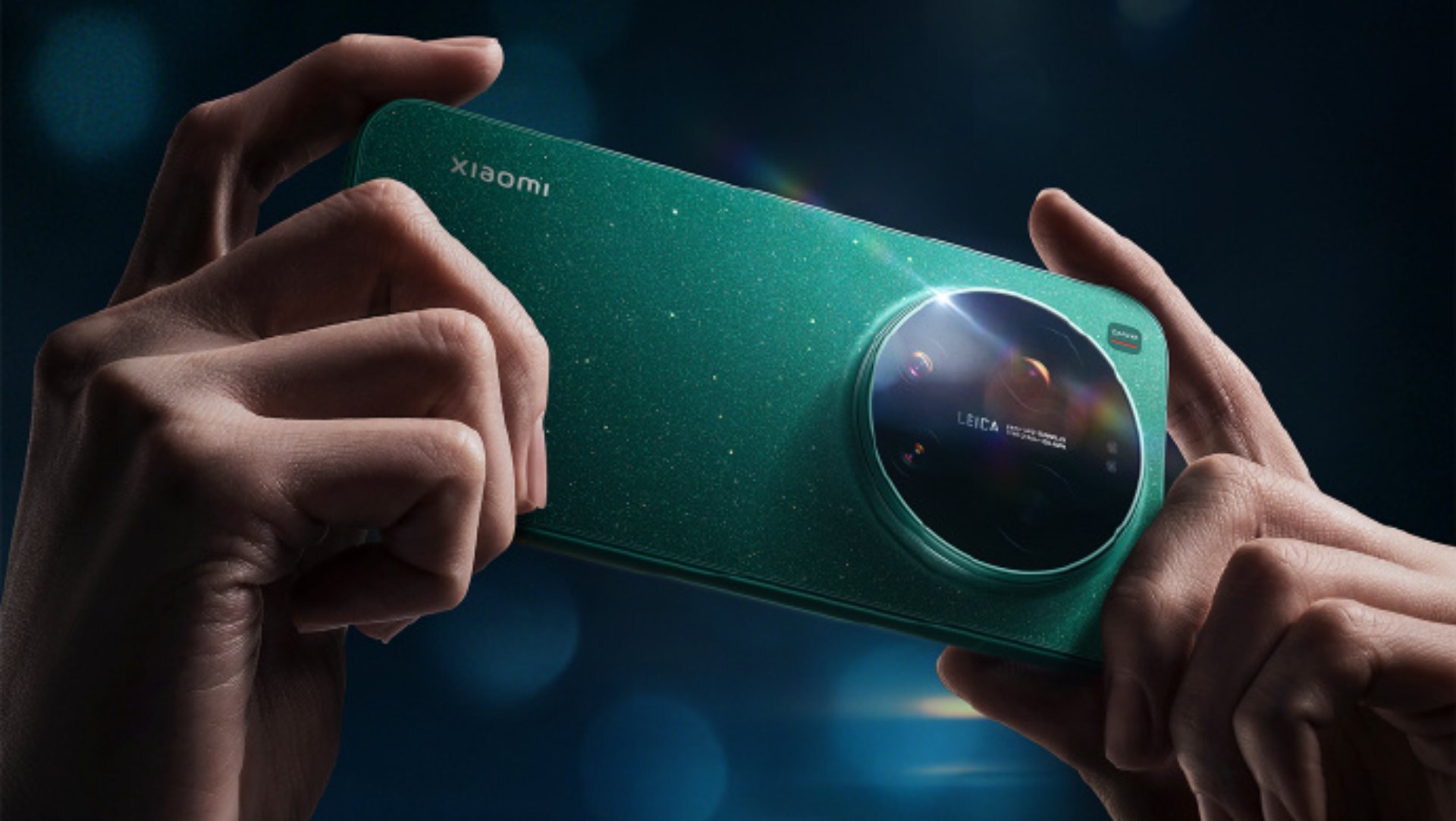
This Xiaomi 17 Ultra review tackles the biggest question in mobile photography right now: has Xiaomi finally built the undisputed camera king of 2026? With a world-first continuous optical zoom, a 1-inch LOFIC sensor and Leica APO-certified optics, the spec sheet certainly thinks so.
We tested the 17 Ultra for weeks against the Galaxy S26 Ultra, iPhone 17 Pro, Vivo X300 Pro and Oppo Find X9 Pro — shooting in harsh daylight, neon-soaked streets and pouring rain. If you are weighing up this year’s flagships, our latest expert reviews and recommendations will help you compare them side by side. Here is where the Xiaomi pulls ahead, and where it still stumbles.
Xiaomi 17 Ultra Review: Design and Build Quality
At 224 grams and 8.3mm thin, the 17 Ultra is neither small nor light — but it hides its heft well. The aluminium frame feels dense and precise, while the Starlit Green model’s composite fibreglass back shimmers under direct light without ever feeling plasticky.
The first thing you notice is the enormous circular camera island. It swallows nearly a third of the rear panel and shifts the balance toward the top, so one-handed use takes adjustment. That bulk is the price of serious optics: inside sits a mechanically moving zoom system no other phone offers.
Xiaomi has flattened everything this year. The micro-curves on the display and back are gone, which makes screen protectors fit properly and improves grip. A rigid clear case ships in the box, and the whole package is sealed to IP68/IP69 — Trusted Reviews notes it survives immersion to 6 metres for 30 minutes.
Buyers get black, white or green globally, plus a Leica edition in vegan leather with the red Leica badge and a rotating control ring around the camera for zoom and exposure. Shield Glass 3.0 guards the display, while Gorilla Glass 7i protects the camera module.
Display: Big, Bright and Completely Flat
The 6.9-inch OLED runs at 1200×2608 with a 120Hz LTPO refresh rate and 2160Hz PWM dimming — a step up from the 1920Hz of its predecessor. Peak brightness hits 3,500 nits, and HDR content genuinely pops.
Colours are vivid yet accurate out of the box, and the flat panel kills edge glare while playing nicely with tempered glass. Notebookcheck’s one gripe: resolution is lower than the 15 Ultra’s, and GSMArena’s lab test measured only 639 nits manual and 1,132 nits auto on a 75% white patch — below the predecessor.
Camera System: Where the Crown Is Won
The rear array pairs a 50MP 1-inch main, a 50MP ultrawide and a 200MP telephoto with true mechanical zoom. Instead of four sensors, you get three — with the two old periscopes replaced by a single, far more ambitious zoom unit.
50MP Main Camera with 1-Inch LOFIC Sensor
The 23mm Leica Summilux main uses a 50MP 1-inch sensor — now the Omnivision OV50X, marketed as Light Hunter 1050L (Light Fusion 1050L internationally), replacing the Light Fusion 900. Its LOFIC technology captures highlights and shadows in a single exposure instead of leaning on aggressive HDR software.
In practice, neon signs keep their detail while dark streets retain texture, with none of the muddy shadows phones usually produce. LOFIC switches on automatically in 1x photo mode and can be toggled manually for video — a genuine help for night shooting.
200MP Leica APO Telephoto with Continuous Optical Zoom
This is the headline act: a 200MP telephoto that glides continuously from 75mm to 100mm (3.2x–4.3x) with every step fully optical. No other phone does this — rivals jump between fixed focal lengths, but here the lens elements physically move.
The optics are Leica APO-certified — apochromatic glass that focuses all colours of light at the same point, killing purple fringing and messy night highlights. A dedicated 200MP mode offers 75, 85, 90 and 100mm options, and processing is fast enough that you can shoot and walk on.
Push further and the 17.2x in-sensor zoom reaches an equivalent 400mm with surprising cleanliness — no watercolour smearing. For context, the Oppo Find X9 Pro tops out at 280mm, the Vivo X300 Pro at 300mm and the Honor Magic 8 Pro at 304mm.
One quirk: the moving elements rattle when you shake the phone. Reviewers at T3 and Gadgets Now confirm it sounds alarming but is completely normal — that is the genuine mechanical zoom shifting in its housing.
Ultrawide, Macro and Selfie
The 50MP f/2.2 ultrawide covers 14mm with minimal barrel distortion — vertical lines stay straight — and doubles as a 5cm macro lens for textures and close-ups. A Super Macro mode can also draft in the telephoto.
The selfie camera jumps from 32MP to 50MP with a larger sensor and autofocus, delivering sharp, detailed self-portraits with strong dynamic range. The weak spot is telemacro: the new zoom cannot focus as closely as the 15 Ultra’s, so cropping is needed to match rivals.
Video Recording
Video is a genuine strength: 8K at 30fps, 4K Dolby Vision up to 120fps on the main and telephoto, and 4K 60fps LOG that finally feels creator-grade. Handheld footage stays remarkably stable, and colour stays consistent when switching lenses mid-shot.
Performance: Snapdragon 8 Elite Gen 5 Muscle
Qualcomm’s Snapdragon 8 Elite Gen 5 pairs with 12GB or 16GB of LPDDR5X RAM and up to 1TB of UFS 4.1 storage. Everyday use is instant, and heavy camera processing never stutters.
Gaming impresses too: maxed-out Genshin Impact ran for hours without a single frame drop, and the phone barely warmed up after 45 minutes — evidence of a serious cooling system. Sustained synthetic loads do trigger throttling, as with every 2026 flagship, but Notebookcheck found it comparatively moderate.
Battery Life and Charging
Capacity depends on where you buy: China gets a 6,800mAh silicon-carbon cell, while the global model steps down to 6,000mAh. Either way it is built for heavy camera days, and most reviewers report solid endurance.
Charging is 90W wired HyperCharge (PD-PPS compatible), 50W wireless and 22.5W reverse wired. On paper 90W looks rapid, but Notebookcheck found real-world top-ups slower than rival flagships. A charger ships in the box in markets like Malaysia.
Software: HyperOS 3 on Android 16
HyperOS 3 arrives on Android 16 with a bolder, more iOS-flavoured look — including Hyper Island, Xiaomi’s take on the Dynamic Island, and AI-animated wallpapers. Useful AI touches include system-wide live subtitles and photo tools like outpainting, object removal and portrait blur added after the fact.
Update policy is decent but not class-leading: four major OS upgrades and six years of security patches, with some regions listing five years of OS updates. Gadgetbyte still calls software the phone’s Achilles’ heel, and HyperOS can feel quirky next to Pixel or Galaxy polish.
Speakers and Connectivity
The dual stereo speakers are among the best on any phone — bass is deep yet controlled, with genuine stereo separation. Calls sound natural and noise suppression works well.
Connectivity is flagship-complete: Wi-Fi 7 with 6GHz, Bluetooth 5.4, full 5G bands, NFC, UWB and an IR blaster. The USB-C port runs at USB 3.2 speeds with video output and OTG, plus Miracast for wireless display. The global model adds eSIM alongside dual nano-SIM.
Photography Kit Accessories
Xiaomi now sells two add-ons. The slim Photography Kit is a case with a sculpted grip, two-stage shutter button and programmable video button over Bluetooth. The Photography Kit Pro adds a 2,000mAh battery that charges the phone, a zoom rocker, control dial and a rotating 67mm filter ring for ND or mist filters — with MagSafe-compatible magnets and Qi passthrough built in.
Price and Availability
Pricing varies sharply by market. In China it starts at 7,000 yuan (about $1,000); Malaysia gets it from RM5,499; Australia lists the 512GB model at 1,799 AUD; India at Rs 1,39,999 before offers; and Europe around €1,499. Grey imports in the US run roughly $1,216–$1,295, since Xiaomi still does not sell officially stateside.
A global launch is expected around MWC in March, though Xiaomi has not confirmed it. Note that the global version trims the battery versus the Chinese model.
Verdict: Is the Xiaomi 17 Ultra the Camera King?
After weeks of testing, the answer is close to yes. The continuous optical zoom is a genuine world first, the 1-inch LOFIC sensor delivers outstanding dynamic range, and performance, display and speakers are all top-tier. It earns its place among the best tech reviews of 2026 for anyone who puts camera first.
It is not flawless: telemacro regressed, colour reproduction could be better, 90W charging is slower than it sounds, and the software still trails Google and Samsung. But if you want the most serious camera phone you can buy — one that makes you hunt for shots — this is it.
- Pros: world-first continuous optical zoom; superb 1-inch main sensor; excellent display and speakers; strong performance and cooling.
- Cons: weaker telemacro than predecessor; colour science needs polish; charging slower than rivals in practice; pricey.

Frequently Asked Questions
What is the Xiaomi 17 Ultra price?
It starts at 7,000 yuan in China (about $1,000), RM5,499 in Malaysia, 1,799 AUD in Australia for the 512GB model, Rs 1,39,999 in India (dropping to Rs 1,29,999 with offers), and around €1,499 in Europe.
How good is the Xiaomi 17 Ultra camera?
It is among the very best: a 200MP telephoto with the world’s first continuous 75–100mm optical zoom and Leica APO certification, plus a 1-inch main sensor with LOFIC HDR. Notebookcheck rates the Vivo X300 Pro a touch ahead, but calls the Xiaomi a demonstration of power against the Galaxy S25 Ultra and iPhone 17 Pro.
Does the Xiaomi 17 Ultra support wireless charging?
Yes — 50W wireless HyperCharge, alongside 90W wired HyperCharge and 22.5W reverse wired charging.
How many years of updates does the Xiaomi 17 Ultra get?
Four major OS upgrades and six years of security patches, with some regions listing five years of OS updates — solid, though shorter than Google’s and Samsung’s commitments.
Is the Xiaomi 17 Ultra waterproof?
Yes, it carries IP68 and IP69 ratings, with Trusted Reviews noting survival at 6 metres depth for 30 minutes plus resistance to hot-water jets.
What is the Xiaomi 17 Ultra battery capacity?
6,800mAh in China and 6,000mAh in the global model.
Why does my Xiaomi 17 Ultra camera rattle?
That is the mechanical zoom lens moving inside its housing — completely normal for the 75–100mm optical zoom system, not a defect.
