

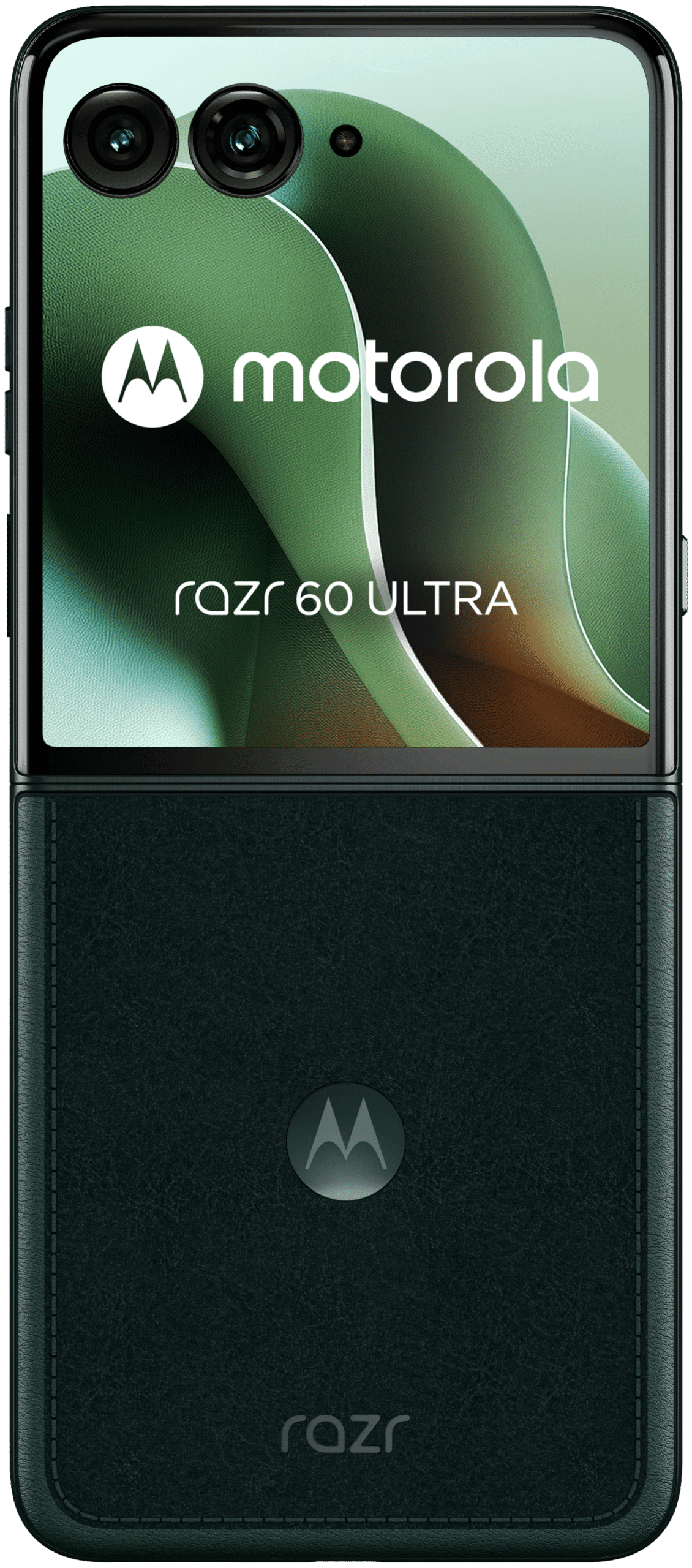
Motorola Razr 60 Ultra Review: First Impressions
Flip phones are supposed to be compromises. Smaller batteries, weaker chips, fragile hinges, cameras that trail the flagship crowd. For years that was the deal, and the Motorola Razr 60 Ultra is the first flip phone that refuses to sign it. It packs a genuine flagship processor, a 4,700mAh battery, triple 50MP cameras, and two displays that both run at 165Hz.
This Motorola Razr 60 Ultra review pulls together hands-on testing from five major review outlets to give you the full picture: what’s brilliant, what’s merely good, and whether the steep price is actually worth paying. Spoiler — if you want the best folding flip phone money can buy right now, this is it. But you should know the catches.
Motorola Razr 60 Ultra Review: Design That Steals the Show
Finishes That Don’t Feel Like a Phone
Motorola partnered with colour experts Pantone again, and the result is the most beautiful phone one reviewer has ever held. There are four finishes, each with genuinely different materials. Scarab brings Alcantara — a soft, suede-like fabric — to a phone back for the first time ever. Mountain Trail uses real FSC-certified wood, which adds grip and somehow never looks dirty. Rio Red is a brownish wine-red in faux leather, and Cabaret is a vivid pink with a satin finish.
The unique finishes only cover the bottom half of the back — the only flat surface not taken up by the screen. The aluminium frame colour-matches whichever finish you pick, and the whole thing weighs 199g, which is actually on the lighter side for modern flagships. At 7.2mm unfolded, it’s slim; folded down to 88.1 x 74 x 15.7mm, it disappears into pockets that swallow regular phones whole.
Hinge, Durability, and a Dust Rating First
The hinge feels impressively sturdy, holds the phone firmly at every angle, and shows zero weakness even after rough handling during testing. The cover display is protected by Gorilla Glass Ceramic, which is engineered to survive drops onto hard surfaces, and there’s a pre-applied screen protector on the inner display for extra peace of mind.
New this year: an IP48 rating, up from the IPX8-only rating of the last model. That means it’s safe against objects larger than 1mm and submersion in up to 1.5m of fresh water for 30 minutes. It’s not the full IP68 you’d get on a conventional flagship, but flagship-level dust protection feels almost impossible on a foldable, and this is a real step forward.
Two physical details matter. The fingerprint sensor sits in the side power button, so it unlocks naturally whether the phone is open or closed — fast, reliable, and sensible. On the opposite edge sits the dedicated Moto AI button, which gives one-tap access to Motorola’s AI features without hijacking your power or volume controls.
Motorola Razr 60 Ultra Review: Cameras
What the Triple 50MP System Does
Motorola installed three 50-megapixel cameras: a 50MP main sensor (f/1.8) with OIS, a 50MP ultrawide (f/2.0, 122-degree field of view) with autofocus that doubles as a macro camera, and a 50MP internal selfie camera (f/2.0, no autofocus). Video tops out at 8K at 30fps, with 4K at up to 120fps and slow-motion at 240fps in 1080p.
The big talking point is the swap: the Razr 50 Ultra’s 2x telephoto is gone, replaced by the ultrawide. On paper that’s a downgrade, but in practice it’s a smart trade. The old telephoto’s zoom was mostly digital beyond 2x anyway, while the new ultrawide offers flexibility the phone never had — sweeping group shots and surprisingly decent macro work. Moto AI’s 2x digital zoom from the main sensor is nearly indistinguishable from optical in most shots.
Real-World Photo Quality
Daylight shots from the main camera are colourful, sharp, and rich in detail, with strong dynamic range. The larger main sensor delivers more accurate colours than last year’s model, and in low light it can hang with the best camera phones — Night Vision mode makes a subtle but significant difference to dark scenes.
It’s not flawless. Reviewers found the bokeh could look a little artificial, exposure and shadows could be inconsistent — some shots over- or underexposed, so it’s not the most reliable point-and-shoot. Video looks sharp with quick autofocus, though the OIS couldn’t prevent occasional judder in footage with significant movement.
The flip-phone party trick remains the best camera feature: you can take selfies with the main rear cameras while the cover display acts as a live viewfinder. The results are far better than anything a conventional front camera produces, and you can flip to the ultrawide for group selfies. A fun extra: Camcorder mode automatically starts video recording when you half-close the phone in the camera app, mimicking an old-school camcorder. If you’re cross-shopping design-forward flagships, our Nothing Phone 3 review is a good comparison point for what camera-centric phones at this level offer.
The One Clear Gap
There is no dedicated telephoto lens. Everything beyond 2x is digital, and quality drops off quickly past that point. If long-range zoom is your priority, a conventional flagship like a Samsung Galaxy S-series or Pixel will serve you better. For a flip phone, though, this is one of the strongest camera packages you can get.
Displays: Two Screens, Zero Weak Links
The internal display is a 7.0-inch LTPO AMOLED with 1224 x 2992 resolution, 165Hz refresh rate, 1B colours, Dolby Vision, and HDR10+. Peak brightness hits 4,500 nits, and lab measurements recorded a centre brightness of around 1,379 nits with precise colour reproduction — one of the brightest, most accurate panels in its class. Resolution is a welcome step up from the 1080p panel on the Razr 50 Ultra, and PWM dimming runs at a high 707Hz frequency, which most flicker-sensitive users won’t notice.
The 4.0-inch cover display (1272 x 1080) is essentially unchanged from last year — but it remains the biggest cover screen on any flip phone, comfortably ahead of the 3.4-inch panel on the Galaxy Z Flip 6. It matches the inner display on 165Hz, LTPO, Dolby Vision, and HDR10+, with a 3,000-nit peak.
Where Motorola genuinely leads is what you can do with the cover screen. Unlike Samsung’s restrictive approach, the Razr 60 Ultra runs full apps on the outside display — every app, with only a brief warning that it “may not be designed for this screen size.” You could never open the phone and still lose almost no functionality.
The crease is well controlled: you can feel it when scrolling, but it’s never visible with the screen on. Stereo speakers with Dolby Atmos are the one disappointment here — punchy and impressively loud, but often tinny and lacking bass. High-res Bluetooth codecs (aptX HD, aptX Adaptive) mean good headphones close the gap.
Performance: Flagship Chip, Hot Pockets
The Snapdragon 8 Elite is the single biggest upgrade over the Razr 50 Ultra, which made do with the step-down Snapdragon 8s Gen 3. Combined with 16GB of LPDDR5X RAM and 512GB or 1TB of UFS 4.0 storage, the Razr 60 Ultra offers the best performance of any flip phone. Web browsing, messaging, social media, photography — everything flies, with power in reserve.
The catch is thermals. A flip chassis has almost no room for cooling, and under extended strain the phone gets noticeably hot — hot enough to be uncomfortable during long gaming sessions, with throttling kicking in during sustained heavy workloads. Casual games and demanding titles like Genshin Impact run smoothly in short bursts, but if you’re serious about mobile gaming, a conventional phone or dedicated gaming handset will sustain performance better.
Day-to-day, you will never feel the heat. Wi-Fi 7 is on board and genuinely fast — lab tests recorded over 1,700 MBit/s receive speeds, nearly double last year’s model. There’s 5G with broad global bands, dual-SIM via physical SIM plus eSIM, Bluetooth 5.4, and NFC. The one spec-sheet sting: the USB-C port is still USB 2.0, which feels cheap on a phone at this price.
Motorola Razr 60 Ultra Review: Battery & Charging
Battery Life That Matches Regular Flagships
The jump from 4,000mAh to 4,700mAh transforms the Razr 60 Ultra’s endurance. Reviewers consistently call it best-in-class for a clamshell foldable, with runtimes on par with conventional high-end devices. In a PCMark battery test simulating real-world tasks, it scored an impressive 14 hours and 30 minutes. In real use, most reviewers ended every day with charge to spare, and lighter days stretched past 48 hours between charges.
Only heavy days — hours of gaming, non-stop photography and video, max brightness with GPS and mobile data — drain it fast. For normal use, a full charge comfortably lasts until bedtime.
Charging Speeds
68W TurboPower wired charging is nearly 50% faster than the Galaxy Z Flip 6’s. Motorola claims a full charge in around 40 minutes; one reviewer’s test with a 65W charger reached 29% in 15 minutes and 55% in 30 minutes, with a full charge taking just over an hour. There’s no charger in the box — just a USB-C cable and a premium ring case — so any 68W+ Power Delivery charger will do the job.
Wireless charging runs at 30W via any Qi pad, with 5W reverse wired charging for topping up earbuds.
Software: Clean Android, Dedicated AI Key, Short Support Window
The Razr 60 Ultra runs Android 15 with Motorola’s light-touch Hello UI — close to stock Android with a different font, squircle icons, and a tweaked quick-settings menu.
The Moto AI button is this year’s software headline. One press unlocks a suite of AI features: “Update me” summarises missed calls and notifications, “Take notes” records audio with near-instant accurate transcription, “Remember this” analyses photos and screenshots so you can ask questions about them later, “Image Studio” generates images and avatars from text prompts, and “Playlist Studio” builds custom playlists in your music service. A Perplexity partnership adds an AI answer engine, and Google Gemini is a long-press of the power button away.
The weak point is software support: 3 years of major OS updates and 4 years of security patches, taking the phone to Android 18 and 2029. That’s the shortest commitment in its price class — Samsung offers seven years on the Galaxy Z Flip line, and for a phone this expensive, buyers reasonably expect better.
Price, Availability, and the Competition
The Motorola Razr 60 Ultra starts at $1,299.99 in the US (512GB; 1TB is $1,499.99) and £1,099 in the UK. In North America it’s sold as the Motorola Razr Ultra 2025 — same phone, different name. In India it launched at ₹99,999 in May 2025. Discounts have since been generous, with street prices well below launch in many regions.
Competition in the flip space is thin. The Galaxy Z Flip 6 is cheaper but runs an older chip, charges slower, and has weaker cameras. The Xiaomi Mix Flip is China-only. The OPPO Find N3 Flip is nearly 18 months old. The Razr 50 Ultra remains a good deal if you want to save money, but you lose the battery gains and the ultrawide camera. For the full landscape of folding phones, see our comparison of the best foldable phones we’ve tested this year.
Full Specs at a Glance
| Spec | Detail |
|---|---|
| Main display | 7.0″ LTPO AMOLED, 1224 x 2992, 165Hz, Dolby Vision, 4,500-nit peak |
| Cover display | 4.0″ LTPO AMOLED, 1272 x 1080, 165Hz, Gorilla Glass Ceramic, 3,000-nit peak |
| Chipset | Snapdragon 8 Elite (3nm) |
| RAM / Storage | 16GB / 512GB or 1TB (UFS 4.0, no microSD) |
| Rear cameras | 50MP main (f/1.8, OIS) + 50MP ultrawide (f/2.0, macro AF) |
| Selfie camera | 50MP (f/2.0, no AF) |
| Video | 8K@30fps, 4K up to 120fps, Dolby Vision HDR |
| Battery | 4,700mAh; 68W wired, 30W wireless, 5W reverse wired |
| Build | 199g, aluminium frame, IP48, Pantone finishes (Alcantara/wood/leather/satin) |
| Connectivity | 5G, Wi-Fi 7, Bluetooth 5.4 (aptX), NFC, USB-C 2.0, dual SIM + eSIM |
| Software | Android 15, 3 OS updates, 4 years security patches |
| Extras | Side fingerprint sensor, stereo speakers (Dolby Atmos), Moto AI button |
Pros & Cons
Pros
– Stunning design with genuinely unique materials (Alcantara, real wood)
– Both displays are superb — 165Hz, bright, colour-accurate
– True flagship performance from the Snapdragon 8 Elite
– Excellent battery life for a flip phone, with fast 68W charging
– Versatile triple 50MP camera system with macro ultrawide
– IP48 dust and water resistance — a first for the series
– Cover screen runs full apps, not just widgets
Cons
– No telephoto camera; digital zoom falls off past 2x
– Gets uncomfortably hot under sustained heavy load
– Only 3 OS updates / 4 years of security patches — short for the price
– Still stuck on slow USB 2.0
– Expensive, and speakers are merely average
Should You Buy the Motorola Razr 60 Ultra?
If you want the absolute best flip phone and can afford it, yes. The Razr 60 Ultra is a clear step up from the Galaxy Z Flip 6, with flagship performance, superb displays, excellent battery life, and the most usable cover screen in the business. The wood and Alcantara finishes make it a genuinely desirable object, not just a spec sheet.
The honest caveats: it’s pricey, it throttles under pressure, there’s no telephoto, and Motorola’s update policy lags Samsung by years. If those are dealbreakers, the regular Razr 60 gets you most of the flip experience for far less.
But if money is no object and you want a foldable that finally doesn’t feel like a compromise, the Motorola Razr 60 Ultra is the flip phone to beat in 2026.

Frequently Asked Questions
What is the price of the Motorola Razr 60 Ultra?
It launched at $1,299.99 in the US (512GB) and £1,099 in the UK; the 1TB model is $1,499.99. In India the launch price was ₹99,999. Street prices have dropped well below launch in most markets, so check current deals before buying.
Does the Motorola Razr 60 Ultra have a telephoto camera?
No. It has a 50MP main camera, a 50MP ultrawide, and a 50MP selfie camera. Zoom beyond 2x is digital and loses quality quickly — if optical zoom is a priority, look at a conventional flagship instead.
What display does the Motorola Razr 60 Ultra have?
A 7.0-inch LTPO AMOLED main display (1224 x 2992, 165Hz, Dolby Vision, 4,500-nit peak brightness) and a 4.0-inch LTPO AMOLED cover display (1272 x 1080, 165Hz, 3,000-nit peak). Both support refresh rates down to 1Hz to save battery.
How fast does the Motorola Razr 60 Ultra charge?
68W wired charging (a full charge takes around 40 minutes) and 30W wireless charging. There’s no charger in the box — you’ll need a 68W+ Power Delivery charger for the fastest speeds.
Is the Motorola Razr 60 Ultra the same as the Razr Ultra 2025?
Yes. In North America it’s sold as the Motorola Razr Ultra 2025; everywhere else it’s the Razr 60 Ultra. The hardware and software are identical.
How many years of updates does the Motorola Razr 60 Ultra get?
Motorola promises 3 major OS updates and 4 years of security patches, taking the phone to Android 18 and 2029. That’s shorter than Samsung’s 7-year policy on the Galaxy Z Flip line.
Is the Razr 60 Ultra water resistant?
It’s IP48 rated — protected against objects larger than 1mm and submersion in up to 1.5m of fresh water for 30 minutes. A genuine improvement over the previous model’s IPX8-only rating, though I’d still avoid the beach.
What’s in the box?
A thin black box containing the phone, a USB-C cable, and a premium ring case. No charger, so budget for one if you don’t already own a 68W+ Power Delivery brick.
Can you run apps on the cover screen?
Yes — and this is where Motorola leads. Every app can run in mini form on the 4-inch cover display, unlike the Galaxy Z Flip line, which restricts you to widgets and selected apps.
Does the Razr 60 Ultra support eSIM and dual SIM?
Yes. It supports dual-SIM operation with a physical nano-SIM and eSIM, plus broad global 4G and 5G band coverage — reviewers describe it as a true world phone.
Does the Motorola Razr 60 Ultra have expandable storage?
No microSD slot. You choose 512GB or 1TB at purchase, both using fast UFS 4.0 storage, so most users won’t miss it.
Is the Razr 60 Ultra good for gaming?
For casual gaming and short sessions of demanding titles, yes — the Snapdragon 8 Elite is excellent. But the thin flip chassis can’t sustain cooling, so long sessions cause throttling and uncomfortable heat. Serious mobile gamers should pick a conventional flagship instead.
